

In the quiet hum of a studio, where the scent of linseed oil mingles with the whisper of memories, a miniature world begins to take shape. Not one of vast landscapes or towering figures, but of delicate brushstrokes on tiny canvases, each stroke a testament to a heart navigating the labyrinth of grief. This is the miniature art of grief and healing—a practice where loss is not diminished but distilled, where sorrow is not erased but reimagined into something tangible, something beautiful. It’s an art form that promises not just solace, but a radical shift in perspective, inviting you to see your pain not as an insurmountable wall, but as a mosaic of moments waiting to be rearranged into meaning.
Imagine holding a universe in the palm of your hand. A tiny porcelain teacup, cracked yet still holding liquid gold. A miniature house with a door left ajar, as if waiting for someone who will never return. These aren’t just objects; they are vessels of emotion, crafted with such precision that they force you to confront what you’ve been avoiding. Miniature art doesn’t just depict grief—it choreographs it, turning the abstract into the concrete, the overwhelming into the manageable. It’s a paradox: the smaller the canvas, the larger the emotional resonance. And in that paradox lies its power.
The Alchemy of Scale: Why Tiny Canvases Hold Immense Power
There’s a peculiar magic in working on a miniature scale. When every brushstroke is deliberate, every color choice fraught with intention, the act of creation becomes meditative. Grief, in its raw form, is often chaotic—a storm of emotions that feels impossible to corral. But miniature art imposes order. It demands patience. It forces you to slow down, to focus, to distill your feelings into their essence. A single tear on a tiny canvas can carry the weight of a thousand sorrows, yet it fits neatly within the confines of a 3×3 inch frame.
This alchemy of scale is not just about technical skill; it’s about emotional precision. Consider the Japanese art of netsuke, where tiny sculptures carved from ivory or wood tell stories of gods, monsters, and human folly. Each piece is a universe unto itself, and so too can your miniature art become a microcosm of your grief. The act of creating something so small yet so potent forces you to confront what truly matters. Is it the grand gesture of a sweeping landscape, or the quiet intimacy of a single flower wilting in a corner? Miniature art strips away the noise and leaves only the signal—the raw, unfiltered truth of your heart.
The Language of Symbols: Speaking Without Words
Grief is a language without words, a dialect of silence and sighs. But miniature art gives it a voice. Through symbols, you can externalize what words cannot capture. A broken clock, frozen at the hour of loss. A birdcage with an open door, its occupant long gone. A miniature room with a single chair, draped in a shawl that still holds the warmth of a presence no longer there. These symbols are not just decorative; they are incantations, spells cast to make sense of the senseless.
What symbols resonate with you? Perhaps it’s the empty rocking chair in your childhood home, now a silent witness to absence. Or the shattered teacup you found in the back of the cupboard, its pieces a puzzle you’ll never solve. In miniature art, these objects become more than relics; they become collaborators in your healing. They allow you to project your grief onto something tangible, something you can hold, examine, and ultimately transform. The process is cathartic, but it’s also revelatory. In the act of creating, you might discover that your grief isn’t a monolith—it’s a constellation of smaller, more manageable emotions, each one a star you can navigate by.
The Ritual of Creation: Turning Pain into Presence
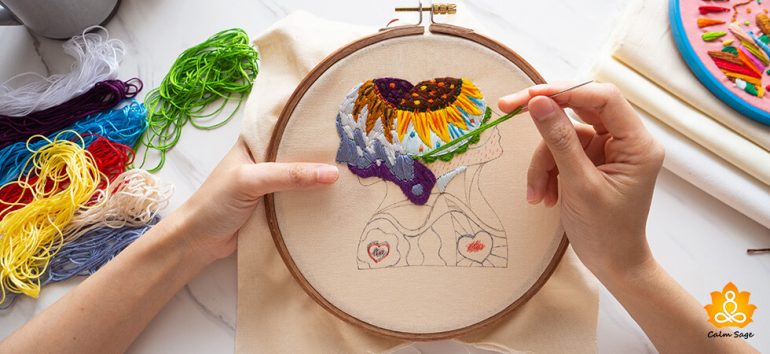
Healing is not a linear journey; it’s a spiral, a dance of forward motion and backward glances. Miniature art becomes a ritual, a sacred pause in the chaos of grief. Every session is an opportunity to revisit, reimagine, and release. The first time you pick up a brush, the emotions may feel raw, the colors too bright or too dull. But with each stroke, something shifts. The act of creation becomes a dialogue—a conversation between you and your pain, where neither is diminished, but both are transformed.
Think of it as a form of active meditation. You’re not just sitting with your grief; you’re shaping it, molding it, giving it form. The miniature format intensifies this process. There’s no room for distraction, no escape into the vastness of a large canvas. You must confront each detail, each shadow, each fleeting thought. And in doing so, you reclaim a sense of agency. Grief can make you feel powerless, but miniature art reminds you that you are still the author of your story. You may not control the plot, but you can control the brush, the color, the composition. You can decide where the light falls, where the shadows linger, and how the narrative unfolds.
From Fragmentation to Wholeness: The Mosaic of Memory
Grief often feels like a shattering, a breaking apart of the self into countless fragments. But miniature art offers a way to gather those pieces and reassemble them into something new. Each tiny artwork is a tile in a larger mosaic, a fragment of a larger story. Over time, these fragments begin to form a pattern, a design that is uniquely yours. It might not be a picture-perfect resolution, but it’s a picture of your truth—a truth that is messy, complex, and deeply human.
Consider the work of artists like Willard Wigan, who carves microscopic sculptures inside the eye of a needle. His art is a celebration of the unseen, the overlooked, the seemingly insignificant. In the same way, your miniature art can celebrate the small, the quiet, the often-unnoticed moments of your grief. The way the light hits the edge of a table at dusk. The scent of a loved one’s perfume lingering on a scarf. The way a particular song can transport you back to a moment frozen in time. These are not grand tragedies; they are the quiet echoes of love, and they deserve to be honored.
As your mosaic grows, so too does your understanding of grief. It’s not a wound to be stitched shut, but a landscape to be explored. A miniature world where every detail matters, every shadow has depth, and every color tells a story. And in that world, you are not just a survivor—you are an artist, a storyteller, a weaver of meaning.

The Gift of Perspective: Seeing the Big Picture in the Smallest Details
One of the most profound promises of miniature art is the shift in perspective it offers. When you zoom in on the smallest details of your grief, you begin to see the bigger picture. A single tear on a tiny canvas can represent the ocean of sorrow you’ve been carrying. A miniature door left ajar can symbolize the threshold between denial and acceptance. The act of zooming out—stepping back from the canvas to admire your work—mirrors the process of healing itself. You start to see that your pain is not an endless abyss, but a terrain with peaks and valleys, with paths that lead somewhere, even if you can’t yet see the destination.
This shift in perspective is not just visual; it’s emotional. It allows you to hold your grief with both hands, to examine it from every angle, to understand its contours and textures. And in doing so, you may find that what once felt like an insurmountable obstacle is now a landscape you can navigate. The miniature becomes a metaphor for life itself—a vast, complex world contained within the smallest of spaces. And if you can create beauty in the smallest of canvases, perhaps you can find beauty in the smallest moments of your life, even in the midst of grief.
So, pick up your brush. Choose your canvas. Let the miniature world become your sanctuary, your laboratory, your sacred space. Here, in the quiet hum of creation, you will find not just solace, but transformation. Not just healing, but a new way of seeing. Not just closure, but a promise—a promise that even in the smallest of things, there is room for light, for love, and for the quiet, persistent hope that comes from turning pain into art.


Leave a Comment