

In the quiet corners of curiosity, where the mundane meets the extraordinary, lies a world few dare to explore—the miniature art of the collector. It is not merely about owning objects; it is about curating fragments of wonder, each piece a whisper of a larger narrative waiting to unfold. This journey is not for the faint of heart, for it demands patience, reverence, and an unyielding fascination with the overlooked. Yet, for those who embark upon it, the rewards are nothing short of transformative. The miniature collector does not just gather; they redefine their relationship with time, space, and the very essence of beauty.
Imagine, if you will, a teacup no larger than a thimble, its delicate porcelain painted with scenes of a forgotten era. To the untrained eye, it is insignificant—a trifle. But to the collector, it is a portal. A portal into the life of someone who once sipped from it, into the hands of the artisan who crafted it, into the cultural tapestry of a bygone epoch. This is the magic of miniature art: it shrinks the vast into the intimate, the distant into the tangible. It invites us to pause, to marvel, and to reconsider what we deem worthy of our attention.
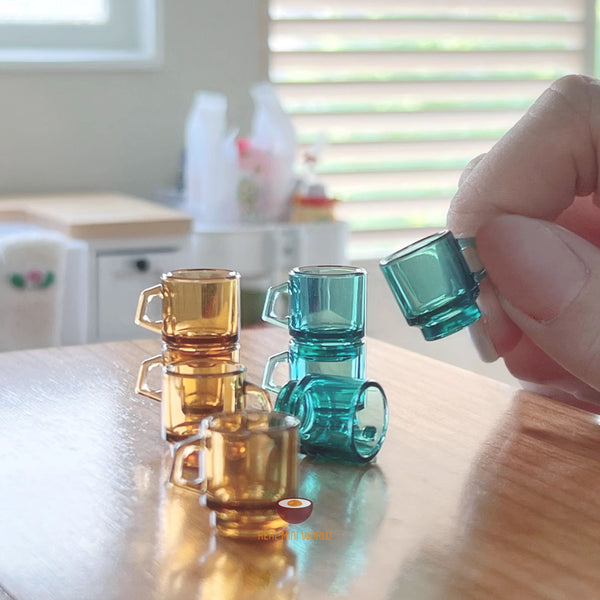
The Alchemy of Scale: How Miniatures Reshape Perception
There is an alchemy to scale, a silent transformation that occurs when an object is reduced to a fraction of its original size. The miniature collector understands this intuitively. They see not just a scaled-down version of reality but a distilled essence of it. A miniature house, for instance, is not a toy—it is a microcosm of domestic life, a frozen moment in architectural history. The collector does not merely observe; they engage in a dialogue with the past, questioning the materials, the techniques, and the cultural contexts that birthed such a piece.
This shift in perspective is not passive. It is an active unraveling of assumptions. Consider the miniature landscape: a meticulously crafted diorama of a mountain range or a forest glade. To the casual observer, it is a charming decoration. To the collector, it is a study in ecology, geology, and even philosophy. Each element—every rock, every tree, every winding path—is a deliberate choice, a narrative thread woven into the larger story. The miniature becomes a mirror, reflecting not just the world as it is, but as it could be, as it might have been, or as the collector wishes it to be.
The true allure of miniature art lies in its ability to evoke emotion through restraint. It does not overwhelm with grandeur; instead, it whispers. It does not demand attention; it invites contemplation. In a world saturated with noise, the miniature collector finds solace in the quietude of the small, the delicate, the precise. It is a rebellion against the tyranny of the large, a reclaiming of space for the subtle and the nuanced.
The Collector’s Obsession: A Love Letter to the Unseen
To be a collector is to be an archaeologist of desire. Each acquisition is a dig, a sifting through layers of history, taste, and serendipity. The miniature collector, however, operates in a realm where the stakes are emotional rather than monetary. They are not driven by the need to possess but by the need to understand. What compels a person to seek out a 19th-century miniature portrait? What draws them to a tiny, hand-painted porcelain snuffbox? The answer lies not in the object itself but in the stories it carries—the stories of its maker, its owner, its journey through time.
There is a tactile intimacy to miniature collecting that is absent in other forms of art appreciation. Holding a miniature book between your fingers, its spine no thicker than a credit card, is an act of reverence. Flipping through its pages, each one a canvas of intricate calligraphy or miniature illustrations, is an exercise in patience and wonder. The collector does not just look; they touch, they feel, they connect. This physical engagement deepens the emotional resonance of the collection, forging a bond that transcends the mere act of ownership.
Yet, the collector’s journey is not without its challenges. The miniature world is a labyrinth of authenticity and provenance. A single misstep—a misattributed piece, a forged signature—can shatter the illusion of the collection. The collector must become a detective, a scholar, a connoisseur. They must learn the language of materials, the dialects of craftsmanship, the silent stories etched into every curve and contour. It is a pursuit that demands humility, for no matter how vast one’s knowledge, there will always be another layer to uncover, another mystery to solve.
From Curiosity to Craft: The Evolution of the Collector
What begins as a passing fascination often evolves into something far more profound. The collector does not merely amass; they create. Their collection becomes a living entity, a testament to their evolving tastes, their discoveries, and their growth. The miniature collector, in particular, may find themselves drawn not just to the objects they collect but to the art of collecting itself. They may begin to experiment with miniature crafting—building their own dioramas, painting their own porcelain, or even designing their own tiny libraries.
This evolution is not just about skill; it is about identity. The collector becomes a storyteller, weaving their own narratives into the fabric of their collection. A miniature kitchen, for instance, is no longer just a decorative piece—it is a stage for the collector’s imagination. What meals were prepared here? Who lived in this tiny world? The collector fills in the blanks, crafting a history that is as personal as it is universal. In this way, the act of collecting becomes an act of creation, a dialogue between the collector and the collected.
There is also a communal aspect to this journey. Collectors are not solitary figures hunched over their treasures in dimly lit rooms. They are part of a global network, a fellowship of the fascinated. They attend miniature fairs, exchange pieces with fellow enthusiasts, and engage in lively debates about the merits of a particular craftsmanship technique. The miniature collector is never alone; they are surrounded by a community that shares their passion, their curiosity, and their reverence for the small and the exquisite.
The Philosophy of the Miniature: Why Small Things Matter
In a culture that celebrates the monumental—the skyscraper, the megacity, the blockbuster exhibition—it is radical to find beauty in the miniature. Yet, the miniature collector understands that greatness is not measured in size alone. A miniature painting, for instance, can convey the same depth of emotion as a mural, if not more. The intimacy of the scale allows the viewer to engage with the artwork on a deeply personal level, to see not just the subject but the artist’s hand, their technique, their soul.
There is also an ecological dimension to this philosophy. The miniature collector, in their reverence for the small, often develops a heightened awareness of the natural world. They notice the patterns in a leaf, the texture of a pebble, the way light filters through a tiny stained-glass window. This attention to detail fosters a sense of stewardship, a desire to protect and preserve the delicate ecosystems that inspire their collections. The miniature becomes a metaphor for the world itself—a fragile, interconnected web of beauty and meaning.
The miniature collector’s worldview is one of paradox. They find grandeur in the small, significance in the overlooked, and depth in the seemingly insignificant. They challenge the notion that importance is proportional to size, that value is determined by scale. Instead, they argue that the miniature is a lens—a way of seeing the world that reveals its hidden layers, its quiet wonders, its untold stories.

The Unseen Threads: Connecting the Past and the Present
Every miniature object is a thread in a larger tapestry, a connection between the past and the present. The collector becomes a custodian of these threads, ensuring that the stories they tell are not lost to time. A miniature tea set from the Victorian era, for instance, is not just a decorative piece—it is a window into the social rituals of the 19th century, a glimpse into the lives of women who gathered for afternoon tea, exchanging gossip and confidences over tiny cups of Earl Grey.
The collector’s role is not passive. They are not mere spectators to history; they are active participants in its preservation. By acquiring and caring for these objects, they keep the past alive, infusing it with new meaning for each generation. The miniature becomes a bridge, a way to traverse the chasm of time and connect with those who came before us. In this sense, the collector is not just an individual with a hobby—they are a guardian of cultural heritage, a storyteller who ensures that the whispers of the past are not silenced.
This connection to history is not just about nostalgia. It is about understanding the present through the lens of the past. The miniature collector sees patterns, repetitions, and evolutions in the objects they collect. They trace the lineage of a craft, the migration of an artistic style, the evolution of a cultural practice. They become historians by default, piecing together the fragments of the past to create a cohesive narrative. In doing so, they challenge the linear view of history, revealing its cyclical nature, its interconnectedness, and its endless possibilities.
A New Way of Seeing: The Collector’s Legacy
The true gift of the miniature collector is not the objects they own but the way they see the world. They teach us to look closer, to appreciate the details, to find beauty in the overlooked. They remind us that greatness is not always loud, that significance is not always obvious, and that meaning can be found in the smallest of things.
For those who have yet to embark on this journey, the miniature world offers an invitation—an invitation to slow down, to observe, to marvel. It is an invitation to see the world with fresh eyes, to find wonder in the ordinary, and to rediscover the joy of curiosity. The miniature collector’s path is not an easy one, but it is a rewarding one. It is a path that leads not just to a collection of objects but to a transformation of the self—a shift in perspective, a deepening of the soul, and a newfound appreciation for the art of the small.
So, take a moment to pause. Look around you. What small things have you overlooked? What miniature wonders have you yet to discover? The world is full of them, waiting for those who dare to see.


Leave a Comment