

In an age where digital landscapes stretch endlessly before us, there exists a quiet rebellion—a return to the tactile, the diminutive, the meticulously crafted. Among these whispers of nostalgia, miniature cartographies emerge as unsung heroes, redefining how we perceive space, distance, and the very essence of place. These tiny maps, often no larger than a postage stamp, are not mere novelties; they are portals to new ways of seeing the world. They promise a shift in perspective, a piqued curiosity, and an invitation to explore the extraordinary within the ordinary.
Imagine holding a world in your palm, where continents shrink to the size of freckles and rivers become delicate veins of ink. This is the magic of miniature cartographies—a genre where precision meets poetry, and geography becomes art. These creations challenge our preconceived notions of scale, urging us to question what we consider “real” and what we deem “imagined.” They are not just representations of land; they are invitations to wander, to dream, and to rediscover the familiar through a lens of wonder.
The Allure of the Miniature: Why Small Maps Captivate the Imagination
There is an inherent fascination with the miniature. From dollhouse furniture to model trains, humanity has long been drawn to scaled-down versions of the world around us. Miniature cartographies tap into this primal curiosity, offering a sense of control over vast, often overwhelming landscapes. When a map is reduced to the size of a thumbnail, it transforms from a tool of navigation into an object of contemplation. The intricate details—every contour line, every shaded elevation—invite closer inspection, rewarding the viewer with a deeper connection to the terrain.
Consider the psychological impact of these tiny maps. They force us to slow down, to engage with the world in a way that modern technology rarely allows. In an era of GPS and satellite imagery, where directions are delivered in real-time with pinpoint accuracy, miniature cartographies reintroduce serendipity. They remind us that exploration is not just about reaching a destination but about savoring the journey itself. The act of tracing a finger along the winding path of a river or the jagged edge of a mountain range becomes a meditative experience, a respite from the relentless pace of digital life.
Moreover, miniature cartographies possess a unique ability to evoke emotion. A map of a beloved hometown, shrunk to pocket size, becomes a cherished memento. A fictional kingdom from a favorite novel, rendered in delicate brushstrokes, transforms from a figment of imagination into something tangible. These maps do more than depict geography; they capture memories, dreams, and the intangible essence of place. They are silent storytellers, whispering tales of adventure, loss, and discovery.
The Artistry Behind the Scale: Crafting Tiny Worlds with Precision
Creating a miniature cartography is no small feat. It demands a blend of technical skill, artistic vision, and an almost obsessive attention to detail. Artists who specialize in this niche must grapple with the constraints of scale while preserving the integrity of the landscape they are representing. Every line, every color choice, every texture must be carefully considered to ensure that the final piece is both accurate and evocative.
Take, for example, the delicate hatching used to depict elevation in a topographic miniature map. What might be a bold contour line on a standard map becomes a whisper of ink on a tiny canvas, requiring the artist to adjust their technique to maintain clarity. Similarly, the choice of materials plays a crucial role. Watercolor washes can lend a dreamy, ethereal quality to a map, while fine linocut engravings might evoke the precision of a cartographer’s tool from centuries past. Some artists even incorporate unconventional mediums, such as gold leaf or handmade paper, to add layers of texture and depth to their work.
The process often begins with extensive research. Whether the map is of a real location or an entirely imagined one, the artist must immerse themselves in the geography, climate, and cultural nuances of the place. For real-world cartographies, this might involve poring over satellite imagery, historical documents, or even personal photographs. For fictional maps, the artist must invent a world from scratch, ensuring that every river, mountain, and settlement feels cohesive and believable. This meticulous research is what gives miniature cartographies their authenticity, even when they are scaled down to the size of a postage stamp.
One of the most striking aspects of miniature cartographic art is its ability to play with perspective. By altering the scale, artists can highlight certain features while downplaying others, creating a sense of drama or focus. A mountain range might loom larger than life, dominating the frame, while a sprawling city is reduced to a cluster of tiny, intricate buildings. This manipulation of scale allows artists to guide the viewer’s eye, directing their attention to the elements that matter most. It’s a technique that harks back to the golden age of cartography, when maps were as much about artistry as they were about accuracy.
Miniature Cartographies as Cultural Artifacts: A Bridge Between Past and Present
Miniature maps are not a modern invention. Their roots stretch back to ancient civilizations, where cartographers crafted maps on clay tablets, papyrus, and even the skins of animals. These early maps were not just practical tools; they were works of art, imbued with cultural significance and mythological meaning. The Hereford Mappa Mundi, a 13th-century medieval map of the world, is a prime example. Though not miniature by today’s standards, its intricate details and symbolic representations of the known world reflect the same blend of artistry and geography that defines contemporary miniature cartographies.
In many ways, modern miniature cartographers are the heirs to these ancient traditions. They carry forward the legacy of mapmaking as a form of storytelling, where geography is intertwined with culture, history, and imagination. Yet, they also push the boundaries of the medium, experimenting with new techniques and materials that would have been unimaginable to their predecessors. The result is a fusion of old and new, a celebration of the enduring human fascination with maps as both practical tools and objects of beauty.
Miniature cartographies also serve as cultural artifacts in another sense. They reflect the values and priorities of the societies that produce them. A map that emphasizes natural landscapes over urban sprawl might speak to a culture’s reverence for nature. A map that highlights trade routes could reflect a society’s focus on commerce and connectivity. In this way, miniature cartographies become mirrors of their time, offering insights into the collective consciousness of the people who create and consume them.
The Emotional Resonance of Tiny Maps: More Than Just Geography
Perhaps the most compelling aspect of miniature cartographies is their ability to evoke emotion. A map of a childhood home, rendered in delicate watercolors, can transport the viewer back to a specific moment in time. A map of a fictional world from a beloved book can reignite the sense of wonder that first drew us to the story. These tiny pieces of art are not just representations of place; they are vessels of memory, nostalgia, and imagination.
Consider the emotional weight of a miniature map of a loved one’s hometown. For someone who has moved away, such a map can serve as a tangible connection to their roots. For a traveler, it might capture the essence of a place they visited and long to return to. The act of holding a tiny map in your hand creates a physical link to the intangible—memories, dreams, and the places that shape our identities. In a world where digital maps are ephemeral and easily forgotten, miniature cartographies endure as keepsakes, treasured for their ability to preserve the past and inspire the future.
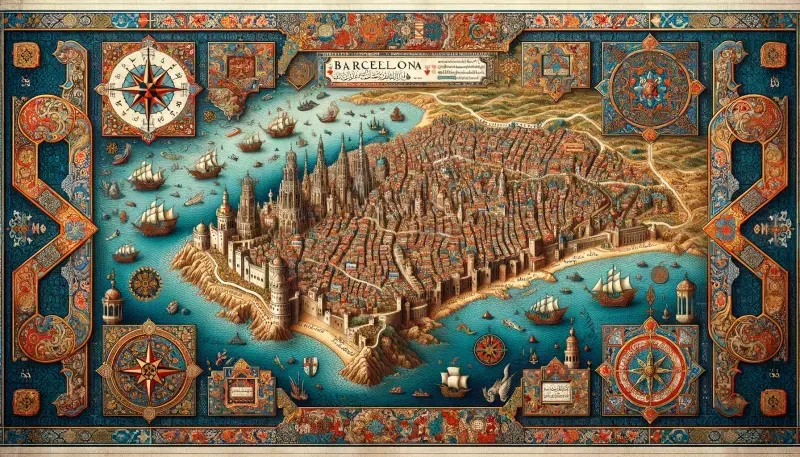
There is also a therapeutic quality to miniature cartographies. The act of creating one can be a meditative process, a way to slow down and engage with the world in a mindful manner. For artists, the process of crafting a tiny map can be a form of escapism, a way to lose oneself in the details of a landscape. For viewers, the act of examining a miniature map can be equally soothing, offering a moment of quiet reflection in a chaotic world. In this sense, miniature cartographies are more than just art; they are tools for mindfulness and emotional well-being.
The Future of Miniature Cartographies: Innovation and Exploration
The world of miniature cartographies is not static; it is a living, evolving art form that continues to push boundaries and defy expectations. Advances in technology have opened up new possibilities for artists, allowing them to experiment with digital tools while still embracing traditional techniques. 3D printing, for instance, has enabled artists to create tactile, three-dimensional maps that invite touch as well as sight. Augmented reality (AR) is another frontier, where miniature maps can come to life, revealing hidden details or animations when viewed through a smartphone or AR glasses.
Yet, despite these technological innovations, the essence of miniature cartography remains rooted in the human touch. The imperfections, the subtle variations in line weight, the hand-painted textures—these are the qualities that give miniature maps their soul. As long as there are artists who are drawn to the challenge of scale, there will be miniature cartographies that captivate, inspire, and transport us to new worlds.
The future of this art form also lies in its ability to adapt to contemporary themes. As climate change and environmental degradation become increasingly urgent concerns, miniature cartographers are turning their attention to ecological landscapes, highlighting the fragility of ecosystems and the importance of conservation. Similarly, miniature maps of urban spaces can serve as tools for urban planning, offering a fresh perspective on the design and functionality of our cities. The possibilities are as vast as the imagination itself.
Miniature cartographies also hold potential as educational tools. For children, a tiny map of a fictional world can spark a love of geography and storytelling. For students, a detailed miniature map of a historical region can bring history to life in a way that textbooks never could. By making geography tangible and engaging, these tiny maps can inspire the next generation of explorers, scientists, and artists.
A New Way of Seeing: The Transformative Power of Tiny Maps
In a world that often feels overwhelming and disconnected, miniature cartographies offer a simple yet profound gift: the ability to see the world anew. They remind us that beauty can be found in the smallest of things, that wonder is not reserved for the grand and the expansive, but can be discovered in the palm of our hands. These tiny maps are more than just representations of geography; they are invitations to slow down, to observe, and to find joy in the details.
They also challenge us to reconsider our relationship with the places we inhabit. A miniature map of a neighborhood can make us see our own street with fresh eyes, noticing the subtle curves of the sidewalk or the way sunlight filters through the trees. A map of a distant land can ignite a sense of curiosity, prompting us to learn more about a culture or a history we previously overlooked. In this way, miniature cartographies are not just art; they are catalysts for connection and understanding.
Ultimately, the magic of miniature cartographies lies in their ability to transform the way we perceive the world. They teach us that scale is relative, that perspective is everything, and that even the smallest of maps can hold the largest of stories. Whether crafted by hand or rendered through digital tools, these tiny works of art are a testament to the enduring human desire to explore, to create, and to find meaning in the places we call home.
So the next time you encounter a miniature cartography, take a moment to hold it, to study it, to let it transport you. Let it remind you that the world is not just a vast expanse to be conquered, but a tapestry of details waiting to be discovered. In the palm of your hand, you hold not just a map, but a universe of possibilities.


Leave a Comment