

In the labyrinth of legal documents that govern creative works, few instruments wield as much silent power—or as much potential for regret—as the moral rights waiver. It’s the fine print that artists, writers, and creators often skim past, lulled into complacency by the promise of a project’s completion or the allure of a lucrative deal. Yet, signing away moral rights isn’t just a formality; it’s a surrender of your soul’s fingerprint on your own creation. Imagine crafting a masterpiece, only to watch it morph into something unrecognizable, its essence diluted by corporate edits, rebranded aesthetics, or even outright misattribution. This isn’t dystopian fiction—it’s the reality for countless creators who’ve traded their moral rights for a fleeting moment of validation or financial gain. The moral rights waiver you’re about to sign could be the one that haunts you long after the ink dries.
But why does this happen? Why do so many creators, armed with creativity and passion, willingly sign away the very protections that ensure their work remains authentically *theirs*? The answer lies in a cocktail of naivety, pressure, and the seductive illusion of control. In an industry where deadlines loom like storm clouds and budgets shrink faster than creative freedom, the temptation to “just sign here” is overwhelming. Yet, the consequences of such a decision ripple far beyond the initial agreement. Moral rights aren’t just legal jargon—they’re the last bastion of an artist’s integrity, a bulwark against the erasure of their vision. To waive them is to invite the possibility of seeing your name attached to work you no longer recognize, or worse, watching your creation become a vessel for someone else’s agenda.
The Illusion of Ownership: What You’re Really Giving Up
At first glance, a moral rights waiver might seem like a harmless formality, a checkbox to expedite a project. After all, you’re still the creator, right? The work is yours—until it isn’t. Moral rights, enshrined in laws like the Berne Convention, are the rights of an author to claim authorship of their work and to object to any distortion, mutilation, or other modification that would be prejudicial to their honor or reputation. These rights are inalienable in many jurisdictions, meaning they cannot be transferred—only waived. And that’s where the danger lies. By signing a waiver, you’re not just giving up control; you’re potentially surrendering the very essence of your creation to the whims of others.
Consider the case of a musician whose song is remixed without their consent, its melody twisted into something unrecognizable, its lyrics altered to fit a commercial jingle. Or a visual artist whose mural is painted over by a corporation, its vibrant colors reduced to a bland corporate palette. These aren’t hypothetical scenarios—they’re real-world examples of what happens when moral rights are waived. The waiver doesn’t just strip you of the right to object; it strips you of the right to even be acknowledged as the creator. Your work becomes a blank canvas for others to reinterpret, rebrand, or repurpose, all while your name remains attached—or worse, is erased entirely.
Even more insidious is the psychological toll. Creators pour their emotions, experiences, and identities into their work. To see that work altered in ways that contradict your values or vision is akin to watching a part of yourself be rewritten. The waiver doesn’t just affect the work; it affects the creator. It’s a silent erasure of your voice, your intent, and your legacy. And yet, so many sign it without a second thought, lured by the promise of a paycheck or the allure of a “done deal.”
The Fine Print Trap: How Waivers Sneak In the Back Door
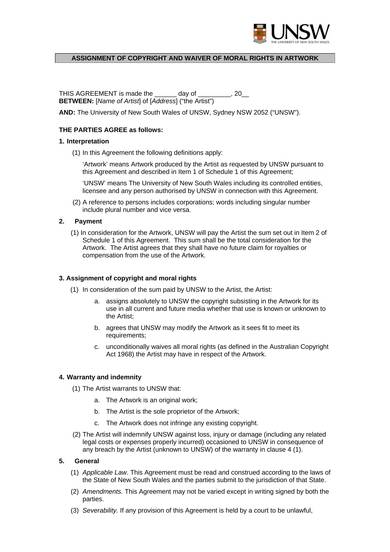
Moral rights waivers are often buried in the depths of contracts, disguised as boilerplate language or tucked away in the “miscellaneous” section. They’re presented as a necessary evil, a small price to pay for the opportunity to see your work in the public eye. But the fine print is where the real danger lies. A waiver might be buried in a clause that reads something like: “Creator hereby waives all moral rights in the Work, including the right to be identified as the author and the right to object to derogatory treatment.” On the surface, it seems innocuous. After all, who would object to being paid for their work? But the implications are anything but.
Worse still, waivers are often framed as a one-size-fits-all solution. “Just sign here,” the contract might say, “and we’ll take care of the rest.” But the “rest” includes the potential for your work to be used in ways you never intended. A waiver might grant a corporation the right to edit, modify, or even destroy your work without your consent. It might allow them to rebrand it, recontextualize it, or repurpose it for a purpose you find abhorrent. And because moral rights are often waived in perpetuity, these changes can follow your work for the rest of its existence—long after you’ve moved on to other projects.
Even more alarming is the lack of standardization in waivers. Some are vague, leaving room for interpretation. Others are so broad that they effectively strip you of all rights to your work. The language might be couched in legalese, making it difficult for creators to fully grasp what they’re signing away. And in industries where power dynamics are skewed—think film, publishing, or music—creators often feel pressured to accept whatever terms are offered, lest they lose the opportunity entirely. The result? A generation of creators who’ve unknowingly signed away their moral rights, only to regret it when it’s too late.
The Corporate Chameleon: How Your Work Becomes Someone Else’s Canvas
Once a moral rights waiver is signed, your work is no longer yours in the eyes of the law. It becomes a corporate asset, subject to the whims of shareholders, marketing teams, and focus groups. This is where the true metamorphosis begins. Your carefully crafted novel might be adapted into a film with a different ending, your song might be remixed into a jingle for a product you’d never endorse, or your artwork might be cropped, recolored, or even censored to fit a brand’s aesthetic. The possibilities are as endless as they are unsettling.
Take, for example, the case of a graphic designer who created a logo for a startup. The logo was a sleek, minimalist design that perfectly captured the brand’s ethos. But after the startup was acquired by a larger corporation, the logo was altered—colors were changed, the font was replaced, and the design was simplified into something unrecognizable. The designer’s name was removed from the credits, and the new version was rolled out as the “official” logo. The designer had signed a moral rights waiver, and there was nothing they could do. Their work was now a corporate asset, stripped of its original intent and identity.
This isn’t an isolated incident. It’s a systemic issue that plagues industries where creativity intersects with commerce. The moment a moral rights waiver is signed, the creator’s control over their work evaporates. The work becomes a blank slate for others to reinterpret, rebrand, or repurpose, often without any regard for the creator’s original vision. And because moral rights are often waived in perpetuity, these changes can persist for decades, long after the creator has moved on. The work you created today might bear no resemblance to the work that bears your name tomorrow—and there’s nothing you can do about it.
The Silent Epidemic: Why So Many Creators Don’t Realize the Stakes
If moral rights waivers are so dangerous, why do so many creators sign them without a second thought? The answer lies in a combination of ignorance, pressure, and the seductive allure of opportunity. Many creators simply don’t understand what moral rights are, let alone the implications of waiving them. They see a contract, they see a signature line, and they assume it’s a necessary step to get their work out into the world. They don’t realize that by signing, they’re potentially surrendering the very essence of their creation.
Others are pressured into signing by the sheer weight of the industry’s expectations. In fields like film, publishing, and music, creators are often at the mercy of producers, publishers, and labels. The opportunity to see your work in the public eye is tantalizing, but the pressure to “just sign here” is overwhelming. Creators are told that if they don’t sign, someone else will—and that’s often enough to silence their objections. The result is a culture where waivers are signed without question, where creators are conditioned to prioritize opportunity over integrity.
Even those who do understand the stakes might feel powerless to do anything about it. The legal system is complex, and fighting a waiver in court is a costly and time-consuming endeavor. For many creators, the cost of litigation outweighs the potential benefits. They’re left with no choice but to accept the terms, no matter how unfavorable. And so, the cycle continues—creators sign away their moral rights, their work is altered beyond recognition, and the cycle repeats itself with the next generation of artists.
The Last Stand: How to Protect Your Creative Soul
So, what can you do to protect your moral rights? The first step is awareness. Before you sign any contract, read the fine print. Look for clauses that mention moral rights, waivers, or the right to object to modifications. If the language is vague or overly broad, ask for clarification. If the waiver is non-negotiable, consider whether the opportunity is worth the risk. Remember, once you sign, there’s no going back.
Next, negotiate. Many creators assume that contracts are set in stone, but that’s rarely the case. If a waiver is required, ask for limitations. Can you specify the ways in which your work can be modified? Can you retain the right to be consulted on major changes? Can you ensure that your name remains attached to the work, even if it’s altered? The more specific you can be, the better. And if the other party refuses to budge, ask yourself whether the opportunity is worth the potential loss of control.
Finally, consider seeking legal advice. A lawyer who specializes in intellectual property can help you navigate the complexities of moral rights waivers and ensure that your interests are protected. They can also help you understand the implications of the waiver and whether there are alternative clauses that might better serve your needs. It’s an investment, but one that could save you from a lifetime of regret.
In the end, the moral rights waiver you sign today could define the legacy of your work tomorrow. It’s not just a formality—it’s a decision that could haunt you for years to come. So, before you put pen to paper, ask yourself: Is this opportunity worth the risk? And more importantly, is it worth surrendering the very essence of your creation?
The choice is yours. But choose wisely. Your creative soul depends on it.


Leave a Comment