

There is something irresistibly enchanting about miniature worlds. From tiny glass bottle scenes to intricate dioramas, these scaled-down universes capture our imagination like few other art forms. People across cultures and generations have been drawn to these diminutive realms, often marveling at their precision and charm. But why exactly do miniature worlds command such fascination? What psychological underpinnings compel us to lean closer, to marvel, and to emotionally invest in these tiny tapestries? The allure we experience is not merely skin-deep; it taps into a profound interplay of nostalgia, cognitive intrigue, and emotional resonance that reveals much about the human psyche.
The Innate Human Attraction to Miniature Forms
Throughout history, miniature representations have played a significant role in human culture — from ancient model villages to delicate dollhouses. This attraction is rooted in an evolutionary and cognitive framework. Psychologists suggest that our brains are wired to appreciate scaled-down versions of reality because they condense complexity and detail into a manageable whole. Miniatures offer a digestible glimpse into a grander scheme, satisfying our innate curiosity while simultaneously providing a comforting sense of control.
Consider the concept of perceptual fluency, the ease with which our minds can process visual information. Miniature objects are often more approachable; their minute scale captivates attention and cushions us from sensory overload. By observing the world in miniature, we assert dominion over chaotic vastness, cultivating feelings of mastery and comprehension. This dynamic reflection of scale stimulates a paradoxical blend of awe and familiarity, encouraging us to explore without feeling overwhelmed.

Nostalgia and the Comfort of Childhood Revisited
Miniature worlds often evoke a powerful sense of nostalgia, transporting adults back to the innocence and wonder of childhood. The act of creating or observing miniatures can stir memories of simpler times, when imagination was boundless and everyday items were imbued with magic. This psychological rewind taps into temporal self-continuity, a comforting linkage between past and present selves.
More than mere whimsy, miniatures act as a temporal bridge, inviting a playful innocence that soothes existential uncertainties of adulthood. Dollhouses, train sets, and model villages are tangible vessels of memory, reinforcing identity and emotional stability. In these miniature realms, individuals rekindle a childlike optimism, nurturing psychological resilience against the pressures and complexities of contemporary life.
The Therapeutic Promise of Miniature Crafting
Beyond nostalgia, engaging with miniatures has tangible mental health benefits. The meticulous process of crafting tiny objects demands sustained concentration, fine motor skills, and patience. This meditative engagement functions similarly to mindfulness practices, centering awareness in the present moment and quieting intrusive thoughts.
Miniature artistry fosters a calming rhythm and a deep sense of accomplishment. Constructing intricate scenes, whether a rustic village or a bustling street corner, nurtures creativity while offering a respite from digital saturation. The deliberate slow pace contrasts the often frenetic tempo of modern life, providing psychological restoration and promoting emotional equilibrium.
The Suspense of Mystery and the Allure of Hidden Details
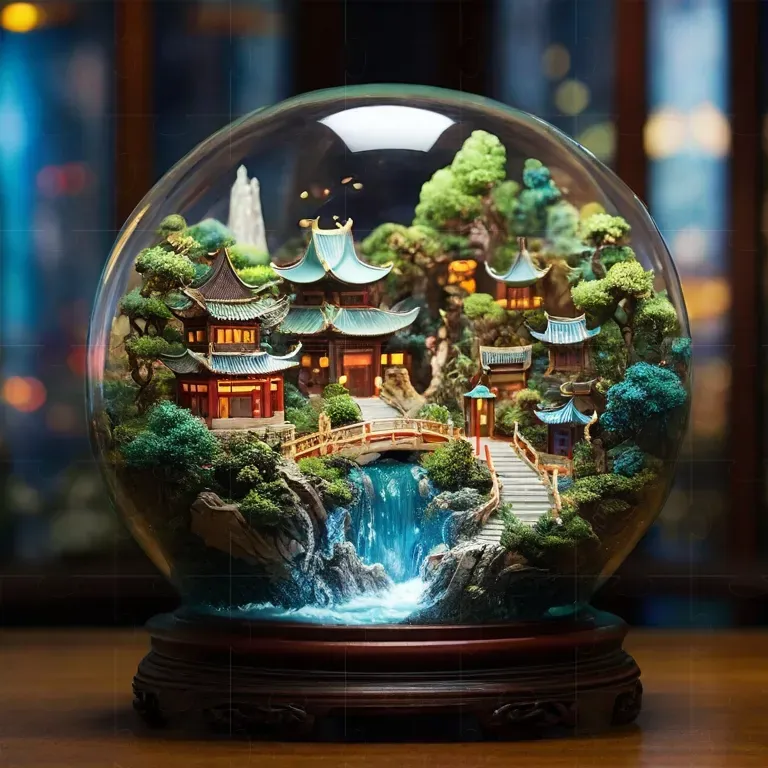
Another compelling facet of miniature worlds lies in their invitation to exploration and discovery. Unlike expansive landscapes where many details may overwhelm, miniature scenes encourage close inspection. Each corner can reveal secret vignettes—a weathered bench, a hand-painted flower pot, or a diminutive figurine frozen in time. This treasure hunt activates our psyche’s reward systems, engendering curiosity and sustained engagement.
Miniatures harness the power of subliminal storytelling. Through subtle cues and carefully arranged elements, they inspire viewers to create narrative threads, imagining lives and histories behind these tiny structures. Encountering these miniatures becomes akin to unlocking a secret dimension, heightening emotional satisfaction and deepening personal connection.
Miniatures as a Reflection of Human Scale and Perspective
In a world that often feels overwhelmingly vast or uncontrollable, miniatures offer a charming inversion of scale that invites introspection. Observing a tiny cityscape or a pocket-sized forest encourages us to recalibrate our perspective—not just physically, but metaphorically. We become aware of our position within larger systems, pondering concepts of minuteness and grandeur, vulnerability and power.
This contrast between scale sparks a contemplative state, nourishing philosophical reflection about existence and space. The miniaturization of the world serves as a metaphor for human consciousness itself: a small, delicate microcosm within the infinite expanse. It reminds us of our interconnectedness and our capacity to find wonder everywhere—even in the smallest corners.

Why Miniature Worlds Continue to Captivate Us
The perennial allure of tiny worlds lies in their ability to bridge intellect and emotion, imagination and mastery. They appeal simultaneously to our desire for control and our passion for enchantment. Miniatures charm us because they are both real and fantastical—meticulously crafted yet escaping complete comprehension.
In a society prone to accelerated pace and digital immersion, miniature realms offer a counterbalance: an invitation to slow down, to observe minutiae, and to reconnect with elemental joys. Their enduring popularity can be seen as a testament to the importance of smallness in a world often obsessed with scale and speed—proof that sometimes the tiniest details hold the greatest mysteries.
Ultimately, our fascination with miniature worlds is a mirror of human nature itself: complex, curious, and ever yearning for places where imagination can take root and flourish. As long as we find delight in small things, the charm of tiny universes will continue to beckon, inviting us into endless journeys of wonder.


Leave a Comment