

The gallery has long been a temple of the muses, a hallowed space where art is revered in hushed silence, its masterpieces encased in glass or elevated on pedestals. Yet, something is shifting. The rigid solemnity of the traditional gallery is giving way to a new paradigm—one that whispers of restoration, not just of art, but of the human spirit. The rise of the “restorative” gallery experience is not merely a trend; it’s a quiet revolution, a response to the collective exhaustion of modern life and the unspoken hunger for spaces that heal as much as they inspire.
In an era where digital noise drowns out contemplation and urban sprawl leaves little room for introspection, the gallery is evolving into a sanctuary. No longer content to merely display art, these spaces now curate experiences that mend the frayed edges of our attention spans, offering respite from the relentless pace of existence. The “restorative” gallery is less about the art itself and more about the emotional and psychological space it creates—a place where visitors can exhale, reflect, and, in some cases, even reconnect with parts of themselves they’d forgotten existed.
The Gallery as a Healing Threshold
Walk into one of these contemporary sanctuaries, and the first thing you notice isn’t the art—it’s the absence of friction. The air is softer. The lighting is warmer. The floors, often made of reclaimed wood or textured stone, seem to absorb the clatter of the outside world. This is by design. The restorative gallery is a liminal space, a threshold between the chaos of daily life and the stillness of inner quiet. It’s where the mind is gently coaxed into a state of receptivity, where the soul is given permission to wander without destination.
Consider the use of biophilic design—elements drawn from nature that ground the visitor in the present moment. Living walls of cascading greenery, the murmur of indoor fountains, the scent of cedar or sandalwood diffused subtly through the air. These aren’t mere aesthetic choices; they’re deliberate tools to lower cortisol levels, to slow the heart rate, to remind the body that it is, in fact, safe here. The gallery becomes a microcosm of the natural world, a place where the mind can reset, much like a computer rebooting after too many tabs have been left open.

But the restorative experience isn’t confined to sensory comfort. It’s also about narrative. The curation of these spaces often weaves a thread of emotional continuity, guiding visitors through a journey that feels less like an exhibition and more like a pilgrimage. A single piece of art might be contextualized not just by its historical significance, but by its potential to evoke personal memories or provoke quiet introspection. The labels aren’t just informative; they’re invitations to pause, to feel, to remember. In this way, the gallery transcends its role as a repository of culture and becomes a collaborator in the visitor’s inner work.
The Democratization of Awe
There’s a paradox at the heart of the restorative gallery: it seeks to heal, yet it does so by democratizing the very experience of awe. Traditionally, art has been an elite affair, accessible only to those who could afford the time, the education, or the social capital to engage with it meaningfully. But the new wave of galleries is dismantling that barrier, not by dumbing down the art, but by making the experience of engaging with it more inclusive.
Take, for example, the rise of sensory-friendly exhibitions. These are spaces where the lighting is dimmed not to obscure the art, but to reduce visual overload. Where soundscapes replace the usual cacophony of overlapping voices. Where tactile elements—textured surfaces, interactive installations—invite participation without demanding expertise. The goal isn’t to simplify the art, but to make it accessible to those whose sensory processing might otherwise be overwhelmed. It’s a quiet rebellion against the idea that art should be intimidating, that beauty must always come with a side of exclusivity.

This democratization extends beyond physical access. Digital restorative galleries now offer virtual tours that mimic the calming effects of their physical counterparts—soft piano music, guided meditations paired with artworks, even AI-driven recommendations that adapt to the visitor’s emotional state. The gallery, once a place of passive observation, is now a dynamic partner in the visitor’s emotional journey. It’s not about what you know; it’s about how you feel. And in a world where information is abundant but wisdom is scarce, that’s a radical shift.
The Alchemy of Collective Restoration
Perhaps the most intriguing aspect of the restorative gallery is its ability to foster a sense of communal healing. In an age of polarization and digital isolation, these spaces are becoming unintentional gathering grounds for shared solace. Visitors don’t just come to see art; they come to feel less alone in their struggles. A painting of a stormy sea might resonate with someone navigating their own emotional turbulence. A sculpture of intertwined figures could mirror the quiet longing for connection in a world that feels increasingly fragmented.
There’s a term in psychology called “collective effervescence”—the idea that shared experiences, even fleeting ones, can create a sense of unity and purpose. The restorative gallery taps into this phenomenon. By designing spaces that encourage slow, mindful engagement, it inadvertently creates pockets of shared stillness. People linger. They strike up conversations. They leave with a sense that, for a moment, they were part of something larger than themselves. It’s not about the art as an object; it’s about the art as a catalyst for human connection.
Consider the phenomenon of “silent discos” in galleries, where visitors wear wireless headphones and listen to curated soundscapes as they move through the space. The music isn’t just background noise; it’s an emotional anchor, guiding the visitor’s mood and pace. Or the rise of “art therapy” workshops, where guided exercises help participants externalize their emotions through creative expression. These aren’t gimmicks; they’re acknowledgments of a deeper truth: art has always been a form of communion, and the gallery is merely the vessel that holds the space for it.
The Paradox of Presence in a Distracted World
Yet, for all its warmth and intention, the restorative gallery exists in a tension. How does a space designed for slowness compete with the dopamine-driven urgency of the digital world? The answer lies in the very thing it seeks to counteract: the human need for depth. In a culture that prizes speed and efficiency, the gallery offers something radical—permission to be slow. To stare. To feel. To do nothing at all.
This is why the most successful restorative galleries are those that resist the temptation to over-explain. They don’t bombard visitors with didactic panels or flashy interactives. Instead, they create an environment where the art can speak for itself, where the silence between the pieces is as important as the pieces themselves. It’s a rejection of the idea that engagement must always be active, that understanding requires constant stimulation. Sometimes, the deepest connections happen in the pauses—the moments when the mind is allowed to wander, to daydream, to simply *be*.
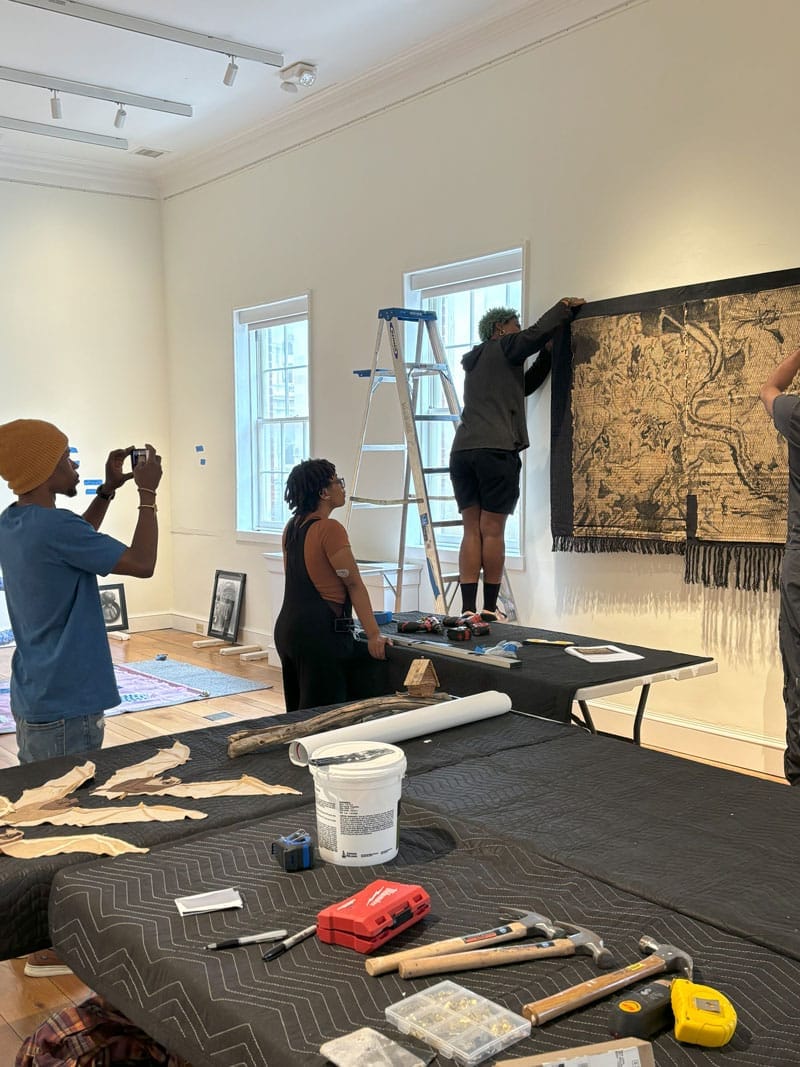
The restorative gallery is, in many ways, a rebellion against the tyranny of productivity. It’s a place where you’re not expected to “get” the art, but to *feel* it. Where the goal isn’t to leave with more knowledge, but with a lighter heart. Where the act of looking becomes an act of healing. In a world that’s increasingly fragmented, these spaces offer a radical promise: that beauty can be a balm, that stillness can be a revolution, and that the gallery, of all places, might just be the most restorative space of all.
The rise of the restorative gallery isn’t just a trend—it’s a quiet manifesto. A declaration that art doesn’t have to be loud to be powerful. That healing doesn’t require grand gestures, only the right environment. That in a world that’s always pushing us forward, sometimes the most revolutionary act is to pause, to breathe, and to let the art do its work. The gallery, once a place of reverence, is now becoming a place of restoration. And perhaps, in that shift, we’ll find not just a new way to experience art, but a new way to experience ourselves.


Leave a Comment