

In the labyrinthine corridors of modern literature, a new sentinel has emerged—not to guard the gates of prose, but to scrutinize its every shadow. The sensitivity reader, a once-obscure role, now stands at the nexus of creativity and conscience, sparking a debate that echoes through publishing houses, book clubs, and academic symposia alike. Is this figure a benevolent guardian of authenticity, a gatekeeper of inclusivity, or an insidious censor cloaked in the guise of progress? The answer, as with most polarizing questions, is not black and white but a kaleidoscope of nuance, where art, ethics, and commerce collide in a symphony of discordant opinions.
The very notion of a sensitivity reader—a professional tasked with evaluating a manuscript for cultural, racial, or identity-based inaccuracies—challenges the sacrosanct principle of artistic freedom. Traditionally, authors have been the sole arbiters of their narratives, their words untethered by external moral scrutiny. Yet, as society’s collective consciousness evolves, so too does the demand for representation that resonates with lived experience. The sensitivity reader, in this context, is not merely a critic but a bridge—a translator between the author’s intent and the reader’s expectations. But when does collaboration become coercion? And where does the line between constructive feedback and creative suppression blur?
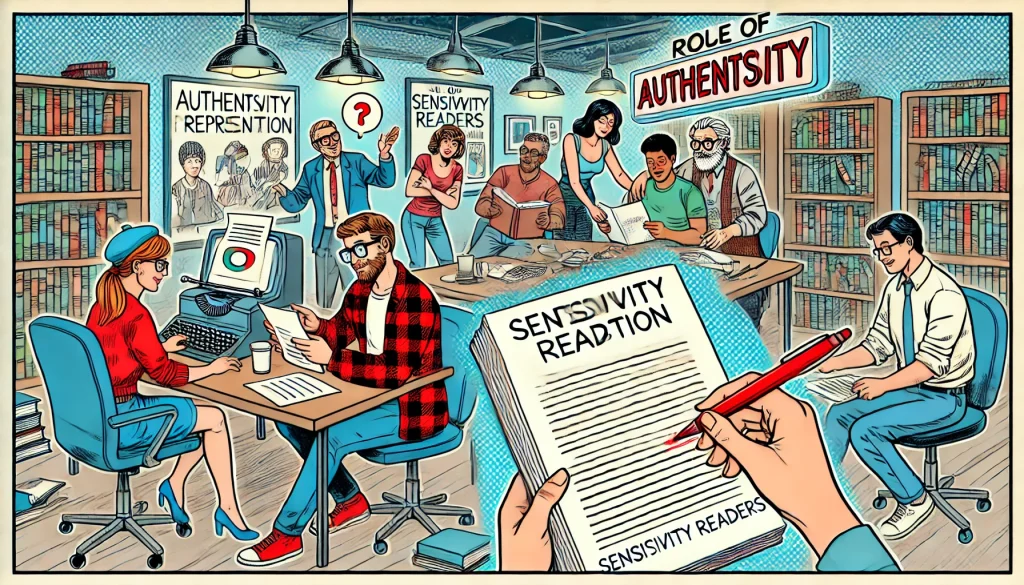
The Evolution of the Sensitivity Reader: From Obscurity to Ubiquity
Once relegated to the periphery of the publishing world, sensitivity readers have ascended to prominence in the last decade, catalyzed by social movements that demanded greater accountability in storytelling. Their rise coincides with the growing awareness that literature is not an insular art form but a mirror reflecting the complexities of human experience. Authors writing outside their own cultural or identity spheres now face an unprecedented expectation: to get it right, or risk the wrath of readers who demand authenticity.
This shift is not without precedent. Historical examples abound where authors have been called to task for misrepresentations—think of the backlash against Huckleberry Finn for its racial stereotypes or the critiques of Margaret Mitchell’s Gone with the Wind for its romanticized portrayal of slavery. What has changed, however, is the proactive role of sensitivity readers, who are often hired before a manuscript even reaches an editor. Their involvement is not merely reactive but preventive, a preemptive strike against potential missteps that could tarnish an author’s reputation or, worse, perpetuate harm.
Yet, this evolution has not been seamless. Critics argue that the proliferation of sensitivity readers has given rise to a culture of fear among authors, particularly those writing about marginalized communities. The fear is not unfounded: in 2020, a publisher withdrew a young adult novel after sensitivity readers flagged concerns about its portrayal of a disabled character. The incident ignited a firestorm, with some decrying it as an overreach and others celebrating it as a necessary corrective. The debate, it seems, is as much about power as it is about principle.
The Case for Sensitivity Readers: Guardians of Authenticity or Agents of Censorship?
Proponents of sensitivity readers paint them as indispensable allies in the quest for authentic storytelling. In a world where representation matters more than ever, their role is to ensure that narratives do not perpetuate harmful stereotypes or erase the lived realities of underrepresented groups. Consider the case of a white author writing a novel set in a predominantly Black community. Without a sensitivity reader, the manuscript might inadvertently reinforce tropes or misunderstandings that could alienate readers of color. A sensitivity reader, in this scenario, acts as a cultural compass, guiding the author toward a more nuanced and respectful portrayal.
Moreover, sensitivity readers bring a level of expertise that traditional editors may lack. They are often individuals from the communities being depicted, offering insights that are both intimate and informed. Their feedback can elevate a manuscript from good to great, transforming it into a work that resonates deeply with its intended audience. In this light, sensitivity readers are not censors but collaborators, their role akin to that of a translator who ensures that the author’s message is not lost in translation.
There is also a pragmatic argument to be made: sensitivity readers can save authors from costly mistakes. In an era where a single viral tweet can tank a book’s reputation, hiring a sensitivity reader is a form of risk management. Publishers, too, have taken notice, increasingly incorporating sensitivity readers into their editorial processes. This shift reflects a broader industry trend toward accountability, where the bottom line is no longer just sales but social responsibility.
The Counterargument: When Collaboration Becomes Coercion
Yet, for every argument in favor of sensitivity readers, there is a counterargument that paints them as modern-day censors. The primary concern is that their involvement stifles creativity, turning the act of writing into a bureaucratic exercise where every word is scrutinized for potential offense. Authors, particularly those from marginalized backgrounds themselves, may feel constrained by the need to conform to external expectations, fearing that their unique voices will be diluted in the pursuit of palatability.
There is also the question of who gets to decide what is sensitive. Sensitivity readers, like all humans, are not infallible. Their feedback is subjective, influenced by their own experiences and biases. What one reader deems offensive, another might find perfectly acceptable. This subjectivity creates a slippery slope, where authors may find themselves caught in a game of editorial whack-a-mole, constantly revising their work to appease a rotating cast of sensitivity readers with differing opinions.
Critics also point to the commercialization of sensitivity reading, where the service is often marketed as a way to “avoid backlash” rather than a tool for authentic storytelling. This commodification risks reducing the role of sensitivity readers to mere gatekeepers, whose primary function is to protect authors and publishers from reputational harm rather than to enrich the narrative. In this context, sensitivity readers become a form of insurance, a way to mitigate risk rather than foster genuine understanding.
The Middle Ground: Finding Balance in the Sensitivity Reader Debate
The tension between artistic freedom and cultural responsibility is not new, nor is it likely to be resolved anytime soon. However, the most productive conversations about sensitivity readers often center on finding a middle ground—a way to honor both the integrity of the author’s vision and the need for authentic representation. One approach is to view sensitivity readers not as censors but as consultants, whose role is to provide feedback rather than dictate changes. This collaborative model allows authors to make informed decisions about their work, balancing their creative instincts with the insights of those who offer a different perspective.
Another key consideration is the context in which sensitivity readers are used. For example, a historical novel set in a specific cultural context might benefit greatly from sensitivity readers, whereas a work of pure fantasy, where world-building is entirely the author’s domain, might not require the same level of scrutiny. The genre, the author’s background, and the intended audience all play a role in determining how much weight to give sensitivity reader feedback. This nuanced approach acknowledges that not all stories require the same level of external validation, and that the role of sensitivity readers should be tailored to the specific needs of each project.
There is also a growing movement toward transparency in the use of sensitivity readers. Some authors openly credit their sensitivity readers in their acknowledgments, framing their involvement as a collaborative effort rather than a top-down imposition. This transparency not only demystifies the process but also fosters a sense of shared ownership over the final product. It sends a message that sensitivity readers are not adversaries but allies in the pursuit of excellence.
The Future of Sensitivity Readers: A Paradigm Shift in Storytelling
As the debate rages on, one thing is clear: the role of sensitivity readers is not going away. If anything, their influence is likely to grow as society continues to grapple with issues of representation and identity. The question is not whether sensitivity readers have a place in the literary world, but how their role will evolve to meet the changing needs of authors and readers alike.
One potential future is a more inclusive approach to sensitivity reading, where authors from marginalized backgrounds are given the space to tell their own stories without external interference. This shift would not only empower diverse voices but also reduce the need for sensitivity readers in contexts where their feedback might be less relevant. Another possibility is the development of standardized guidelines for sensitivity reading, which could provide authors and publishers with a clearer framework for navigating the complexities of representation.
Ultimately, the sensitivity reader debate is less about censorship and more about the evolving nature of storytelling in a diverse and interconnected world. It is a conversation that challenges us to reconsider what it means to write authentically, to represent fairly, and to collaborate meaningfully. Whether you view sensitivity readers as necessary collaborators or overzealous censors, their presence forces us to confront uncomfortable questions about power, privilege, and the responsibility of the written word.
In the end, the most compelling narratives are those that invite us to see the world through fresh eyes. Sensitivity readers, for better or worse, are a part of that invitation. They remind us that storytelling is not a solitary act but a communal one, where every voice—whether that of the author, the reader, or the sensitivity reader—has the power to shape the story in ways both profound and unexpected.


Leave a Comment