

The human body is a labyrinth of contradictions—both a temple and a battleground, a canvas of exquisite precision and chaotic imperfection. To the surrealist, it is not merely flesh and bone but a surrealist manifesto, a living dream where veins pulse like rivers of liquid starlight and organs hum with the rhythm of forgotten symphonies. This guide is not a clinical dissection but an invitation to wander through the body’s uncanny landscapes, where every crease, cavity, and capillary tells a story of wonder, dread, and boundless creativity.
Here, we will traverse the body’s many dimensions—its visible and invisible realms, its biological and metaphysical layers. Expect a journey that oscillates between the grotesque and the sublime, where the mundane becomes mythic and the ordinary transforms into the extraordinary. Whether you are an artist seeking inspiration, a philosopher probing the edges of consciousness, or simply a curious soul eager to peer beneath the skin, this guide will illuminate the body’s hidden surrealist dimensions.
The Body as a Surrealist Canvas: Artistic Interpretations of Flesh
Surrealism has long been obsessed with the human form, not as a subject to be rendered realistically, but as a playground for distortion, fragmentation, and dream logic. Artists like Hans Bellmer and Frida Kahlo twisted the body into unsettling, erotic, and deeply personal shapes, while Salvador Dalí’s paranoiac-critical method dissected flesh into melting clocks and crawling limbs. The body, in surrealist art, is never static—it writhes, splits, and reconfigures itself into new, often unsettling, identities.
Consider the anatomical dolls of Bellmer, whose dismembered limbs and interchangeable parts evoke both childhood play and psychological horror. Or the x-ray vision of Dalí’s Metamorphosis of Narcissus, where bones and veins become celestial constellations. These works remind us that the body is not a fixed entity but a malleable, ever-shifting entity—a living collage of flesh, memory, and myth.

For the aspiring surrealist artist, the body offers endless possibilities. Try merging unrelated body parts—imagine a hand sprouting from a ribcage, or a face blooming from the soles of the feet. Experiment with automatic drawing, letting your pen trace the contours of your own body without conscious control, revealing the subconscious shapes lurking beneath the skin. The body is not just a subject to be depicted; it is a palette of textures, a symphony of lines, and a puzzle of hidden meanings.
The Body as a Mythological Tapestry: Archetypes and Symbolism
Long before surrealism, the body was a battleground of myth and symbolism. From the chakras of Hindu tradition to the meridians of Traditional Chinese Medicine, every culture has mapped the body with invisible pathways of meaning. The surrealist, however, does not merely borrow these systems—they dismantle and reimagine them, weaving new myths from the threads of the old.
Take the third eye, a concept found in both yogic and esoteric traditions, often depicted as a mystical portal between the physical and spiritual worlds. In surrealist hands, this eye might not be a single point but a constellation of eyes, each blinking in a different dimension. Or consider the heart, not as a mere organ but as a cosmic furnace where emotions are forged into stardust. The surrealist body is a living grimoire, where every organ, gland, and nerve ending is a rune waiting to be decoded.
One need not look further than the works of Leonora Carrington or Remedios Varo to see how the body becomes a vessel for alchemy and transformation. In Carrington’s The Pomps of the Subsoil, figures merge with animals, plants, and mechanical contraptions, their bodies dissolving into the landscape. Varo’s Papilla Estelar depicts a woman’s spine as a ladder to the heavens, her vertebrae transforming into celestial bodies. These artists did not just paint bodies—they painted cosmologies.
For the reader seeking to explore the body’s mythological dimensions, consider creating a personal bestiary—a collection of hybrid creatures born from your own anatomy. What if your liver were a sentient moon? What if your spine were a river of liquid mercury? The surrealist body is not bound by biology; it is a living myth, and you are its author.
The Body as a Psychological Landscape: Dreams, Trauma, and the Unconscious
The surrealist’s greatest muse is the unconscious mind, and the body is its most intimate territory. Freud’s theories on repression and the uncanny found a natural home in surrealism, where dreams were not just fleeting visions but geographies to be explored. The body, in this context, is a psychic terrain—a place where repressed desires fester, where memories congeal into grotesque sculptures, and where the self is constantly being rewritten.
Consider the oneiric body—the body as it appears in dreams, where limbs stretch into impossible lengths, where faces melt and reform, where organs detach and wander like lost travelers. In a dream, the body is not a fixed entity but a fluid architecture, shifting with the tides of the subconscious. Surrealists like André Breton and Max Ernst mined these dreamscapes, translating their illogical logic into art that feels both alien and intimately familiar.
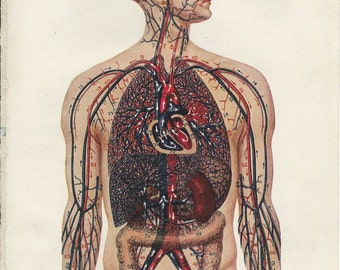
Trauma, too, leaves its mark on the body in surreal ways. The phantom limb phenomenon—where amputees still feel the presence of a missing body part—is a haunting metaphor for how the mind clings to what is no longer there. In surrealist art, this idea is often literalized: a severed arm might still grasp at the air, or a ghostly torso might float above its own skeleton. The body becomes a palimpsest, where old wounds and forgotten selves are etched into the flesh, visible only to those who know how to look.
To engage with the body’s psychological dimensions, try keeping a dream journal focused solely on your physical experiences in sleep. Note how your body feels—does it shrink, expand, dissolve? Do you grow extra limbs, or lose the ability to speak? These fragments are not random; they are clues to the workings of your subconscious. Alternatively, experiment with automatic writing, letting your hand move across the page without direction, describing the body as if it were a foreign land. What strange rituals does it perform in the dead of night?
The Body as a Scientific Aberration: When Biology Becomes Bizarre
Surrealism thrives at the intersection of science and absurdity, where the body’s biological realities collide with the impossible. Medical textbooks, with their stark diagrams and clinical language, are ripe for surrealist reinterpretation. What if the circulatory system were not a network of veins but a highway of glowing highways, where blood cells are tiny, sentient vehicles? What if the brain were not a wrinkled mass of gray matter but a labyrinthine cathedral, its folds housing entire ecosystems?
Consider the homunculus, that distorted map of the body found in the brain’s sensory cortex, where certain body parts (like the hands and lips) are exaggerated out of proportion. In surrealist hands, this homunculus might detach from the brain and take on a life of its own—a tiny, screaming figure crawling out of a cranial fissure. Or consider the ectopic pregnancy, where a fetus implants in the wrong place—what if this were not a medical tragedy but a cosmic joke, a body growing a second, rebellious heart?
The body’s anomalies—polydactyly (extra fingers), situs inversus (reversed organs), hypertrichosis (excessive hair)—are not flaws but evolutionary poetry. Surrealists see these conditions not as aberrations but as mutations of meaning, where the body writes its own surrealist manifesto. For the curious reader, a deep dive into teratology (the study of birth defects) reveals a menagerie of bodies that defy logic, each one a masterpiece of the bizarre.
To explore the body’s scientific surrealism, try creating a specimen jar of impossible organs. What would a lung made of glass look like? How would a stomach lined with mirrors digest reality? The body is not just a biological machine; it is a laboratory of the strange, and you are its mad scientist.
The Body as a Political Battleground: Power, Control, and Rebellion
The surrealist body is never neutral—it is a site of power, resistance, and transgression. From the corsets of the Victorian era to the cybernetic augmentations of modern transhumanism, the body has always been a battleground for control. Surrealists, with their penchant for subversion, have long used the body as a canvas for political commentary, twisting it into a symbol of both oppression and liberation.
Consider the body as a prison—the way society dictates its shape, its movements, its desires. The corset, the high heel, the chastity belt—these are not just fashion statements but tools of confinement. Surrealists like Meret Oppenheim and Dorothea Tanning exposed these constraints, transforming the body into something monstrous, something that refuses to be tamed. Oppenheim’s Fur Gloves with Wooden Buttons turns the hand into a creature of fur and wood, while Tanning’s Maternité depicts a woman’s body sprouting doorways and keys, as if trying to escape its own flesh.
But the body is also a weapon of rebellion
The surrealist body is never neutral—it is a site of power, resistance, and transgression. From the corsets of the Victorian era to the cybernetic augmentations of modern transhumanism, the body has always been a battleground for control. Surrealists, with their penchant for subversion, have long used the body as a canvas for political commentary, twisting it into a symbol of both oppression and liberation.
Consider the body as a prison—the way society dictates its shape, its movements, its desires. The corset, the high heel, the chastity belt—these are not just fashion statements but tools of confinement. Surrealists like Meret Oppenheim and Dorothea Tanning exposed these constraints, transforming the body into something monstrous, something that refuses to be tamed. Oppenheim’s Fur Gloves with Wooden Buttons turns the hand into a creature of fur and wood, while Tanning’s Maternité depicts a woman’s body sprouting doorways and keys, as if trying to escape its own flesh.
But the body is also a weapon of rebellion. The surrealist body does not merely resist—it reconfigures. Consider the cyberfeminist body, where technology merges with flesh to create something new, something that defies gender, race, and species. Artists like Stelarc and Orlan have pushed the boundaries of bodily autonomy, using prosthetics, surgery, and performance to challenge what it means to be human. The surrealist body is not a fixed entity; it is a site of constant revolution.
To engage with the body’s political dimensions, consider creating a body manifesto—a list of demands your body would make if it could speak. What freedoms does it crave? What chains does it reject? Alternatively, experiment with body hacking in a metaphorical sense: alter your appearance, your movement, your voice, and observe how the world responds. The surrealist body is not just a vessel for art—it is a site of revolution.
The Body as a Portal: Transcendence and the Sublime
At its most transcendent, the surrealist body becomes a threshold—a gateway between the mundane and the divine, the physical and the metaphysical. The body is not just flesh; it is a temple, a spaceship, a living equation that can unlock the secrets of the universe. This is where surrealism meets mysticism, where the body is not a prison but a key.
Consider the kundalini serpent, a concept from yogic tradition where dormant energy lies coiled at the base of the spine, ready to rise and illuminate the body’s hidden dimensions. In surrealist terms, this serpent might not be a snake but a spiral galaxy, its coils unfurling into constellations. Or consider the out-of-body experience, where consciousness detaches from the body—what if this were not a fleeting phenomenon but a permanent state, where the body becomes a hollow vessel for something greater?
The surrealist body is a living mandala, a fractal of meaning that expands infinitely. It is the third eye that sees beyond the veil, the heart chakra that beats in time with the cosmos, the skin that is not a barrier but a membrane through which the universe whispers. Artists like Yves Tanguy and Roberto Matta painted bodies that were not quite human, their forms dissolving into nebulae and cosmic dust. These works are not just paintings—they are portals, inviting the viewer to step inside and explore the body’s infinite possibilities.
To explore the body’s transcendent dimensions, try a meditative body scan, but with a twist: imagine each part of your body transforming into something else—a lung becoming a black hole, a hand becoming a galaxy. Alternatively, create a ritual around your body, something that elevates it from the mundane to the sacred. Light candles around your silhouette, anoint your skin with oils, or dance until your body feels like it is no longer yours but a conduit for something greater.
The surrealist body is not just a thing to be observed—it is an adventure, a mystery, a cosmic joke. It is a landscape of contradictions, a labyrinth of meaning, a temple of the strange. Whether you approach it as an artist, a philosopher, a scientist, or a dreamer, the body will always reveal new layers of wonder. So go ahead—step inside. The surrealist body is waiting.


Leave a Comment