

The Surrealist’s Guide to the Subconscious Mind
Beneath the veneer of waking consciousness lies a labyrinth of flickering images, half-formed whispers, and the silent hum of forgotten dreams. The subconscious mind is not merely a repository of memories or a vault of repressed desires—it is a vast, untamed wilderness where logic dissolves into poetry and reality bends like wet paper. Artists, poets, and dreamers have long been drawn to its enigmatic depths, not just as a source of inspiration, but as a realm where the ordinary transforms into the extraordinary. What is it about this hidden dimension that captivates us so fiercely? Why does it feel both intimately familiar and profoundly alien, like a place we’ve visited in dreams but can never quite name?
For the surrealist, the subconscious is not just a tool—it is a collaborator, a mischievous muse that drips surrealism into the mundane like honey into tea. It is the reason a teacup might suddenly sprout wings, or a streetlamp could begin to weep. This guide is an invitation to wander through the subconscious not as a passive observer, but as an active participant in its alchemy. We will explore its mechanics, its myths, and its modern manifestations, all while keeping one foot planted in the surreal and the other in the tangible world.

The Subconscious as a Dreamweaver: Where Logic Takes a Vacation
The subconscious mind operates on a frequency that is as alien to our waking selves as a radio tuned to static. It does not speak in sentences; it speaks in symbols. A locked door might represent an unspoken fear. A falling sensation could mirror the anxiety of losing control. This is the language of the subconscious—a dialect of imagery, emotion, and paradox. Unlike the conscious mind, which clings to linearity and causality, the subconscious thrives in the illogical, the contradictory, and the absurd.
Consider the phenomenon of hypnagogic hallucinations—the fleeting, dreamlike images that drift across the mind’s eye as we drift into sleep. These are not mere flickers of imagination; they are the subconscious’s way of testing reality, of weaving narratives from the threads of memory and desire. A study by the University of Wisconsin found that these hallucinations often involve distorted faces or impossible landscapes, suggesting that the subconscious is not just a passive recorder but an active storyteller, shaping fragments into something cohesive—or at least, something that feels cohesive in the moment.
This is why surrealists like Salvador Dalí and René Magritte turned to the subconscious not as a curiosity, but as a wellspring of artistic revolution. Dalí’s melting clocks in The Persistence of Memory are not just whimsical distortions; they are a direct translation of the subconscious’s refusal to be bound by time. Magritte’s The Treachery of Images, with its pipe that is not a pipe, forces us to confront the gap between perception and reality—a gap the subconscious exploits with gleeful abandon.
The Subconscious as a Time Capsule: Memories That Rewrite Themselves
Memories are not fixed snapshots; they are living, breathing entities that evolve with the passage of time. The subconscious does not merely store experiences—it curates them, rearranging them into new configurations like a DJ sampling old records. This is why childhood memories, when revisited, often feel more vivid and emotionally charged than they did in the moment. The subconscious has polished them, smoothed their edges, and imbued them with a significance they may not have held originally.
Neuroscientists refer to this phenomenon as “memory reconsolidation,” a process where the brain reactivates a memory and then rewrites it based on current emotions and beliefs. The subconscious is the editor-in-chief of this operation, ensuring that the past is not just remembered but reinterpreted. This is why trauma survivors often describe their memories as fragmented or surreal—the subconscious, in its attempt to protect the psyche, distorts reality to make it more bearable.
But the subconscious’s editing skills are not limited to pain. It also amplifies joy. Think of the way a single scent can transport you back to a summer afternoon decades ago, or how a song from your youth can make you feel like that teenager again, if only for a moment. These are not mere associations; they are the subconscious’s way of keeping the past alive, of ensuring that the echoes of our experiences continue to shape who we are.
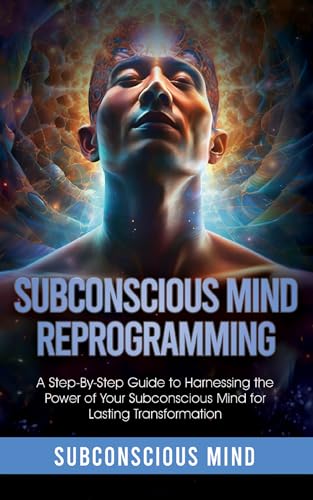
The Subconscious as a Shadow Play: The Dark and the Light
Freud may have popularized the idea of the subconscious as a cauldron of repressed desires, but the surrealists saw it as something far more nuanced—a realm where light and shadow dance in an eternal waltz. The subconscious is not just a dumping ground for taboos; it is a mirror that reflects both our deepest fears and our most radiant aspirations. It is the place where the id and the superego engage in a silent, ceaseless dialogue, and where the ego, that fragile mediator, often gets lost in the shuffle.
This duality is perhaps most evident in the phenomenon of lucid dreaming, where the dreamer becomes aware that they are dreaming and can, to some extent, steer the dream’s narrative. In these moments, the subconscious is no longer a passive participant but an active co-creator. Lucid dreamers report experiences that range from exhilarating to terrifying—flying over cities, conversing with dream characters, or confronting inner demons. These are not just flights of fancy; they are explorations of the subconscious’s vast, uncharted territories.
The surrealists understood this duality intimately. In André Breton’s Surrealist Manifesto, he writes of the subconscious as a “black sun” that illuminates the hidden corners of the mind. It is a source of both revelation and chaos, a place where the mundane and the magical coexist. This is why surrealist art often feels unsettling yet irresistible—it holds up a mirror to the subconscious, forcing us to confront the parts of ourselves we’d rather ignore.
The Subconscious in the Digital Age: A New Frontier of the Mind
In an era dominated by algorithms and artificial intelligence, the subconscious has found a new playground. Social media feeds, personalized recommendations, and even deepfake technology are all tapping into the subconscious’s love of pattern recognition and emotional resonance. When an app curates your feed based on your past behavior, it is essentially performing a crude form of subconscious mining—predicting what will captivate you before you even realize it.
But the digital subconscious is not just a tool for corporations; it is also a space for self-exploration. Apps like dream journaling platforms or AI-generated art tools allow users to externalize and interact with their subconscious in ways that were previously impossible. These tools are not just novelties; they are gateways to a deeper understanding of the self. By engaging with the subconscious in a digital format, we are not just passively observing—we are actively participating in its evolution.
This raises a fascinating question: as our lives become increasingly intertwined with technology, will the subconscious adapt? Will it develop new languages, new symbols, new ways of communicating? Already, we see evidence of this in the rise of “digital dreams”—vivid, technologically infused dreams that reflect our hyper-connected lives. These dreams might feature glitching avatars, infinite scrolls, or conversations with AI entities, all of which are manifestations of the subconscious’s attempt to make sense of the digital world.

Harnessing the Subconscious: A Surrealist’s Toolkit
So how does one engage with the subconscious in a way that feels intentional rather than passive? The surrealists had their methods—automatic writing, dream incubation, and the use of hallucinogens—but these are not the only paths. The key is to create conditions that allow the subconscious to speak without the interference of the conscious mind’s critical voice.
One effective technique is to keep a dream journal by your bedside. Upon waking, before the day’s distractions take hold, jot down whatever fragments you can recall. Even if the memories seem nonsensical, write them down anyway. Over time, patterns will emerge, and you may begin to decipher the subconscious’s unique language. Another method is to engage in activities that bypass the logical mind, such as doodling, free-writing, or even taking a long, aimless walk. These activities create a space where the subconscious can express itself without inhibition.
For those willing to delve deeper, practices like meditation, hypnosis, or even sensory deprivation can open doors to the subconscious that might otherwise remain closed. The goal is not to control the subconscious but to listen—to let it guide you, even if its directions seem absurd. After all, the surrealists knew that the most profound insights often come not from logic, but from the uncharted territories of the mind.
The subconscious is not a mystery to be solved; it is a landscape to be explored. It is the place where dreams are born, where memories are rewritten, and where the boundaries between reality and fantasy blur into something entirely new. To engage with it is to embrace the surreal—not as a fleeting escape, but as a fundamental aspect of what it means to be human. So the next time you find yourself captivated by a dream, or struck by an inexplicable emotion, remember: you are not just experiencing a moment. You are stepping into a world where the rules of the waking world do not apply—and that is where the real magic begins.


Leave a Comment