

Imagine kneading the buttery viscosity of oil paint between your fingers, the scent of linseed oil mingling with the faint tang of citrus solvent—right in the heart of your kitchen. No longer confined to drafty attics or sunlit studios, your culinary workspace can transform into a sanctuary of creativity. This isn’t about compromise; it’s about reimagining where art begins. A non-toxic oil painting setup in your kitchen isn’t just feasible—it’s revolutionary. It invites spontaneity, eliminates barriers, and redefines the boundaries of where inspiration strikes. Let’s embark on this journey together, turning the familiar into the extraordinary.
The Alchemy of Space: Reclaiming Your Kitchen as Canvas
Kitchens are inherently dynamic spaces—places of transformation where raw ingredients morph into nourishment. Why shouldn’t they also birth visual masterpieces? The key lies in reconfiguring your perspective. A foldable table draped in a silicone baking mat becomes your palette station. A repurposed baking sheet, lined with parchment, serves as a portable palette. The overhead light, often harsh and unflattering, can be softened with a sheer curtain or a strategically placed lampshade. Even the scent of garlic sautéing can be harmonized with the aroma of your paints—citrus-based solvents and walnut oil blends carry notes that dance with culinary spices. This isn’t just about making do; it’s about discovering the latent potential in the mundane.
Consider the ergonomics. A kitchen stool, typically reserved for hurried breakfasts, becomes your throne of creation. Your knees tuck beneath the table, your brushes hover over the canvas like a conductor’s baton. The proximity to your sink is a boon—water for rinsing brushes, a towel for quick cleanups, and the reassurance that any accidental splatters can be swiftly addressed. The kitchen’s built-in storage? A treasure trove for art supplies. Mason jars hold brushes upright, spice racks organize tubes of paint by hue, and a pegboard above the stove becomes a gallery for drying sketches. The space isn’t just repurposed; it’s reimagined.
Non-Toxic Palette: Paints That Nourish, Not Noxify
The myth that oil painting demands toxic solvents and lead-based pigments is as outdated as the notion that creativity thrives only in pristine studios. Modern non-toxic alternatives are not just safe—they’re superior in vibrancy and longevity. Look for oil paints labeled “AP Certified Non-Toxic,” a designation from the Art & Creative Materials Institute (ACMI) that guarantees freedom from hazardous ingredients like cadmium, cobalt, and lead. Brands now offer buttery, pigment-rich formulations where titanium white is replaced by zinc, and cobalt blue is derived from non-toxic organic compounds. The result? Colors that sing without the silent threat of long-term exposure.
Solvents, too, have undergone a renaissance. Traditional turpentine, with its pungent fumes and neurotoxic risks, has been eclipsed by citrus-based and odorless mineral spirits. These alternatives strip away the harshness while preserving the paint’s malleability. For those seeking the ultimate in eco-friendliness, walnut oil or safflower oil can replace solvents entirely, allowing you to paint “fat over lean” with nothing but pure, plant-derived ingredients. The palette knife glides effortlessly, the brushstrokes retain their integrity, and your lungs—along with your loved ones—breathe easy. This is painting without penance, creativity without compromise.
Don’t overlook the mediums. Linseed oil, once a staple, now has counterparts like poppyseed and safflower oil, each offering unique drying times and finishes. Stand oil, a polymerized version of linseed oil, imparts a glossy sheen to your work while reducing brushstrokes. These mediums aren’t just additives; they’re collaborators in your artistic process, enhancing texture and depth without the chemical baggage of traditional options.
Ventilation Virtuosity: Mastering Airflow in a Compact Space
A kitchen’s compact nature demands ingenuity when it comes to ventilation. Stagnant air is the enemy of both health and art—it traps fumes, dulls colors, and stifles inspiration. The solution? A symphony of airflow strategies tailored to your space. Begin with a simple box fan placed in a window, angled outward to expel fumes while drawing in fresh air. For a more refined approach, a portable air purifier with a HEPA filter and activated carbon can be tucked into a corner, silently scrubbing the air of volatile organic compounds (VOCs).
Consider the placement of your easel. Position it near an extractor fan or range hood, even if you’re not cooking. The suction power of these appliances can be harnessed to whisk away solvent vapors before they settle. If your kitchen lacks built-in ventilation, a DIY solution awaits: a length of flexible ducting attached to a small, quiet fan can channel fumes directly outside. The goal isn’t just to ventilate—it’s to orchestrate an environment where every breath feels as pure as the moment you dip your brush into paint.
Humidity, too, plays a role. A dehumidifier set to a moderate level prevents the air from becoming too damp, which can slow drying times and encourage mold growth. Conversely, a small humidifier can counteract the drying effects of heating systems in winter, preserving the workability of your paints. The kitchen’s microclimate becomes a controlled ecosystem, where every variable is calibrated for optimal creativity.
Brushwork & Beyond: Tools for the Modern Kitchen Artist
The tools of your trade deserve as much consideration as the space itself. Brushes, the extensions of your hand, should be versatile and easy to clean. Synthetic bristles—particularly those made from taklon or nylon—are ideal for oil painting. They retain their shape, resist solvents, and mimic the behavior of natural hairs without the ecological cost. A set of hog bristle brushes, reserved for impasto work, adds texture and dimension to your pieces. Store them upright in a jar of water or a brush holder filled with linseed oil to keep the bristles supple.
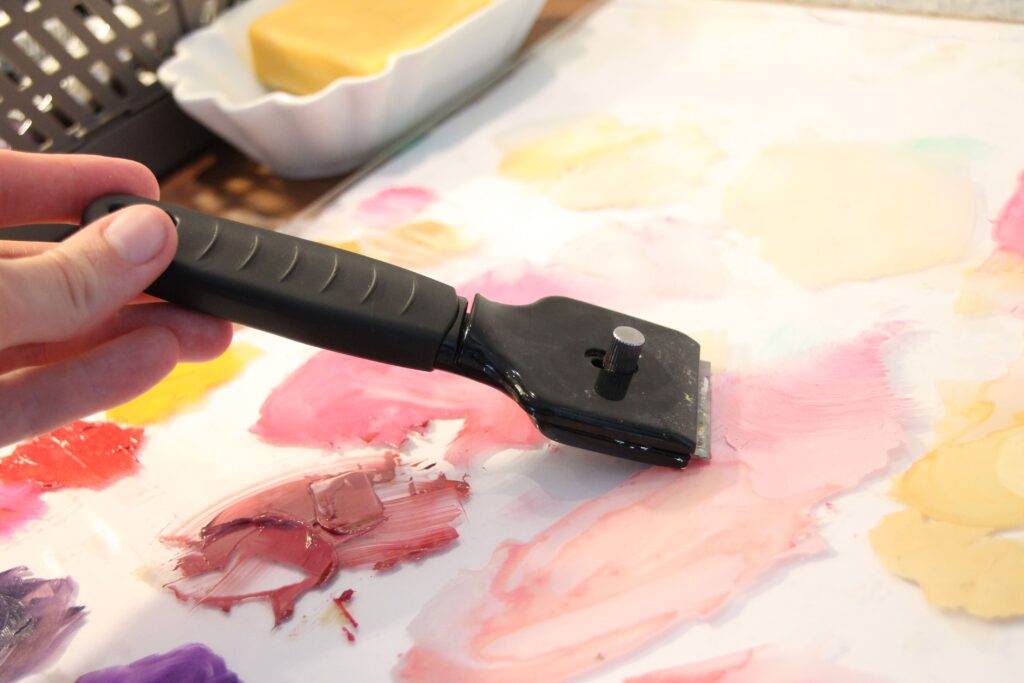
The palette, too, can be a kitchen staple. A glazed ceramic tile, the kind used for backsplashes, serves as an excellent disposable palette. Its smooth surface allows for easy mixing, and it can be cleaned with a ceramic scraper or wiped down with a damp cloth. For a reusable option, a sheet of glass—salvaged from an old picture frame—rests atop a layer of white paper, providing a neutral backdrop for color mixing. The act of scraping the glass with a razor blade becomes a meditative ritual, clearing away the old to make way for the new.
Don’t overlook the humble palette knife. Beyond its role in mixing paint, it’s a tool for sculpting texture, scraping away mistakes, and applying thick impasto strokes. A stainless steel knife with a comfortable handle becomes an extension of your wrist, allowing for bold, expressive marks. And for those inevitable spills? A roll of paper towels and a spray bottle of odorless mineral spirits are your first line of defense, ensuring that any accidents are swiftly contained.
Cleanup Rituals: The Unsung Hero of Creative Freedom
The end of a painting session should feel like the closing of a chapter—satisfying, not stressful. In a kitchen-turned-studio, cleanup is an art form in itself. Begin with the brushes. Rinse them under lukewarm water to remove excess paint, then massage them with a mild soap—castile or dish soap works wonders. For stubborn oil paint, a dab of walnut oil or citrus solvent loosens the pigment without damaging the bristles. Rinse again, reshape the brushes, and lay them flat to dry on a towel. Never store wet brushes upright; the water seeps into the ferrule, warping the bristles over time.
The sink becomes your ally. Line it with a mesh strainer to catch stray bristles and bits of dried paint, preventing clogs. A layer of baking soda sprinkled in the drain absorbs odors and keeps the pipes clear. For the palette, a quick scrape with a ceramic scraper removes dried paint, followed by a wipe-down with a cloth dampened with soap and water. The glass palette, if used, can be cleaned with a razor blade at a 45-degree angle, revealing a pristine surface for your next session.
Even the air benefits from a post-painting ritual. Light a beeswax candle or diffuse essential oils like lavender or eucalyptus to neutralize lingering solvent odors. The scent of cleanliness mingles with the faint aroma of your paints, creating an olfactory signature that’s uniquely yours. Cleanup isn’t just a chore—it’s a transition, a bridge between the creative frenzy of the session and the calm of the next.
The Creative Payoff: Why This Setup Changes Everything
There’s a magic in painting where you live, where the mundane and the magnificent collide. Your kitchen, once a place of routine, becomes a crucible of experimentation. The scent of your morning coffee blends with the earthy notes of your paints. The hum of the refrigerator underscores the rhythm of your brushstrokes. The very act of painting in this space infuses your work with a sense of intimacy and authenticity that a sterile studio can’t replicate.
This setup isn’t just practical—it’s transformative. It breaks down the barriers between art and life, proving that creativity isn’t confined to designated spaces. It invites spontaneity: a quick 20-minute session between meals, a bold experiment with a new color palette, the freedom to leave your work in progress on the table, safe in the knowledge that it’s part of your daily life. The kitchen becomes a living gallery, where every meal is a celebration of your artistic journey.
And perhaps most importantly, it democratizes art. You don’t need a sprawling loft or a hefty budget to paint like a master. All you need is a willingness to see the world differently—and the courage to turn your kitchen into a studio.
The canvas awaits. The paints are ready. The space is yours to claim. What will you create?


Leave a Comment