

The Venice Biennale 2026 beckons like no other, promising to be not merely an exhibition but a transformative sojourn into the heart of contemporary art’s most enigmatic expressions. As visitors prepare to traverse the labyrinthine corridors of this renowned cultural phenomenon, the Venice Biennale 2026 map emerges as an indispensable guide and a metaphorical compass, inviting an odyssey through spaces where melancholy entwines with beauty, provoking a profound shift in perspective. This map is not just a navigational tool; it is a portal into a realm where art’s most elusive narratives unfold, challenging audiences to rethink, feel, and dream.
Charting the Terrain: Giardini and Arsenale – The Twin Pulses of the Biennale
At the heart of Venice’s artistic festival lie the twin epicenters of the Biennale: Giardini and Arsenale. Each venue radiates its own distinct energy, creating a dynamic dialogue of contrasts and harmonies. The Giardini, with its verdant gardens interspersed by national pavilions, offers a measured serenity—a place where tradition meets innovation in carefully curated exhibitions. The Venice Biennale 2026 map meticulously details this area, allowing visitors to anticipate the spatial relationships and narrative arcs that connect these emblematic structures.
Conversely, the Arsenale, an industrial labyrinth of former shipyards and warehouses, throbs with raw intensity, showcasing vast installations that challenge perceptions of space and scale. Navigating this colossal complex can feel overwhelming. Yet, the 2026 map transforms this potential disorientation into an exhilarating exploration, revealing hidden alcoves and vantage points that amplify the gravity and melancholy infused within many of the installations. Together, Giardini and Arsenale form a rhizomatic network—a labyrinth that is as much psychological as it is physical.
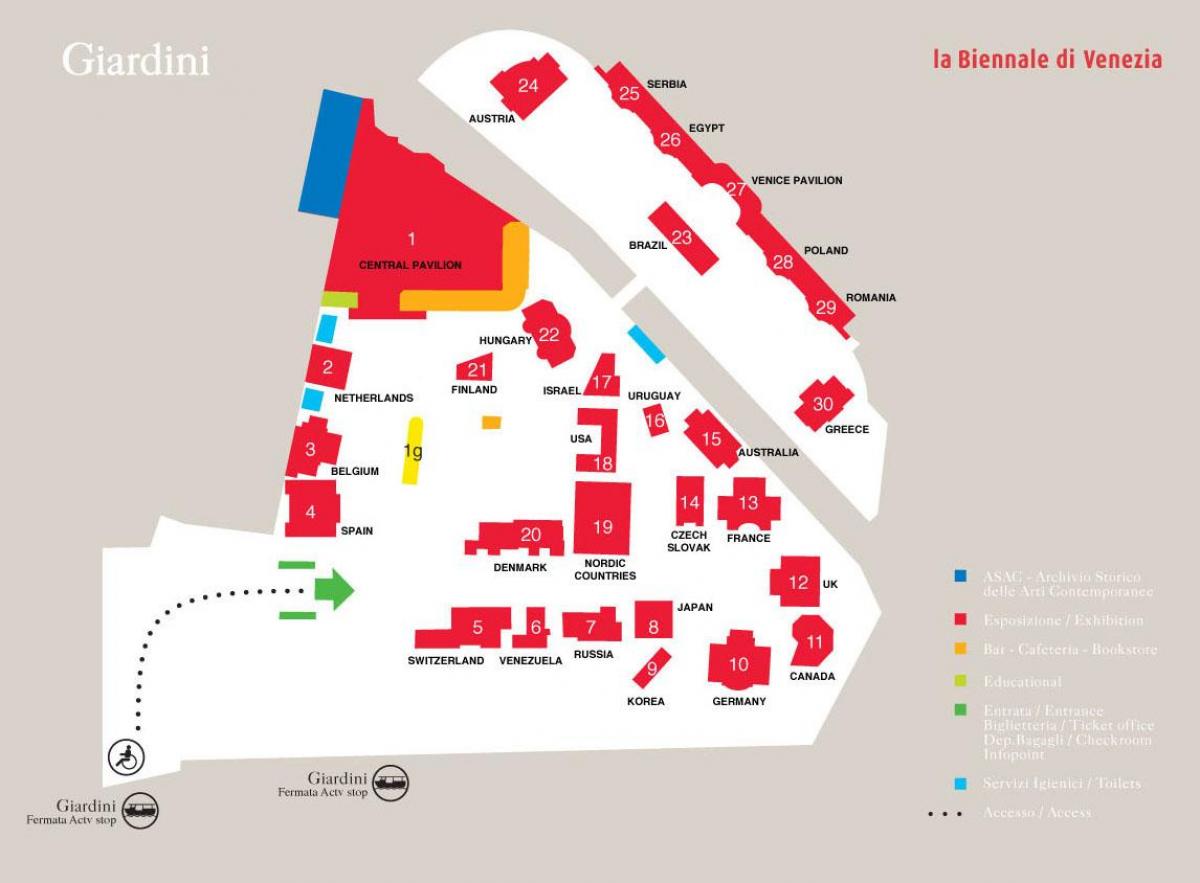
The Architecture of Melancholy: How the Map Frames a Shifting Perspective
The Venice Biennale 2026 map does more than locate pavilions and exhibitions; it orchestrates a sensorial choreography. The very design of the map conjures a melancholic undercurrent—the kind that dwells in the shadows of Venetian alleyways and the reflective waters beneath ancient bridges. This essence pervades the thematic texture of the Biennale, inviting visitors to confront themes of transience, memory, and loss through the visual lexicon of the art pieces themselves.
Exploring the map reveals a deliberate spatial ambiguity. Some pathways appear as direct routes, only to divert into winding detours that evoke a psychological state of introspection. This cartographic subtlety mirrors the curatorial strategy of the Biennale, which deliberately eschews linear narratives in favor of fragmented, kaleidoscopic experiences. Each turn in the map presents an opportunity for serendipitous discovery—an unexpected installation, a fleeting image, a whisper of melancholy captured in color and form.
Decoding the Visual Narratives: Highlights and Hidden Gems
The Venice Biennale is renowned for its ability to balance monumental displays with intimate, contemplative works. Utilizing the 2026 map, visitors can meticulously plan their journey to encompass both the headline exhibitions and the lesser-known pavilions where emerging artists grapple with themes of sorrow, resilience, and hope.
Some installations demand vast, cavernous spaces, engendering a profound physical and emotional experience. Others nestle within small rooms or even outdoor nooks, their subtle poignancy amplified by proximity. Understanding these nuances through the map’s legend offers a richer engagement with the Biennale’s melancholic spirit. It encourages one to linger, reflect, and absorb—a crucial step in the transformative encounter that the Biennale architects.

Beyond the Physical: The Map as a Metaphor for Psychological Exploration
The term ‘labyrinth’ carries connotations of complexity and enigma, but also of a journey towards revelation and self-discovery. The Venice Biennale 2026 map encapsulates this duality with remarkable poise. As visitors follow its pathways, they are not only charting a physical course but also engaging in an inward voyage through states of emotional melancholy and aesthetic wonder.
Each pavilion becomes a cell in a larger matrix of shared human experience—pain and joy, memory and forgetting, presence and absence—artfully mediated through contemporary artistic lenses. The map’s intricate layout encourages the erasure of boundaries between art and observer, fostering an empathic immersion as visitors navigate through interwoven exhibitions and unexpected convergences.
Practical Guidance: Maximizing the Biennale Experience with Your 2026 Map
To fully embrace the Venice Biennale 2026, the map serves as an essential ally. It facilitates not only logistical planning but also enriches the sojourn by highlighting synergies between exhibits scattered across Venice’s historic topography. Armed with the map, art enthusiasts can balance their itineraries, interspersing moments of intense engagement with reflective pauses amid Venice’s timeless canals and piazzas.
Moreover, the digital iterations of the map offer interactive features—real-time updates, navigational aids, and insights into the artistic themes—that heighten visitors’ awareness and curiosity. By wielding the map skillfully, one transforms from a passive observer into an active participant, forging personal narratives that interlace with the Biennale’s collective story.

Ultimately, the Venice Biennale 2026 map is far more than a functional document. It is a narrative scaffold, a psychological talisman, and a beacon leading into the depths of artistic melancholy. This meticulous cartography invites each visitor to shed preconceived notions, to embrace uncertainty, and to emerge transformed. To wander these mapped routes is to embark on a pilgrimage where art and emotion converge, promising a vista of perception hitherto unimagined.


Leave a Comment