

In the pantheon of modern art, few gestures are as audacious, as philosophically loaded, or as visually searing as Ai Weiwei’s Dropping a Han Dynasty Urn. Captured in a triptych of photographs in 1995, this seemingly simple act—three frames of a ceramic vessel plummeting to its destruction—unleashed a cascade of meaning that still resonates in contemporary discourse. It is not merely a performance of destruction; it is a deliberate shattering of cultural, historical, and artistic conventions. To understand why Ai Weiwei dropped a Han Dynasty urn—and why that act is undeniably art—we must traverse the terrain of cultural heritage, political dissent, artistic intention, and the very definition of art itself.
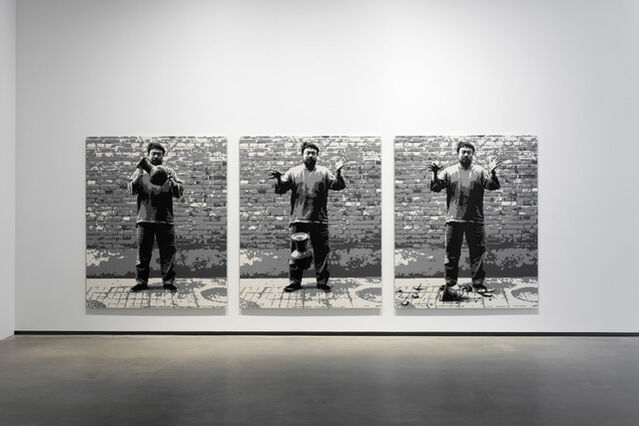
At first glance, the images are stark and unsettling. The first shows the urn intact, resting on a surface, its surface adorned with the characteristic earthen glaze and geometric patterns of the Han Dynasty. The second captures the moment of impact, the vessel suspended in mid-fall, its form blurred by motion. The third frame reveals the aftermath: shards scattered across a concrete floor, a silent testament to irreversible transformation. There is no blood, no violence beyond the ceramic, yet the emotional weight is palpable. This is not destruction for destruction’s sake. It is destruction as creation—a deliberate act of negation that births new meaning.

The Weight of History: Why a Han Dynasty Urn?
The choice of a Han Dynasty urn was not arbitrary. The Han period (206 BCE–220 CE) in China is celebrated for its technological sophistication, artistic elegance, and the consolidation of imperial power. Ceramic vessels from this era are not mere artifacts; they are vessels of memory, identity, and national pride. To destroy one is to challenge the sanctity of history itself. Ai Weiwei, however, was not attacking history. He was interrogating its preservation.
In Chinese culture, antiquity is often venerated as a source of moral and aesthetic authority. The urn, in this context, is more than pottery—it is a symbol of continuity, a physical link to an idealized past. By dropping it, Ai Weiwei exposed the fragility of that continuity. He asked: Can history be preserved without being ossified? Can tradition be honored without being idolized? The act forces us to confront the tension between reverence and revision, between preservation and progress.
Moreover, the Han urn represents a form of cultural capital—something that gains value through scarcity, age, and institutional endorsement. Ai Weiwei’s destruction of it is a critique of the commodification of heritage. In a world where ancient artifacts are auctioned for millions, where museums display them behind glass as trophies of civilization, the act of smashing one becomes a radical act of demystification. It strips the urn of its market value and returns it to the realm of the ephemeral, the transient, the human.
Art as Provocation: The Role of Intent and Audience
Art, at its most potent, is not a passive object to be admired but an active force to be reckoned with. Ai Weiwei’s Dropping a Han Dynasty Urn
is a masterclass in artistic provocation. It does not rely on beauty or technical skill alone; it thrives on the shock of recognition. The audience is confronted with a choice: recoil in horror at the destruction of a cultural treasure, or pause to consider what the act signifies. This duality is central to its power. Art, when it functions at its highest level, does not offer answers—it exposes questions.
The triptych format is crucial here. It mimics the structure of a religious icon, a historical narrative, or even a cinematic sequence. The first image establishes reverence; the second captures the moment of rupture; the third reveals the aftermath. Together, they form a visual argument: destruction is not the end, but a transition. The urn is not gone—it has been transformed into something else: a symbol of change, a catalyst for thought, a mirror held up to society.
This work also challenges the traditional boundaries between performance, photography, and conceptual art. It is not a painting that hangs quietly on a wall. It is not a sculpture meant to be admired from a distance. It is an event, frozen in time, that demands participation from the viewer. The audience must engage with the idea, not just the image. They must ask: What does it mean to destroy something beautiful? What does it mean to preserve it? And who gets to decide?
Political Undercurrents: Art as Resistance
Ai Weiwei is not merely an artist; he is a dissident. His work often intersects with activism, challenging authoritarianism, corruption, and the suppression of free expression. While Dropping a Han Dynasty Urn predates some of his more overtly political projects, it foreshadows his broader critique of power and control.
The act of destruction can be read as a metaphor for the dismantling of oppressive systems. The urn, like tradition or government, may appear unassailable—until it is shown to be fragile. Ai Weiwei’s gesture is a reminder that all structures, no matter how ancient or revered, are subject to reinterpretation. This is not nihilism. It is liberation.
In this light, the work becomes a call to action. It invites viewers to question not only the past but the present. If a Han Dynasty urn can be shattered and still carry meaning, then what else can be reimagined? What systems, what beliefs, what histories are we clinging to out of fear rather than conviction?
Reinterpretation and Legacy: From Ceramic to LEGO
Art is not static. It evolves. Ai Weiwei himself revisited the concept in 2015 with Dropping a Han Dynasty Urn (LEGO), a playful yet profound reinterpretation. Using thousands of interlocking plastic bricks, he reconstructed the urn, only to drop it again—this time in a digital simulation. The shift from ceramic to LEGO is telling. It transforms the act from one of violence to one of experimentation. The LEGO version is not precious. It is malleable, rebuildable, a toy for the mind.
This iteration underscores the fluidity of meaning. The original act was shocking because it was real. The LEGO version is shocking because it is surreal. It forces us to confront the absurdity of destruction as spectacle. If a LEGO urn can be dropped and rebuilt endlessly, what does that say about the original? Perhaps that meaning is not destroyed—only redistributed.
The legacy of Dropping a Han Dynasty Urn extends beyond the art world. It has been analyzed in academic journals, debated in classrooms, and reproduced in countless forms. It challenges curators, collectors, and critics to reconsider what constitutes value. Is an object’s worth tied to its physical integrity? Or is it tied to the ideas it inspires?
The Philosophy of Destruction: Can Ruin Be Creation?
At its core, Ai Weiwei’s act is a meditation on the philosophy of destruction. In Western thought, destruction is often associated with nihilism or chaos. But in Eastern philosophy, particularly in Taoism and Zen Buddhism, destruction is a form of creation. The falling of a leaf, the shattering of a cup—these are not endings but transitions. They are part of a larger cycle of renewal.
The urn, in its shattered state, becomes a metaphor for impermanence. It reminds us that all things—cultures, empires, even artworks—are temporary. The beauty lies not in preservation, but in the acceptance of change. Ai Weiwei’s gesture is not an act of vandalism. It is an act of liberation. It frees the urn from the constraints of its own history, allowing it to exist in new contexts, new interpretations, new lives.
This philosophy resonates deeply in an era of digital reproduction and virtual existence. In a world where images are endlessly duplicated and meanings are fluid, the act of destruction becomes a radical assertion of presence. It says: This happened. It mattered. And now, it is part of something else.
The Audience’s Role: Participation in Meaning-Making
Art does not exist in a vacuum. It requires an audience to complete its meaning. In the case of Dropping a Han Dynasty Urn, the viewer is not a passive observer but an active participant. The shock, the discomfort, the curiosity—these are not side effects of the artwork. They are its essence.
When we look at the triptych, we are forced to confront our own values. Do we mourn the loss of the urn? Do we celebrate its transformation? Or do we simply marvel at the audacity of the act? The answers are less important than the questions they provoke. Art, at its best, does not provide closure. It opens doors.
This participatory dimension is what elevates Ai Weiwei’s work from mere provocation to profound commentary. It is not enough to look at the images. We must engage with them. We must allow them to unsettle us. Only then do they fulfill their purpose.
In a time when art is often reduced to Instagram-friendly moments or marketable commodities, Dropping a Han Dynasty Urn stands as a defiant reminder of art’s power to challenge, to provoke, and to transform. It is not a work that can be neatly categorized or commodified. It is a work that demands to be felt.
Ai Weiwei did not drop a Han Dynasty urn to shock. He dropped it to awaken. To make us see. To make us question. And in that awakening, in that seeing, in that questioning, the urn lives on—not as a relic, but as a catalyst for thought, a spark for change, a testament to the enduring power of art to reshape the world.


Leave a Comment