

In the vast, pulsating landscape of modern music, few sounds are as instantly recognizable—or as hotly debated—as the drill beat. It’s the sonic backbone of a global movement, a rhythmic fingerprint that has seeped into the veins of hip-hop, pop, and even electronic music. Yet, for all its ubiquity, a common refrain echoes through forums, comment sections, and casual conversations: “All drill beats sound the same.” At first glance, this observation seems like a damning indictment of creativity, a monotonous loop of 808s, snappy snares, and hi-hats that blur into one another. But what if this uniformity isn’t a flaw—what if it’s the very essence of drill’s genius?
To understand why drill beats have converged into a singular, hypnotic template, we must peel back the layers of history, culture, and raw sonic alchemy. Drill music didn’t emerge in a vacuum; it evolved from the gritty, underground soundscapes of Chicago’s South Side, where the genre was born in the early 2010s. The pioneers of drill—artists like Chief Keef, Lil Durk, and Fredo Santana—crafted beats that mirrored the harsh realities of their environment: sparse, menacing, and relentless. The production was stripped-down, prioritizing rhythm over melody, and the drum patterns were designed to mimic the staccato gunfire that echoed through their neighborhoods. This wasn’t just music; it was aural documentation of a way of life.
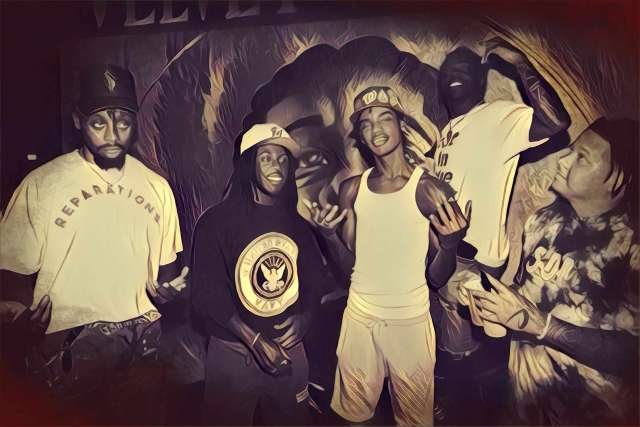
As drill migrated from Chicago to cities like New York, Atlanta, and London, it absorbed local flavors while retaining its core DNA. The beats became slightly more polished, but the foundational elements remained: a slow, menacing tempo (typically between 60-70 BPM), a kick drum that thumps like a heartbeat in a horror film, and a snare that cracks like a whip. The hi-hats, often layered in rapid, stuttering patterns, create a sense of urgency, as if the music itself is sprinting away from something—or toward it. This template isn’t arbitrary; it’s a sonic shorthand, a way to communicate danger, swagger, and unapologetic energy in just a few measures.
But why does this template persist? The answer lies in the paradox of drill’s appeal: its uniformity is both a limitation and a superpower. In a musical landscape that often prizes innovation above all else, drill’s consistency is a form of comfort. It’s the sonic equivalent of a familiar street corner, a place where listeners can gather and feel at home, even if the world outside is chaotic. For artists, the drill beat is a blank canvas—one that allows them to focus on lyrical dexterity, vocal delivery, and storytelling without getting bogged down in complex production. The beat becomes a stage, and the rapper the star, free to command attention with nothing but words and rhythm.
There’s also a practical reason for drill’s sonic homogeneity: it’s designed to sound good in a club, on a phone speaker, or blasting from a car subwoofer. The kick and snare are tuned to hit hard in the low end, where most consumer audio systems excel, while the hi-hats and percussion add enough texture to keep the beat from feeling sterile. This isn’t laziness; it’s engineering. Drill producers understand that their music needs to translate across environments, from the dimly lit basements where it’s born to the festival stages where it’s celebrated. The uniformity ensures that the energy of the beat isn’t lost in translation—it’s amplified.

Yet, drill’s genius doesn’t stop at its sonic template. The genre’s repetitive nature taps into something primal: the power of ritual. Think of the way a heartbeat syncs with a march, or how a drum circle can induce trance-like states. Drill beats operate on a similar wavelength. The looped patterns, the hypnotic swing of the hi-hats, the relentless pulse of the kick—all of it conspires to create a trance that’s both exhilarating and unsettling. It’s no coincidence that drill has been adopted in everything from workout playlists to ASMR videos; its rhythmic consistency is aural comfort food, a sonic embrace that wraps around the listener like a familiar blanket.
This isn’t to say that drill is devoid of evolution. Within the constraints of its template, producers and artists constantly push boundaries. Some infuse their beats with eerie, minor-key melodies, while others layer in unexpected samples or distort the drums to create a more abrasive, industrial sound. The genre’s adaptability is a testament to its strength—like a language with a rigid grammar that still allows for endless poetry. The drill beat is the grammar; the lyrics, the melody, and the production choices are the poetry that makes each track unique.
But perhaps the most fascinating aspect of drill’s uniformity is how it reflects the genre’s cultural DNA. Drill music is, at its core, a product of marginalized communities. It’s a voice for those who’ve been ignored, a way to assert presence in a world that often seeks to silence them. The repetitive, insistent nature of the beats mirrors the cyclical nature of struggle—poverty, violence, systemic oppression—that many drill artists and their communities face. The music doesn’t just reflect these realities; it embodies them. The sameness of the beats isn’t a lack of creativity; it’s a refusal to be distracted by anything less than raw, unfiltered truth.
There’s a strange beauty in this. In a world that celebrates individuality above all else, drill reminds us that sometimes, the most powerful statements come from unity. The beats don’t need to change to feel fresh because the stories they carry are always evolving. A drill beat in the hands of a lyrical genius like Pop Smoke or Chief Keef is a vessel for something far greater than music—it’s a cultural artifact, a historical document, and a rallying cry all at once.
So the next time you hear a drill beat and think, “This sounds just like the last one,” pause for a moment. Listen closer. The repetition isn’t a flaw; it’s a feature. It’s the heartbeat of a movement, the pulse of a generation, and the sound of resilience echoing through the concrete canyons of the modern world. Drill’s genius lies in its ability to make the familiar feel urgent, the repetitive feel revolutionary, and the simple feel profound. In a genre where the beats are the same, the stories—and the lives behind them—are anything but.


Leave a Comment