

Have you ever stood in a gallery, staring at a towering digital canvas that seems to breathe with light, only to realize your eyes are playing tricks on you? The walls undulate like liquid mercury. The shadows stretch into impossible geometries. The air hums with the faintest whisper of code. Welcome to the mesmerizing world of Refik Anadol’s AI data sculptures—where architecture dissolves into hallucination, and perception becomes a playground of algorithmic wonder.
Anadol doesn’t just create art; he engineers experiences that hijack the brain’s visual cortex, blurring the line between reality and simulation. His work doesn’t merely depict data—it transmutes it into a symphony of light, motion, and architectural illusion. But how does a machine’s cold, calculated logic evoke such visceral, almost psychedelic reactions in human observers? And more intriguingly, what happens when the very structures we rely on to ground us—walls, floors, ceilings—begin to warp and dissolve before our eyes?
The Alchemy of Data into Dream
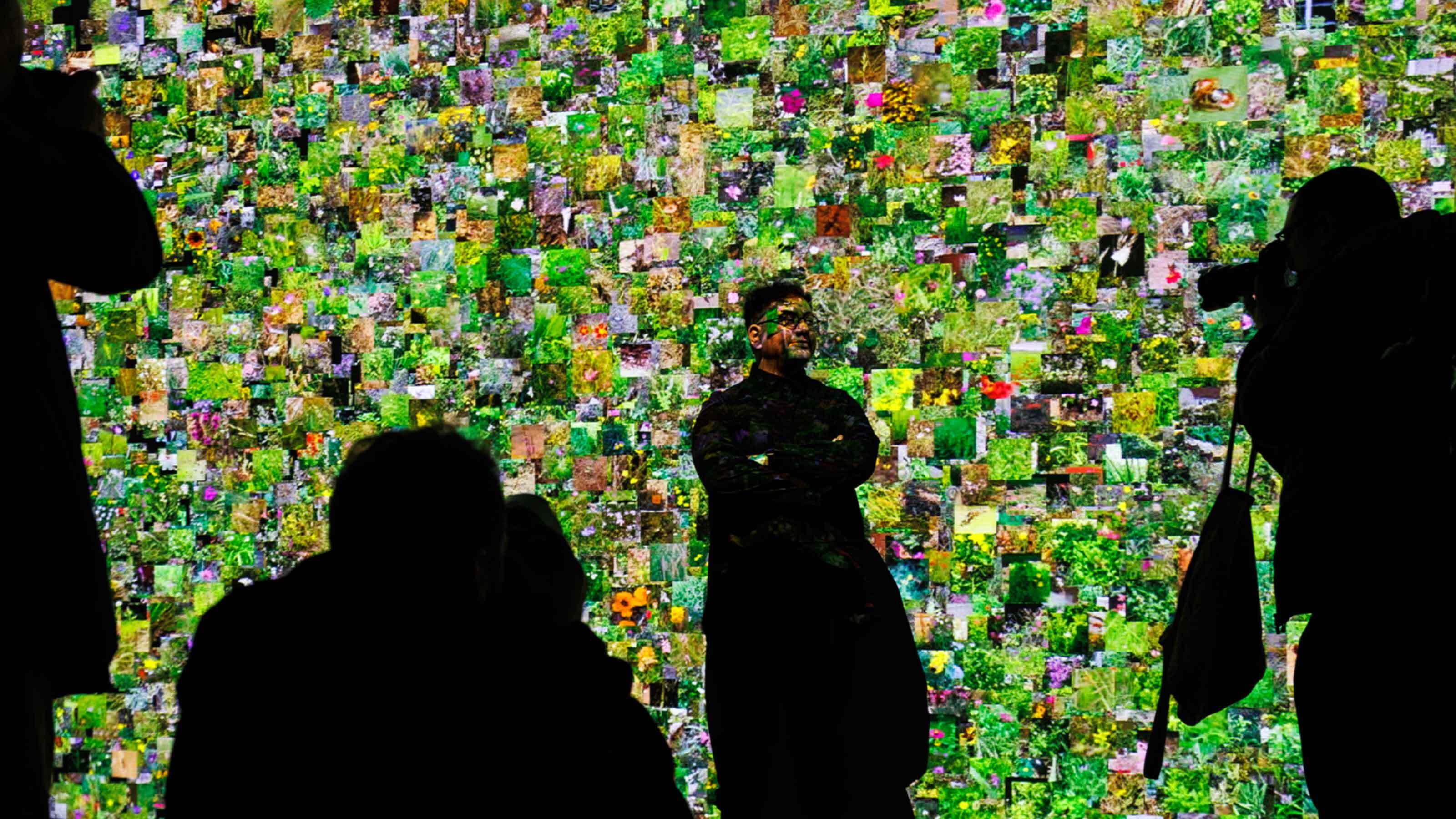
At the heart of Anadol’s practice lies a radical reimagining of data as a malleable, almost sentient material. He doesn’t just visualize information; he choreographs it. By feeding vast datasets—from architectural blueprints to urban traffic patterns—into generative adversarial networks (GANs), Anadol’s AI becomes a co-creator, weaving patterns that defy conventional logic. The result? Structures that pulse with life, their forms shifting in real-time, as if alive.
Consider Machine Hallucinations, one of his most celebrated series. Here, the AI doesn’t just replicate existing architecture; it hallucinates new ones. A skyscraper might sprout crystalline tendrils. A plaza could ripple like water. The human brain, wired to seek patterns, latches onto these forms, interpreting them as familiar—yet impossible. It’s a cognitive dissonance that feels eerily like dreaming while awake.
But why does this happen? The answer lies in the brain’s struggle to reconcile the familiar with the alien. Anadol’s work exploits our pareidolia—the tendency to perceive meaningful patterns in randomness. When a digital wall flickers with the ghostly silhouette of a building that never existed, our minds fill in the gaps, inventing narratives where none exist. It’s as if the AI is whispering secrets to our subconscious, and we’re only too eager to listen.
The Architecture of Disorientation
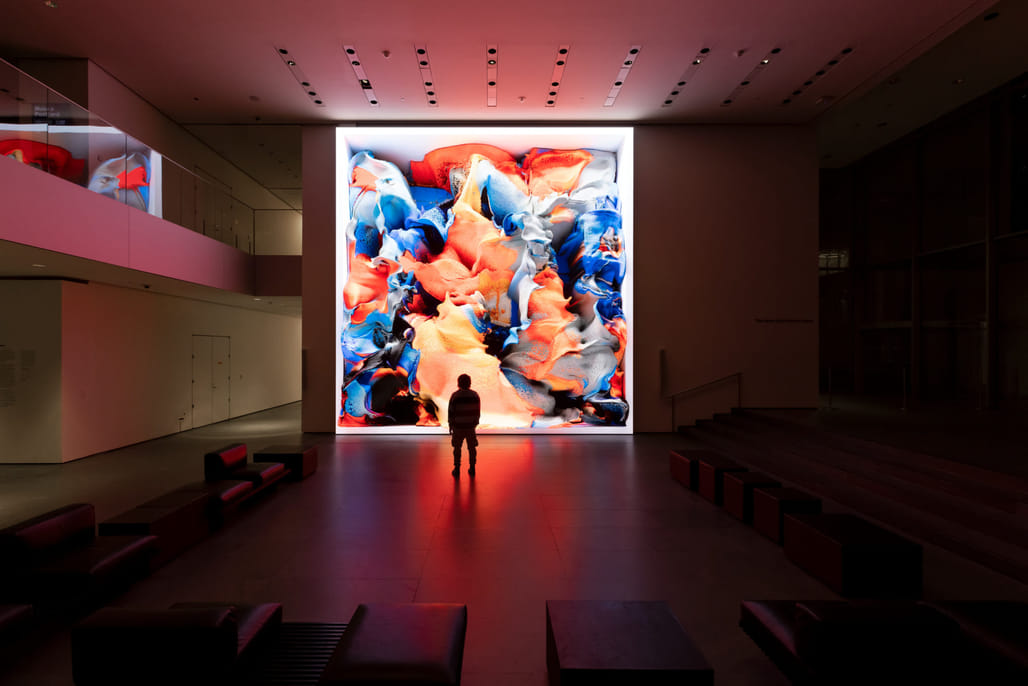
Traditional architecture grounds us in stability. Walls anchor us. Floors support us. But Anadol’s installations do the opposite—they unmoor us. In Latent Being, for instance, the viewer is enveloped in a 360-degree projection where the boundaries of the room dissolve into a vortex of data. The ceiling becomes a sky of swirling pixels. The floor transforms into a mirror of fractal patterns. Suddenly, the very space you occupy feels transient, as if the laws of physics have been suspended.
This architectural disorientation isn’t accidental. Anadol designs his installations to exploit spatial cognition—the way our brains map and navigate physical environments. By disrupting our usual cues—horizon lines, vertical supports, fixed textures—he forces us to question our surroundings. Is that glowing mass a wall or a mirage? Is the floor solid or a trick of the light? The more we try to orient ourselves, the more the installation slips through our fingers like smoke.
The Paradox of Control and Chaos
There’s a delicious tension in Anadol’s work between control and chaos. On one hand, his AI models are meticulously trained on curated datasets. Every pixel, every motion, is the result of algorithms fine-tuned to evoke specific emotional responses. Yet, the output is anything but predictable. The AI’s “hallucinations” introduce an element of serendipity, a creative rebellion against its own programming.
This paradox mirrors the human experience of creativity itself. We crave structure—rules, techniques, frameworks—but true art often emerges from the cracks in that structure. Anadol’s AI, like a human artist, dances on the edge of chaos, pulling order from the void. The result is an experience that feels both meticulously crafted and wildly spontaneous, as if the installation is alive and breathing.
But here’s the challenge: How do we, as viewers, reconcile our desire for meaning with the AI’s inherent unpredictability? When a data sculpture morphs into a shape that resembles a cathedral, a neural network, or even a living organism, are we projecting our own biases onto the machine’s output? Or is the AI truly conjuring something new, something that exists only in the liminal space between code and consciousness?
The Future: When Walls Become Windows to the Mind
Anadol’s work isn’t just a fleeting spectacle—it’s a glimpse into the future of spatial design. Imagine a world where buildings aren’t static structures but dynamic, responsive entities that evolve with their inhabitants. Where the walls of your home shift color and form based on your mood, or where a museum exhibit adapts in real-time to the collective emotions of its visitors. This isn’t science fiction; it’s the logical extension of Anadol’s experiments.
Yet, with this future comes a thorny question: What happens when architecture stops being a fixed backdrop and becomes an active participant in our perception? If walls can hallucinate, can they also manipulate? Could a data-driven environment subtly influence our decisions, our emotions, even our memories? Anadol’s work forces us to confront the ethical implications of blurring the line between art and architecture, between illusion and reality.
Perhaps the most profound takeaway from Anadol’s oeuvre is that we’re not just passive observers of his installations—we’re collaborators. Our presence, our gaze, our very biology interact with the AI’s output, co-creating the experience. In this way, his work becomes a metaphor for the future of human-machine collaboration: a dance where neither partner leads, and the music is written in real-time by the interplay of data and desire.
So the next time you find yourself standing in an Anadol installation, surrounded by walls that breathe and floors that ripple, ask yourself: Is this architecture? Or is it a hallucination we’ve all agreed to share?


Leave a Comment