

The night of May 29, 1913, at the Théâtre des Champs-Élysées in Paris, was not just another evening of classical music. It was a seismic event—one that would echo through the annals of art history not for its elegance, but for its sheer, unbridled chaos. When Igor Stravinsky’s The Rite of Spring premiered, the audience didn’t just hiss; they erupted. Chairs flew. Fists flew. A full-blown riot erupted in the hallowed halls of high culture. But to dismiss this tumult as mere outrage over avant-garde choreography is to miss the deeper, more unsettling truth: the riot was a rebellion against the very foundations of tradition, a visceral rejection of the familiar in favor of the primal, the raw, the untamed. It wasn’t just the dancing that sparked fury—it was the music itself, a sonic earthquake that shattered the delicate illusions of 19th-century romanticism and heralded the birth of modernism.
The Rite of Spring was not merely a composition; it was a manifesto in sound, a defiant declaration that art could—and should—be dissonant, jagged, and unapologetically alive. Stravinsky, then a young firebrand, had already begun to dismantle the sacrosanct rules of harmony and rhythm. But with this ballet, he didn’t just bend the rules—he snapped them in half. The score was a labyrinth of irregular meters, clashing chords, and rhythmic patterns that felt like the earth itself shifting beneath the feet of the dancers. Where previous ballets had offered lush, soothing melodies, The Rite of Spring delivered a cacophony of dissonance that felt less like music and more like the raw, unfiltered pulse of nature—something ancient, something terrifying.
The Music as a Primordial Storm: A Sonic Revolution
Imagine, if you will, the opening bars of The Rite of Spring. Instead of a gentle overture, the audience was greeted by a dissonant chord in the strings, a cluster of notes so jarring that it felt like a physical blow. This was no accidental misstep; it was a deliberate assault on the senses. Stravinsky’s use of polytonality—layering conflicting keys—created a sense of instability, as if the very ground beneath the listeners was trembling. The rhythms were equally revolutionary. Where classical music had relied on the predictable ebb and flow of 4/4 time, Stravinsky employed irregular meters—5/8, 7/8, even 11/8—creating a sense of unpredictability that mirrored the chaos of nature itself.
The ballet’s narrative, drawn from pagan Slavic rituals, depicted a sacrificial dance to the earth goddess, a ritual of renewal and violence. The music was not just an accompaniment to the dance; it was the dance’s very heartbeat. The bassoon’s opening solo, a folk-like melody that twisted and turned in ways that defied classical convention, was like a voice from the depths of the earth, whispering secrets that were not meant to be heard. This was not music for the drawing room; it was music for the wild, untamed corners of the world where civilization had not yet staked its claim.
The dissonance was not accidental; it was intentional. Stravinsky wanted to evoke the raw, unfiltered emotions of ancient rituals—the fear, the ecstasy, the primal connection to the earth. In doing so, he forced the audience to confront something they had spent centuries trying to suppress: the idea that beauty could exist in ugliness, that harmony could be found in chaos. The riot was not just a reaction to the dancing; it was a reaction to the music’s refusal to conform, its insistence on being something other, something more.

The Dance: A Rebellion in Motion
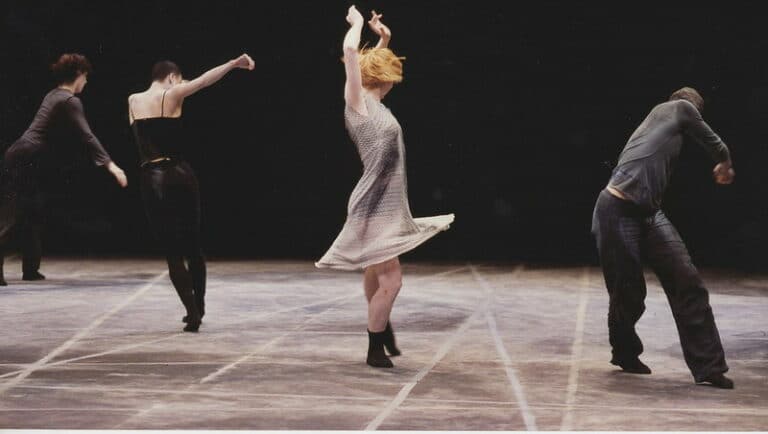
While the music was the spark that ignited the riot, the choreography of Vaslav Nijinsky was the gasoline that turned the spark into an inferno. Nijinsky, a dancer of unparalleled physicality and emotional intensity, had been tasked with bringing Stravinsky’s chaotic score to life. What resulted was not a ballet in the traditional sense but a frenzied, almost animalistic display of movement that seemed to defy the laws of human anatomy. The dancers moved in angular, jerky motions, their bodies twisted into unnatural poses that suggested both ecstasy and agony. Their feet stomped, their limbs flailed, and their faces contorted in expressions of primal ecstasy or terror.
The audience was not prepared for this. Ballet, at the time, was synonymous with grace, elegance, and refinement. The idea that a dancer could move in such a way—so violently, so unapologetically—was an affront to everything they held sacred. The choreography was not just unconventional; it was ugly in the eyes of the traditionalists. The dancers’ feet were turned inward, their arms stiff and angular, their movements disjointed and erratic. It was as if they were not dancing but being possessed by some unseen force, their bodies no longer their own.
Nijinsky’s choreography was not just a rejection of classical ballet; it was a rejection of the very idea of control. The dancers were not performing; they were existing in the moment, their movements dictated by the music’s relentless, unpredictable rhythms. This was not art for the elite; it was art for the masses, art that demanded to be felt rather than merely observed. The riot was not just a reaction to the dancing; it was a reaction to the idea that art could be so visceral, so immediate, so alive that it could provoke a physical response.
The contrast between the music and the dance was striking. Where Stravinsky’s score was a storm of sound, Nijinsky’s choreography was a storm of motion. Together, they created a spectacle that was not just heard or seen but experienced in a way that was both exhilarating and terrifying. The audience was not just watching a ballet; they were witnessing the birth of a new art form—one that refused to be tamed, one that demanded to be felt in every fiber of the body.
The Audience: A Microcosm of Societal Upheaval
The riot at the Théâtre des Champs-Élysées was not just a clash of artistic sensibilities; it was a microcosm of the societal upheaval that defined the early 20th century. The audience was a cross-section of Parisian high society—wealthy patrons, critics, artists, and intellectuals—all of whom were deeply invested in the status quo. To them, The Rite of Spring was not just an artistic failure; it was a moral failure, a betrayal of everything they held dear. The idea that art could be so disruptive, so challenging, was an affront to their worldview.
The riot itself was a spectacle of class and culture. The wealthy elite, who had come to the theater expecting a refined evening of entertainment, found themselves confronted with something that defied their understanding of art. The dissonance, the angular choreography, the primal energy—it was all too much. Some in the audience were outraged, shouting insults and hurling insults at the dancers. Others were genuinely frightened, as if they were witnessing something that threatened to unravel the very fabric of their reality. The police were called, but even they struggled to contain the chaos. The theater became a battleground, not just between art and tradition, but between the old world and the new.
But the riot was also a reflection of the broader societal tensions of the time. The early 20th century was a period of immense change—industrialization, urbanization, and the rise of new political ideologies were reshaping the world. The old order was crumbling, and with it, the certainties that had defined society for centuries. The Rite of Spring was a symptom of this upheaval, a musical manifestation of the chaos that was sweeping through every aspect of life. The audience’s reaction was not just a rejection of the ballet; it was a rejection of the uncertainty and instability that the modern world represented.
In this light, the riot becomes something more than a footnote in art history. It becomes a symbol of the struggle between tradition and innovation, between order and chaos, between the known and the unknown. The audience’s fury was not just a response to the music or the dance; it was a response to the idea that the world was changing in ways they could not control. And in that sense, the riot was not a failure of art; it was a testament to its power.
The Legacy: A Revolution That Could Not Be Stopped
In the aftermath of the riot, The Rite of Spring was not forgotten; it was immortalized. The controversy only served to fuel its legend, and within a few years, the ballet was recognized as a masterpiece. Stravinsky, once a controversial figure, became one of the most influential composers of the 20th century. Nijinsky, though his career was cut short by mental illness, was hailed as a visionary choreographer. And the riot itself became a symbol of the power of art to provoke, to challenge, and to change the world.
The legacy of The Rite of Spring extends far beyond its initial scandal. It paved the way for modernism in music, dance, and art, inspiring generations of artists to push the boundaries of their craft. Composers like Schoenberg, Bartók, and Messiaen drew inspiration from Stravinsky’s bold harmonies and rhythms. Choreographers like Martha Graham and Merce Cunningham built upon Nijinsky’s revolutionary ideas, creating new forms of movement that were equally radical. Even today, the ballet remains a touchstone for artists seeking to challenge conventions and explore the limits of their medium.
But perhaps the most enduring legacy of The Rite of Spring is its reminder that art is not meant to be comfortable. It is not meant to soothe or to please. It is meant to disturb, to provoke, to unsettle. The riot was not a failure; it was a triumph. It was the moment when art stopped being a reflection of the world and became a force that could reshape it. In that sense, The Rite of Spring was not just a ballet; it was a manifesto, a declaration that art could—and should—be a revolution.
The riot may have been a moment of chaos, but it was also a moment of creation. It was the birth of something new, something raw, something alive. And in a world that often seeks to tame and control, that is a legacy worth celebrating.

The riot of 1913 was not the end of an era; it was the beginning of a new one. The Rite of Spring did not just challenge the conventions of its time—it shattered them, leaving behind a world that was forever changed. The music was dissonant, the dance was jagged, and the audience was furious. But in that fury, in that chaos, lay the seeds of modernism—a movement that would redefine art, music, and culture for generations to come. The riot was not just a scandal; it was a revolution. And like all revolutions, it was messy, it was violent, and it was necessary.


Leave a Comment