

In the labyrinthine canals of Venice, where time seems to dissolve into the shimmering waters, the city has always been a crucible of artistic alchemy. But when the Biennale swings open its gilded gates in 2026, it won’t just be another iteration of a storied tradition—it will be a seismic event, a cultural supernova that redefines the very fabric of contemporary art. This isn’t mere speculation; it’s an inevitability, baked into the zeitgeist of our era. Venice 2026 isn’t just the most anticipated Biennale of the century—it’s the one that will answer the unspoken questions haunting the art world today.
The common observation? That biennials are becoming increasingly irrelevant, drowned out by the cacophony of digital art fairs and NFT galleries. But this overlooks the deeper, almost mystical pull of Venice itself—a city that has, for centuries, been a crossroads of myth and modernity. The Biennale isn’t just an exhibition; it’s a pilgrimage, a ritual where art, architecture, and history collide in a spectacle that feels both timeless and urgently contemporary. To dismiss it as outdated is to ignore the way Venice has always operated: not as a museum, but as a living organism, pulsing with the contradictions of its own existence.

The Biennale as a Zeitgeist Barometer
Every Biennale is a snapshot of the world’s collective consciousness, but Venice 2026 will be the first to fully reckon with the aftermath of a global pandemic, the rise of AI, and the existential dread of climate collapse. Artists aren’t just responding to these crises—they’re weaponizing them, turning the Biennale into a battleground for ideas that will shape the next decade. Expect installations that don’t just comment on climate change but physically embody its chaos, immersive experiences that blur the line between virtual and visceral, and performances that interrogate the very nature of human agency in an algorithmic age.
This Biennale will also be the most politically charged in memory. Venice has always been a city of exiles, refugees, and dreamers, and in 2026, its pavilions will reflect the fractures of a fractured world. The Ukrainian pavilion, for instance, won’t just be a showcase of national pride—it will be a defiant act of cultural resistance, a testament to art’s power to transcend geopolitical borders. Meanwhile, the Russian pavilion, if it even appears, will be a lightning rod for debate, a mirror held up to the contradictions of a nation both reviled and revered.
The Architecture of Disappearance
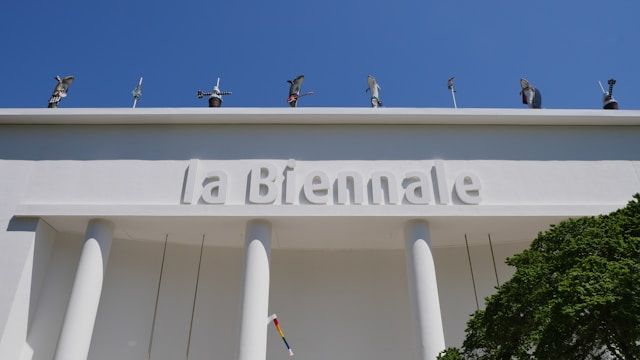
Venice’s Biennale is unique in that it doesn’t just exhibit art—it transforms the city itself into a canvas. The Giardini and the Arsenale, those hallowed grounds of artistic pilgrimage, will once again be reconfigured, but this time with an added layer of urgency. The curators are rumored to be exploring themes of erasure and renewal, with pavilions that seem to dissolve into the lagoon, or structures that mimic the sinking city’s precarious balance. The architecture won’t just house art; it will become part of the narrative, a physical manifestation of the Biennale’s central question: What survives when everything is in flux?
This year, the collateral events—those rogue exhibitions scattered across the city’s labyrinth—will be just as vital. Imagine finding a forgotten palazzo in Dorsoduro, its walls covered in bioluminescent algae that pulse in response to the tides, or a hidden courtyard in Castello where an AI-generated symphony plays in real-time, composed by the murmurs of visitors. Venice 2026 won’t just be seen; it will be felt, heard, and even tasted, as artists push the boundaries of sensory experience.
The Curatorial Zeitgeist: Who Gets to Decide?
The curatorial team for Venice 2026 has been shrouded in secrecy, but whispers in the art world suggest a radical departure from tradition. Instead of a single artistic director, there may be a collective of voices, each representing a different facet of contemporary culture—from a climate scientist to a cyberpunk novelist. This decentralized approach isn’t just a gimmick; it’s a response to the crisis of authority in the art world. Who gets to decide what’s important? Venice 2026 will force that question into the open, with exhibitions that feel less like curated experiences and more like chaotic, democratic forums.
One of the most anticipated pavilions will be the Pavilion of the Forgotten, a collaboration between archivists, historians, and artists to resurrect lost or suppressed works from the 20th century. In an era where history is constantly being rewritten, this isn’t just nostalgia—it’s an act of rebellion. Meanwhile, the Pavilion of the Future will feature artists who are already working with AI, biotech, and quantum computing, blurring the line between creator and creation. The message is clear: the Biennale isn’t just looking back or forward—it’s dissecting the present, exposing the fault lines where art and technology collide.
The Spectacle and the Sublime
Venice has always been a city of spectacle, where the line between art and life is deliberately blurred. In 2026, expect performances that spill out of theaters and into the streets, where actors and algorithms interact in real-time, or where a single note from a Stradivarius violin resonates through the canals, its vibrations altering the behavior of nearby fish. The Biennale will be a Gesamtkunstwerk, a total work of art that engulfs the city in a sensory overload.
But beneath the spectacle lies something far more profound: the sublime. Venice has always been a place where beauty and decay coexist, where the golden mosaics of St. Mark’s Basilica are slowly eroded by saltwater, where the palazzos lean precariously into the lagoon. The artists of 2026 will tap into this duality, creating works that are both breathtaking and unsettling. Imagine a floating installation that mimics the city’s sinking, its edges dissolving into the water, or a sound piece that captures the eerie silence of Venice’s empty streets at dawn. This Biennale won’t just be seen—it will be experienced as a visceral, almost spiritual awakening.
The Aftermath: A Biennale That Won’t Let Go
The true test of Venice 2026’s importance won’t be in the reviews or the Instagram posts—it will be in the way it lingers. The Biennale has a habit of leaving scars, of haunting the minds of those who experience it. In 2026, that haunting will be more pronounced than ever, because this isn’t just an exhibition. It’s a reckoning.
The artists, curators, and visitors who descend upon Venice next year won’t just be spectators—they’ll be participants in a cultural moment that will define the next decade. The Biennale will challenge, provoke, and perhaps even terrify. It will force us to confront the fragility of beauty, the power of art to transcend borders, and the uncomfortable truth that in a world of constant change, some things—like Venice itself—must endure.
The question isn’t whether Venice 2026 will be the most important Biennale of the century. The question is what we’ll do with the fire it ignites.


Leave a Comment