

Why Your Clay Keeps Cracking – The Wedging Fix
There’s nothing more disheartening than rolling out a perfectly smooth slab of clay, only to watch it fracture like dried parchment under the slightest pressure. Cracking isn’t just a sign of poor technique—it’s a cry for help from your clay, a material that thrives on consistency and harmony. The culprit? Often, it’s not the clay itself, but the way it’s been treated before it ever reached your hands. Enter wedging—a process so fundamental, so transformative, that it can turn a brittle, uncooperative lump into a pliable, cooperative canvas. If your clay keeps cracking, the solution might be simpler than you think. It’s time to knead your way to success.
Imagine clay as a tightly woven tapestry of particles, each strand holding a story of pressure, moisture, and air. When these strands aren’t aligned—when pockets of air lurk beneath the surface or moisture is unevenly distributed—the fabric frays. Wedging is the act of reuniting these strands, forcing them into a unified, airless whole. Without it, your clay is a ticking time bomb, primed to split at the first sign of stress. But wedging isn’t a one-size-fits-all ritual. Different techniques cater to different needs, each with its own rhythm and purpose. Let’s explore the methods that will rescue your clay from its brittle fate.
The Spiral Wedging Technique: A Dance of Precision and Pressure
Spiral wedging is the ballet of clay preparation—elegant, methodical, and deeply effective. To perform it, press the heel of your hand into the center of the clay, then push outward in a spiraling motion, folding the edges inward as you go. This technique isn’t just about mixing; it’s about aligning the clay’s particles in a continuous, helical flow. The pressure you apply forces out trapped air, while the spiral motion ensures even moisture distribution. It’s a workout for your arms, but a balm for your clay. The result? A homogeneous mass that resists cracking under stress, ready to be shaped without betraying you.
But here’s the secret: spiral wedging isn’t just about the motion—it’s about the intention. Each fold is a promise to your clay, a commitment to uniformity. Rushing through the process is like skipping rehearsals before a performance; the cracks will appear when the pressure mounts. Take your time. Let the clay yield to your hands. The more you practice, the more intuitive the motion becomes, until your wedging is as natural as breathing.
The Rams Head Wedging Method: Strength in Simplicity
If spiral wedging is the ballet, then rams head wedging is the powerlifting of clay preparation. This technique is all about brute force and raw efficiency. Start by slamming the clay onto your work surface, then fold it in half like a book, pressing down with the heel of your hand to expel air. Repeat this motion—slam, fold, press—until the clay feels dense and responsive. There’s no finesse here, no delicate spirals. Just you, the clay, and an unrelenting rhythm of compression.
The beauty of rams head wedging lies in its simplicity. It’s ideal for thicker clumps of clay or when you’re working with a material that’s particularly stubborn. The forceful nature of the technique breaks up stubborn air pockets and forces moisture to redistribute evenly. But be warned: this isn’t a gentle process. Your arms will feel it, and so will the clay. The key is to maintain a consistent pace, ensuring that every fold and press contributes to the clay’s cohesion. Done correctly, the result is a clay body that’s as tough as it is malleable—a far cry from the brittle mess you started with.
Kneading Like a Baker: The Art of Even Distribution
Kneading clay is akin to kneading dough, but with a far more critical outcome. The goal isn’t just to mix the clay—it’s to ensure that every particle is in the right place, that no pocket of air or uneven moisture remains. Start by pressing the clay into a flat disc, then fold it over itself like a letter. Rotate the disc 90 degrees and repeat. The motion should be rhythmic, almost meditative, as you work the clay into submission. This technique is particularly useful for smaller batches or when you’re dealing with a clay body that’s prone to cracking due to inconsistent texture.
What makes kneading so effective is its ability to address multiple issues at once. The folding motion breaks up air bubbles, while the pressure ensures that moisture is evenly distributed. It’s a process that demands patience, but the payoff is undeniable. A well-kneaded clay body will stretch and bend without resistance, a stark contrast to the brittle slabs that crumble under the slightest pressure. Think of it as the difference between a flimsy piece of paper and a sheet of reinforced steel—both can hold weight, but only one can withstand the test of time.
Cutting and Slamming: The Brutal Efficiency Approach
For those who prefer a no-nonsense approach, cutting and slamming is the way to go. This technique involves slicing the clay into manageable chunks, then slamming each piece onto your work surface to expel air. The force of the impact sends shockwaves through the clay, breaking up stubborn air pockets and forcing moisture to redistribute. It’s a violent process, but one that yields results. The key is to alternate between cutting and slamming, ensuring that every piece of clay is treated with equal force.
The beauty of this method lies in its simplicity. There’s no need for fancy spirals or delicate folds—just raw, unfiltered power. It’s ideal for large batches of clay or when you’re working with a material that’s particularly dense. But be cautious: this technique can be taxing on your body, and it’s easy to overwork the clay if you’re not careful. The goal isn’t to pulverize the clay into submission, but to coax it into a state of uniformity. Done correctly, the result is a clay body that’s as tough as it is pliable—a far cry from the brittle mess you started with.
Testing Your Clay: The Proof Is in the Pliable
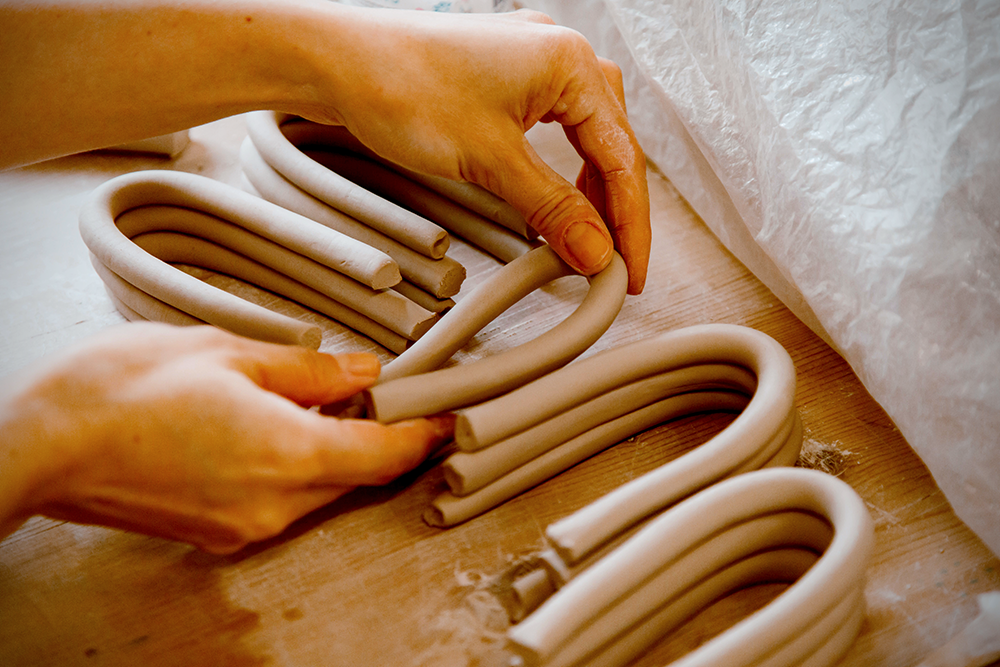
How do you know if your wedging has been successful? The answer lies in the clay itself. A well-wedged clay body should feel smooth, dense, and responsive to your touch. It shouldn’t crack when you bend it, and it shouldn’t resist your shaping efforts. To test it, roll the clay into a coil and gently bend it. If it holds its shape without fracturing, you’ve done your job well. If it cracks or breaks, it’s back to the wedging board for you.
But testing isn’t just about the final product—it’s about the journey. Each time you wedge, you’re learning more about your clay, about its quirks and its needs. It’s a process of discovery, one that rewards patience and persistence. Don’t be discouraged if your first few attempts don’t yield perfect results. Clay is a temperamental material, and even the most experienced potters have to wrestle with it from time to time. The key is to keep practicing, to keep refining your technique until wedging becomes second nature.

Common Mistakes and How to Avoid Them
Even the most seasoned potters make mistakes when wedging. One of the most common is overworking the clay, which can lead to fatigue and cracking. The key is to find the right balance between force and finesse. Another mistake is neglecting to test the clay after wedging. Without testing, you won’t know if your efforts have been successful. Always take the time to roll a coil and bend it—your clay will thank you.
Another pitfall is using the wrong technique for the job. Spiral wedging is great for fine-tuning, but rams head wedging is better for breaking up stubborn air pockets. Kneading is ideal for smaller batches, while cutting and slamming is perfect for large, dense clumps. Choose your method wisely, and your clay will reward you with its obedience.
The Long-Term Benefits of Proper Wedging
Wedging isn’t just a one-time fix—it’s a habit that pays dividends in the long run. A well-wedged clay body is easier to shape, less prone to cracking, and more responsive to your touch. It’s the foundation of every successful pottery project, the silent partner in your creative process. But the benefits go beyond the physical. Wedging is a meditative practice, a moment of connection between you and your material. It’s a reminder that even the most unruly substances can be tamed with patience and persistence.
So the next time your clay cracks, don’t blame the material. Blame the method. Take a step back, reassess your wedging technique, and give your clay the care it deserves. The results will speak for themselves—a smooth, crack-free surface that’s ready to be transformed into something beautiful.
Your clay isn’t just a lump of earth—it’s a canvas, a partner, a challenge waiting to be met. Treat it with respect, and it will reward you with its obedience. Ignore it, and it will crack under the pressure. The choice is yours. But if you’re reading this, you’re already on the path to mastery. Now go forth, wedge with purpose, and let your clay sing.


Leave a Comment