

Have you ever stared at your to-do list, feeling like a juggler who’s dropped every ball but one—except that one is made of glass? You block off an hour, maybe two, convinced this time will be different. Yet, by the end of the session, you’ve reorganized your desk, replied to three non-urgent emails, and somehow convinced yourself that scrolling through memes counts as “strategic thinking.” What if the problem isn’t your willpower or your workload, but the very structure of your time blocks? What if the 5-minute block method isn’t just another productivity hack, but the secret weapon hiding in plain sight?
Imagine this: You sit down to tackle a project, timer set for 25 minutes, only to glance at the clock after 15 and realize you’ve spent the entire time questioning whether you left the oven on. Sound familiar? The issue isn’t the length of your focus—it’s the rigidity of your approach. The 5-minute block method flips the script by embracing brevity, not as a limitation, but as a superpower. It’s not about cramming more into less time; it’s about designing time to work for you, not against you. Let’s dive into why most people are practicing this method wrong—and how to fix it.
The Myth of the “Perfect” Time Block
We’ve all been sold the lie that productivity thrives in long, uninterrupted stretches. But neuroscience begs to differ. Our brains aren’t wired for marathon sessions; they’re designed for sprints. The prefrontal cortex, the CEO of your cognitive functions, starts to fatigue after just 20 minutes of deep work. Yet, we persist in treating time blocks like marathons, expecting our brains to perform at peak levels for hours on end. Spoiler: They don’t.
Enter the 5-minute block—a deceptively simple concept that’s often misunderstood. Most people treat it as a placeholder, a way to “warm up” before the real work begins. They use it to check emails or tidy their workspace, mistaking motion for progress. But the magic of the 5-minute block lies in its precision. It’s not a warm-up; it’s a pressure cooker. By compressing tasks into bite-sized intervals, you force your brain to prioritize, focus, and execute with laser-like intensity. The key? Treat every 5-minute block as a non-negotiable sprint, not a casual jog.

The Art of the Atomic Task
Here’s where most people derail: They treat the 5-minute block as a dumping ground for vague intentions. “Work on project X” or “Plan next quarter” are not tasks—they’re sprawling, amorphous beasts that invite procrastination. The 5-minute block demands atomic tasks: small, specific, and completable within the timeframe. Think “draft the first paragraph of the email” or “outline the three key points for the meeting.” These aren’t just tasks; they’re micro-victories that build momentum.
But how do you identify an atomic task? Ask yourself: Can I complete this in five minutes or less without interruption? If the answer is no, it’s not atomic. Break it down further. For example, instead of “write blog post,” try “brainstorm three blog post titles” or “research one source for the blog post.” The goal isn’t to finish the project in five minutes—it’s to make progress without the paralysis of overwhelm.
Another pitfall? Treating the 5-minute block as a standalone unit. The method thrives when blocks are chained together like pearls on a string. After completing one atomic task, immediately transition to the next. This creates a rhythm, a cadence that keeps your brain in a state of flow. It’s not about cramming more into less time; it’s about creating a pipeline of small wins that propel you forward.
The Psychology of the Ticking Clock
There’s a psychological phenomenon at play here called the “Zeigarnik Effect.” Named after psychologist Bluma Zeigarnik, it describes our tendency to remember uncompleted tasks better than completed ones. In the context of the 5-minute block, this effect works in your favor. By setting a strict timer, you create a sense of urgency that tricks your brain into focusing. The ticking clock becomes a co-pilot, whispering, “You’ve got five minutes—make it count.”
But here’s the twist: The timer isn’t just a tool for urgency; it’s a boundary. It forces you to confront the reality of your time. When you know you only have five minutes, you’re less likely to indulge in distractions like “quickly checking social media” or “organizing your desk for the fifth time.” The timer acts as a gatekeeper, ensuring that every second is spent on what truly matters.
Of course, this requires discipline. It’s tempting to hit “pause” when the timer goes off, especially if you’re in the flow. But the 5-minute block method thrives on consistency. Pause only if you’ve completed the task. Otherwise, the next block is already waiting.
From Blocks to Systems: Scaling the Method
The 5-minute block isn’t just a productivity hack—it’s a gateway to a larger system. Once you’ve mastered the art of atomic tasks and ticking clocks, you can start layering in complexity. For example, you might group related 5-minute blocks into 25-minute “super blocks,” mimicking the Pomodoro Technique but with a sharper focus. Or, you might use the method to tackle the most dreaded tasks first, a strategy known as “eating the frog.”
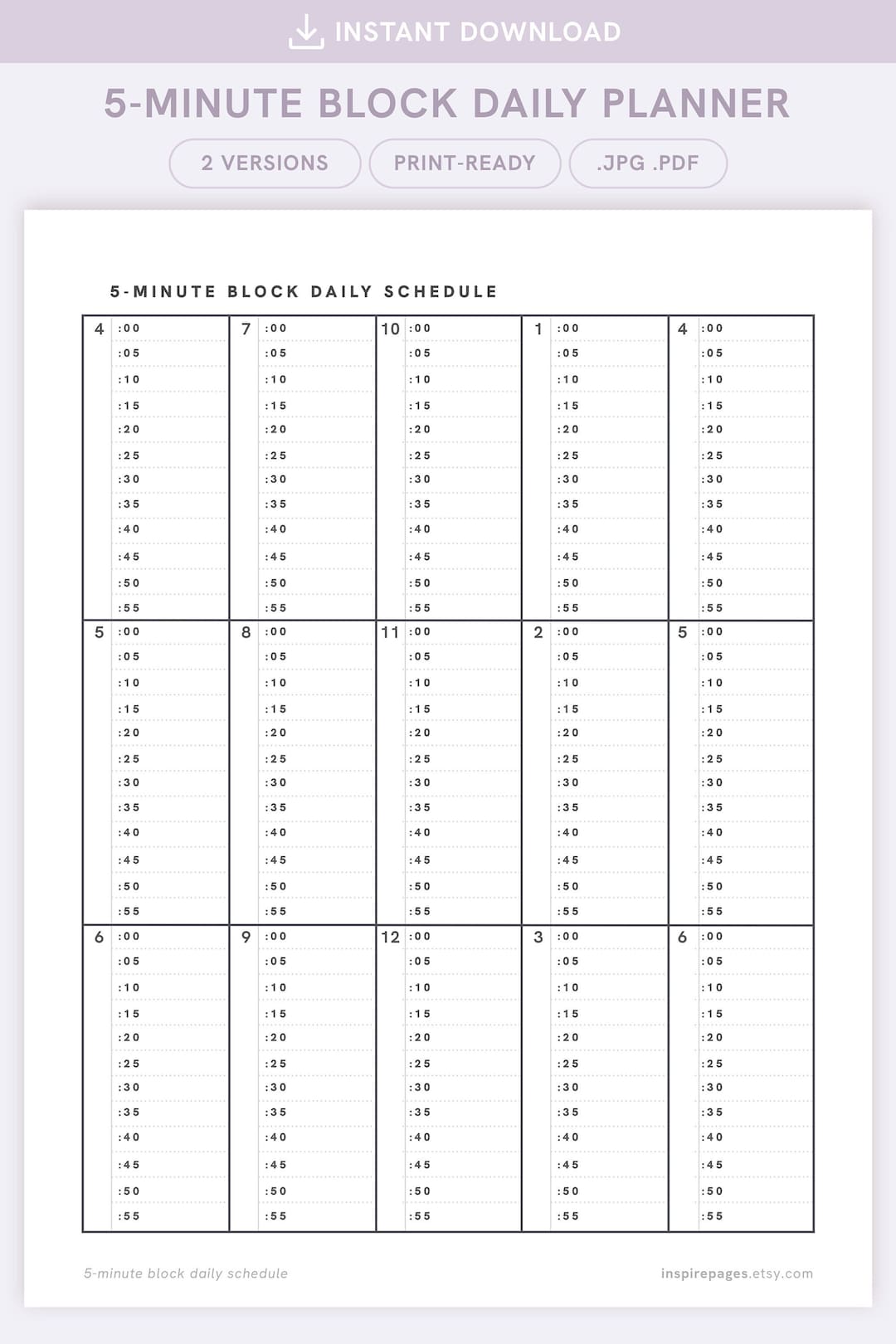
Another layer? The “block audit.” At the end of each day, review your completed blocks. What patterns emerge? Are you consistently struggling with certain types of tasks? Are there blocks where you lost focus? This audit isn’t about judgment; it’s about refinement. It’s how you turn a method into a system that evolves with you.
When the Method Fails (And How to Fix It)
No method is foolproof, and the 5-minute block is no exception. Sometimes, the timer goes off, and you’re still in the zone. Other times, you’re staring at a blank page, paralyzed by the weight of the task. What then?
First, embrace the “block extension.” If you’re in the flow, let the block run for another five minutes. The goal isn’t rigidity; it’s progress. But if you’re stuck, use the block to break the logjam. Ask yourself: What’s the smallest possible step I can take right now? Even if it’s just opening the document or jotting down a single idea, that’s still a win.
Another challenge? The tyranny of the urgent. Emails, Slack messages, and last-minute requests can derail even the most disciplined block schedule. The solution? Batch these interruptions. Designate specific blocks for communication, and protect the rest of your time like a fortress. Remember, every interruption is a 5-minute block stolen from your productivity.
Finally, be kind to yourself. The 5-minute block method isn’t about perfection; it’s about progress. Some days, you’ll crush it. Other days, you’ll struggle. What matters is that you show up, timer in hand, ready to make the most of the time you have.
So, are you ready to ditch the marathon and embrace the sprint? The 5-minute block isn’t just a method—it’s a mindset shift. It’s about trading the illusion of productivity for the reality of progress. Start small. Stay consistent. And watch as your to-do list transforms from a mountain into a series of manageable hills. The clock is ticking. What will you do with your next five minutes?


Leave a Comment