

We’ve all done it. That moment of social alchemy when a well-placed nod and a knowing murmur transform a blank stare into the illusion of literary sophistication. “Oh, *Moby Dick*? A masterpiece, absolutely. The whale, you know—it’s not just a whale.” The truth, however, lingers like the faint scent of old paperbacks in a secondhand bookstore: we’ve lied. Not maliciously, but with the quiet complicity of someone who once bought a ticket to a concert they never attended. The classics, those towering monuments of the written word, have become the literary equivalent of a gym membership we pay for but never use. Yet, their allure persists. Why? What is it about these books—these *supposed* pillars of culture—that keeps us pretending we’ve read them? Let’s peel back the gilded curtain and explore the ten classic novels you’ve lied about reading, now unpacked in a whirlwind of insight, irony, and unexpected revelation.
The Great Pretenders: Why We Lie About the Classics
There’s a peculiar psychology at play here, one rooted in the tension between aspiration and intimidation. We lie about reading the classics not because we fear judgment, but because we fear irrelevance. In a world where curated feeds and algorithmic taste dictate what’s “in,” admitting you’ve never cracked open *Pride and Prejudice* feels like confessing to a crime against culture. The lie becomes a shield, a way to signal membership in the club of the intellectually initiated. Yet beneath this veneer of sophistication lies a deeper truth: the classics are intimidating. Their reputation precedes them like an unclimbed mountain, their dense prose and archaic language serving as a moat around their perceived inaccessibility. We lie because admitting the opposite feels like surrendering to the myth that some books are only for the “elite.” But what if the real lie is that they’re meant to be conquered, rather than savored?
1. *Moby Dick* by Herman Melville: The White Whale of Misunderstanding
 The novel isn’t about a whale. It’s about obsession, the futility of vengeance, and the crushing weight of the unknown. Melville’s sprawling epic is less a tale of maritime adventure and more a philosophical meditation on humanity’s futile struggle against forces beyond its control. The lie we tell is that *Moby Dick* is unreadable; the truth is that it’s unfinishable—for those who approach it with the wrong expectations. Read it not as a story, but as a series of vignettes, each a brushstroke in a vast, storm-tossed canvas. The whale, after all, is just the beginning.
2. *Ulysses* by James Joyce: The Labyrinth That Isn’t a Trap
James Joyce’s *Ulysses* has earned its reputation as the literary Everest: daunting, unyielding, and, for many, unconquerable. Yet to reduce it to a test of endurance is to miss the point entirely. Joyce didn’t write a puzzle; he wrote a day. A single day in the life of Leopold Bloom, rendered in a symphony of styles that mimic the chaos of human thought. The lie is that it’s impenetrable; the truth is that it’s immersive. Dive in not to “understand” it, but to *feel* it—the rhythm of Dublin, the cadence of Bloom’s thoughts, the way Joyce bends language to the will of consciousness. It’s not a book to be conquered; it’s a book to be inhabited.
3. *War and Peace* by Leo Tolstoy: The Epic That Isn’t About War
 Tolstoy’s magnum opus is often dismissed as a doorstop, a tedious march through Napoleonic battlefields. But *War and Peace* is less about war and more about the quiet revolutions of the human heart. The lie is that it’s a slog; the truth is that it’s a mirror. Tolstoy doesn’t just describe history—he dissects the way history is made, not by kings and generals, but by the unspoken desires and fears of ordinary people. The novel’s true battle isn’t fought on the field of Austerlitz; it’s waged in the drawing rooms of St. Petersburg, where love, ambition, and regret collide.
4. *The Great Gatsby* by F. Scott Fitzgerald: The Jazz Age’s Most Misunderstood Tragedy
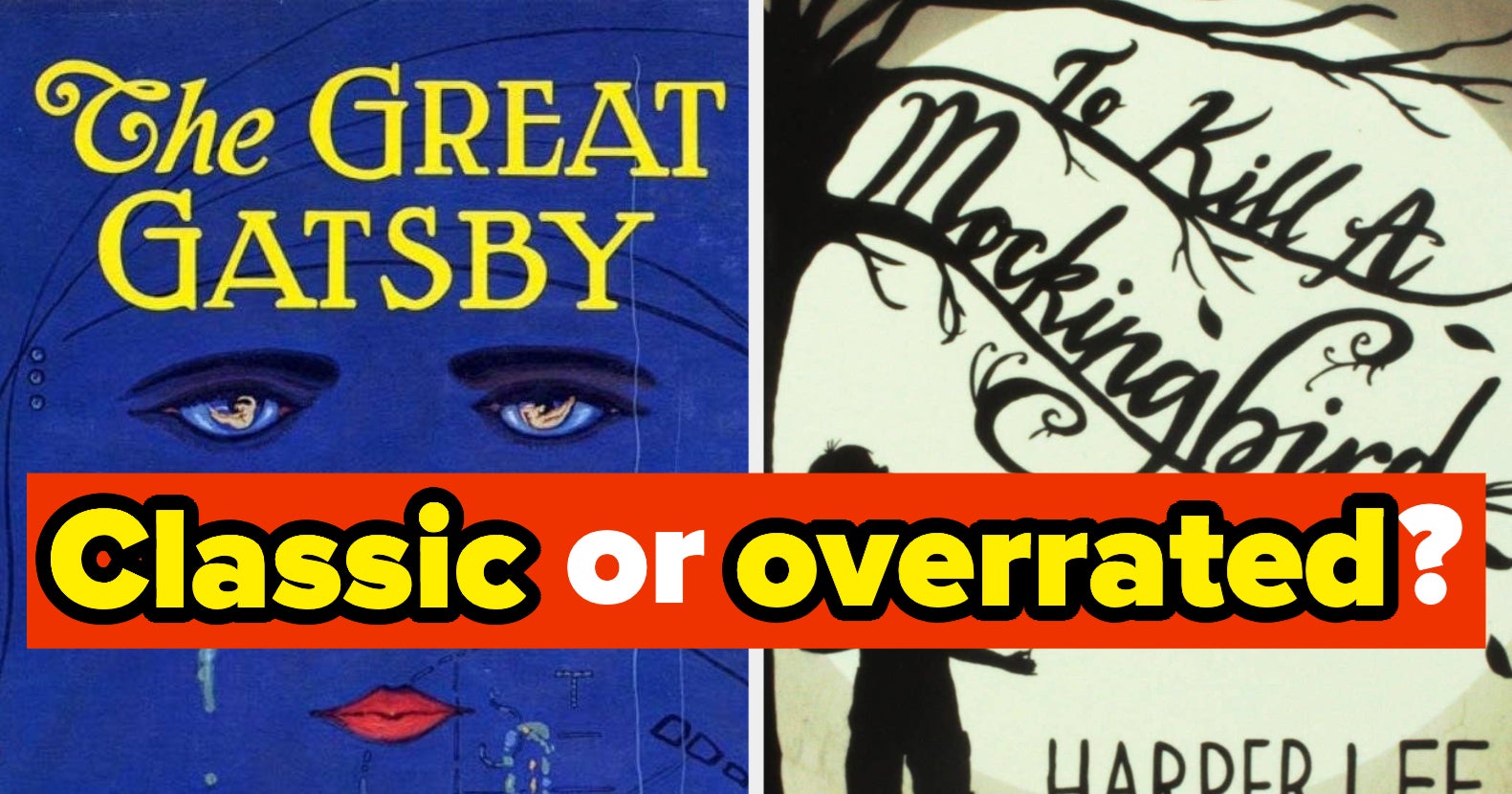
We’ve all quoted Gatsby’s green light, but how many of us have truly reckoned with the novel’s searing indictment of the American Dream? Fitzgerald’s prose shimmers like champagne bubbles, but beneath the glitter lies a story of hollow triumph and irreversible loss. The lie is that *Gatsby* is a simple tale of wealth and romance; the truth is that it’s a cautionary fable about the cost of reinvention. Gatsby isn’t a hero—he’s a cautionary tale, a man who mistook longing for destiny. The novel’s power lies in its refusal to romanticize its subjects, offering instead a haunting elegy for a world that never quite existed.
5. *Crime and Punishment* by Fyodor Dostoevsky: The Psychology of a Murderer
Raskolnikov’s axe isn’t just a weapon; it’s a scalpel, dissecting the fragile boundary between morality and madness. Dostoevsky doesn’t just tell us that guilt is a prison—he locks us inside Raskolnikov’s mind and forces us to feel the weight of his despair. The lie is that the novel is a moralistic tale; the truth is that it’s a psychological thriller where the real crime is the act of self-deception. Raskolnikov doesn’t just kill a pawnbroker—he kills his own illusions, and the punishment isn’t prison; it’s the slow, agonizing process of confronting the truth.
6. *To the Lighthouse* by Virginia Woolf: The Stream of Consciousness That Isn’t Pretentious
 Woolf’s masterpiece is often dismissed as impenetrable, a fog of introspection with no clear path. But to read *To the Lighthouse* is to experience time not as a linear march, but as a series of overlapping moments, each a ripple in the pond of memory. The lie is that it’s abstract; the truth is that it’s deeply human. Woolf doesn’t just describe the Ramsay family’s trip to the lighthouse—she captures the way memory lingers, the way grief reshapes reality, the way love is both a comfort and a prison. It’s a novel that demands patience, not because it’s difficult, but because it’s honest.
7. *1984* by George Orwell: The Dystopia That Feels Like a Prophecy
Orwell’s nightmare vision of totalitarianism has seeped into the cultural lexicon, but how many of us have truly grappled with its chilling implications? *1984* isn’t just a warning about surveillance—it’s a meditation on the fragility of truth itself. The lie is that it’s a relic of the Cold War; the truth is that it’s a mirror. Orwell’s genius lies in his ability to distill the essence of oppression into something both terrifying and eerily familiar. Big Brother isn’t just a symbol; he’s the embodiment of power’s insidious reach, the way language can be weaponized, the way fear can be manufactured. The novel’s power isn’t in its predictions; it’s in its unsettling accuracy.
8. *Jane Eyre* by Charlotte Brontë: The Gothic Romance That’s Really About Independence
Jane Eyre isn’t just a love story—it’s a manifesto. Brontë’s heroine isn’t a damsel in distress; she’s a woman who refuses to be defined by the expectations of others. The lie is that the novel is a sentimental tale of romance; the truth is that it’s a radical assertion of self-worth. Jane’s defiance isn’t just against Rochester’s secrets—it’s against a world that would have her silent, obedient, and invisible. Brontë’s prose crackles with the fire of a woman who knows her own value, and that’s what makes *Jane Eyre* timeless.
9. *The Catcher in the Rye* by J.D. Salinger: The Teenage Angst That’s Really About Alienation
Holden Caulfield isn’t just a disaffected teenager—he’s a mirror held up to the universal experience of feeling out of place. The lie is that *The Catcher in the Rye* is a juvenile rant; the truth is that it’s a piercing exploration of the gap between expectation and reality. Salinger doesn’t just describe teenage rebellion—he captures the way the world conspires to strip away innocence, the way adulthood is a series of compromises that feel like betrayals. Holden’s phoniness isn’t just a quirk; it’s a defense mechanism, a way to keep the world at arm’s length. The novel’s power lies in its refusal to offer easy answers, its willingness to sit with discomfort.
10. *Beloved* by Toni Morrison: The Ghost Story That’s Really About Trauma
Morrison’s Pulitzer-winning novel is often described as a ghost story, but to reduce it to the supernatural is to miss its true horror. *Beloved* isn’t about a vengeful spirit—it’s about the inescapable weight of the past. The lie is that it’s a historical novel; the truth is that it’s a psychological excavation. Sethe’s act of infanticide isn’t just a plot device—it’s the manifestation of a trauma so profound that it defies language. Morrison doesn’t just tell us that slavery leaves scars; she forces us to feel them, to confront the way history isn’t just something we read about—it’s something that lives in our bones.
The classics aren’t meant to be conquered. They’re meant to be experienced, wrestled with, and, yes, even abandoned and revisited. The lie we tell about not reading them is just that—a lie, a shorthand for the way we mythologize art until it becomes untouchable. But the truth is far more interesting. These books aren’t relics; they’re living, breathing entities that shift and change with each reader. They’re not tests to pass; they’re conversations to have. So the next time someone mentions *Anna Karenina*, don’t nod knowingly. Ask them what they think about Vronsky. The real magic of the classics isn’t in the reading—it’s in the sharing.


Leave a Comment