

There’s a quiet revolution brewing in pottery studios around the world, one that challenges the long-held belief that only wheel-thrown vessels can achieve that coveted, artisanal elegance. Hand-building techniques, once relegated to the realm of beginners or functional ware, are now being wielded by artisans to create pieces that rival the sophistication of thrown pottery. The secret? A mastery of form, texture, and illusion—techniques that trick the eye into believing a pot was spun on a wheel, when in reality, it was lovingly shaped by hand. If you’ve ever marveled at a pot’s graceful curves or its seamless symmetry and wondered how it was made, prepare to have your perspective shifted. These five hand-building methods will not only redefine what’s possible with your bare hands but also ignite a newfound appreciation for the artistry hidden in plain sight.
The Illusion of the Wheel: Why Hand-Built Pots Can Rival Thrown Ones
At first glance, the distinction between wheel-thrown and hand-built pottery seems stark. The wheel, after all, is a mechanical marvel that imparts uniformity and fluidity to clay through centrifugal force. Hand-building, on the other hand, relies on the potter’s touch—subtle, deliberate, and inherently human. Yet, the magic lies in the potter’s ability to mimic the wheel’s signature traits: smooth contours, even walls, and balanced proportions. The key is in the technique. By understanding how to manipulate clay without the wheel’s assistance, you unlock a world where the limitations of hand-building dissolve into possibility. The result? Pots that don’t just look thrown—they *feel* thrown, as if the clay itself remembers the motion of the wheel. This isn’t about deception; it’s about transcending the tools at your disposal to achieve a level of craftsmanship that surprises even the most seasoned potters.
Consider the way light dances across the surface of a well-crafted pot. A wheel-thrown piece often has a telltale spiral pattern on its base, a fingerprint of the throwing process. Hand-built pots can achieve a similar effect through careful trimming or by using tools to create faux spirals. The difference? The hand-built version carries the warmth of human intention, a subtle irregularity that makes it feel alive. This is where the shift in perspective begins: recognizing that hand-building isn’t a compromise—it’s a different kind of mastery, one that demands patience, precision, and a deep connection to the material.
Coil Building with a Twist: Crafting Seamless Vessels
Coil building is the backbone of hand-building, a technique as old as pottery itself. Traditionally, coils are stacked and smoothed to form walls, but the magic happens when you push beyond the basics. The secret to making coil-built pots look thrown lies in the way the coils are joined and refined. Start by rolling out coils of uniform thickness, then layer them with a slight overlap, pressing each seam firmly to create a single, continuous wall. The real transformation occurs during the refining stage. Instead of leaving the coils visible, use a rib tool or your fingers to compress and smooth the surface, erasing the seams entirely. For an added layer of sophistication, carve subtle grooves or ridges into the wet clay before smoothing—these will catch the light and mimic the subtle texture of wheel-thrown pots.
But here’s where the technique takes a daring turn: the *twisted coil*. By gently twisting each coil as you stack it, you introduce a dynamic energy to the form. The twist creates a subtle spiral pattern that echoes the motion of the wheel, while the compression of the coils ensures the walls remain even and strong. The result is a vessel that looks as if it was spun, not stacked. This method is particularly effective for larger forms, where the illusion of the wheel’s motion can make even the most substantial pieces feel light and graceful. The twisted coil technique isn’t just about aesthetics—it’s a testament to the potter’s ability to coax the clay into behaving in ways that defy its natural tendencies.
Pinch Pot Perfection: Sculpting with Intentionality
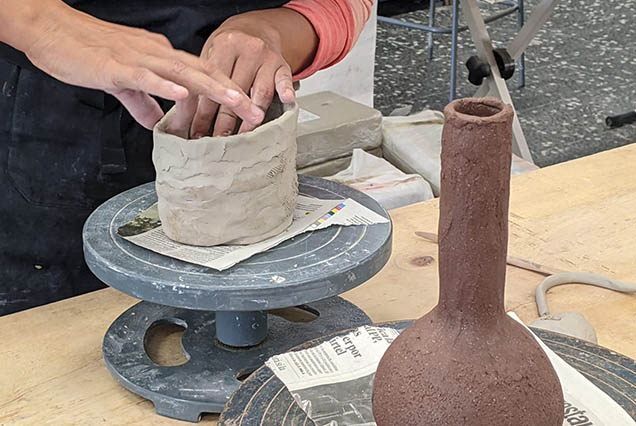
Pinch pots are often dismissed as rudimentary, the first step in a beginner’s journey. But when approached with intention, they can yield results that are anything but basic. The trick to making a pinch pot look thrown lies in the way the clay is manipulated during the forming process. Start with a ball of clay and begin pinching from the base, working your way upward in a slow, rhythmic motion. The key is consistency—each pinch should be even, creating walls that are uniformly thin and smooth. To achieve the illusion of a wheel-thrown form, focus on the *gesture* of the pinch. Instead of pinching straight up, angle your fingers slightly outward as you work, mimicking the outward pull of the wheel. This subtle adjustment creates a gentle taper that gives the pot a sense of movement and balance.
For an added layer of sophistication, incorporate *faceting*—a technique where you press a rib or tool into the wet clay to create flat planes or facets. These facets catch the light in unexpected ways, breaking up the surface and adding a tactile quality that makes the pot feel more dynamic. When done thoughtfully, faceting can mimic the subtle undulations of a wheel-thrown pot, especially when combined with a refined rim and base. The beauty of the pinch pot technique is its simplicity; it strips away the need for complex tools or elaborate setups, proving that sometimes, the most elegant solutions are the most straightforward.
Slab Construction: The Art of Deceptive Simplicity
Slab building is often associated with geometric forms and angular designs, but when wielded with finesse, it can produce vessels that are deceptively organic and fluid. The secret to making slab-built pots look thrown lies in the way the slabs are cut and assembled. Start by rolling out a slab of even thickness, then use a template or freehand cutting to create the basic shape of your vessel. For a more organic look, cut the slab into irregular, curved pieces that can be joined with a slight overlap. The magic happens in the joining process: instead of leaving visible seams, use a rib or your fingers to compress and smooth the joints, creating a seamless transition between the slabs. To further enhance the illusion of a thrown pot, use a loop tool to trim the rim and base, refining the edges until they’re crisp and even.
But the real game-changer is the *draping technique*. Instead of building up from a flat slab, drape the slab over a curved form—like a bowl or a mold—before the clay stiffens. As the clay sags and conforms to the shape, it develops a natural curve that mimics the gentle undulations of a wheel-thrown vessel. The result is a pot that looks as if it was formed by centrifugal force, when in reality, it was shaped by gravity and intention. This method is particularly effective for creating wide-mouthed vessels, like bowls or platters, where the drape can accentuate the form’s natural elegance. The slab construction technique proves that hand-building isn’t limited to additive processes—it’s about working with the clay’s inherent properties to achieve results that feel both intuitive and intentional.

Press Molding: The Alchemy of Negative Space
Press molding is a technique that leverages the power of negative space to create forms that feel both organic and refined. The process involves pressing a slab of clay into a mold—whether it’s a plaster form, a bisque-fired piece, or even a found object—to capture its shape. The magic lies in the way the clay conforms to the mold’s contours, creating smooth, even walls that mimic the precision of the wheel. To make a press-molded pot look thrown, focus on the *refinement* of the form. After removing the clay from the mold, use a rib or sponge to smooth the surface, erasing any tool marks or imperfections. Pay special attention to the rim and base, trimming them to create crisp, clean lines that enhance the pot’s overall elegance.
For an added layer of sophistication, experiment with *multi-part molds*. By using multiple molds to create different sections of a vessel—like the body, neck, and foot—you can assemble the pieces to create a form that feels cohesive and intentional. The seams between the sections can be refined and smoothed until they’re nearly invisible, further blurring the line between hand-built and wheel-thrown. Press molding isn’t just about replication; it’s about using the mold as a tool to push the boundaries of what’s possible with hand-building. The result is a pot that feels both familiar and unexpected, a testament to the potter’s ability to harness the clay’s potential in new and exciting ways.
Refining the Illusion: Trimming, Texturing, and Finishing Touches
Even the most refined hand-built pot can benefit from a final pass of trimming, texturing, or finishing. Trimming isn’t just about refining the shape—it’s about enhancing the illusion of the wheel. Use a sharp loop tool to carve away excess clay, focusing on creating smooth, even walls that taper gracefully toward the base. For an added layer of sophistication, incorporate *faceting* or *fluting* into the design, using a rib or tool to create subtle grooves or ridges that catch the light and add depth to the form. These details not only mimic the texture of wheel-thrown pots but also give the piece a tactile quality that invites touch.
The finishing touches are where the pot truly comes to life. Consider using a *sponge* to soften the edges, creating a velvety smoothness that feels inviting and organic. Alternatively, experiment with *burnishing*—a technique where you polish the surface of the leather-hard clay with a smooth stone or spoon to create a subtle sheen. Burnishing not only enhances the pot’s aesthetic but also strengthens the clay, making it more durable. For an added layer of intrigue, incorporate *subtle asymmetry* into the design, using the trimming or texturing process to create a pot that feels balanced yet dynamic. The key is to approach the finishing process with intention, using each technique to enhance the illusion of the wheel while celebrating the hand-built nature of the piece.
The Mindset Shift: Embracing Hand-Building as a Path to Mastery
Perhaps the most profound shift in perspective comes from recognizing that hand-building isn’t a substitute for the wheel—it’s a parallel path to mastery. The wheel is a tool, but it’s not the only tool. Hand-building offers a level of control and intimacy with the clay that the wheel simply can’t replicate. It demands patience, precision, and a willingness to embrace imperfection. But it also rewards the potter with a sense of accomplishment that’s uniquely its own. When you hold a hand-built pot that looks thrown, you’re not just holding a vessel—you’re holding a testament to the potter’s skill, creativity, and connection to the material.
This mindset shift is about more than technique; it’s about redefining what it means to be a potter. It’s about recognizing that the wheel isn’t the gold standard—it’s just one of many tools at your disposal. Hand-building offers a freedom that the wheel can’t match: the freedom to experiment, to innovate, and to create forms that are uniquely your own. Whether you’re a beginner or a seasoned potter, these techniques will challenge you to see the clay in a new light and to approach your work with fresh eyes. The result? Pots that don’t just look thrown—they feel *alive*, a celebration of the human touch in a world of mechanical precision.
So, the next time you sit at your workbench, ask yourself: What if the wheel isn’t the only path to elegance? What if the clay itself holds the key to forms that are both refined and unexpected? The answers lie in these techniques, waiting to be discovered. All you need is the courage to pick up your tools and let the clay guide you.


Leave a Comment