

The humble rectangle. A shape so unassuming, so utterly devoid of pretense, that it barely registers in our daily visual lexicon. Yet, when draped over the human form, it can transform into a garment that whispers elegance, commands attention, or even redefines an era. This alchemy—turning the mundane into the magnificent—is the essence of haute couture pattern-making. It’s not merely about cutting fabric; it’s about orchestrating a symphony of geometry, physics, and artistry. Here are five pattern-making hacks that elevate the rectangle from the ordinary to the extraordinary.
The Draped Illusion: Mastering the Bias Cut
Imagine a rectangle of silk, its edges raw and unadorned. Now, fold it diagonally, and suddenly, it gains a life of its own. The bias cut—where fabric is sliced along the diagonal grain—is the secret weapon of couturiers who wish to coax movement from stillness. Unlike the rigid warp and weft, the bias yields, clinging to the body like a second skin while cascading in liquid folds. This technique isn’t just about aesthetics; it’s a study in physics. The diagonal grain stretches and compresses, allowing the fabric to drape in ways that defy gravity. Consider the works of Madeleine Vionnet, whose bias-cut gowns seemed to defy the very laws of cloth. The rectangle, when sliced along its bias, becomes a living entity, its edges whispering against the skin as the wearer moves. It’s a hack that turns static fabric into a dynamic sculpture, where every pleat and ripple is a testament to the interplay between structure and surrender.

The Seamless Alchemy: Eliminating Visible Joinery
Every seam is a potential flaw in the couturier’s canvas. The rectangle, when folded and stitched, often reveals its constructed nature through harsh lines and abrupt angles. But what if the seams could vanish? Enter the world of invisible seaming, where pattern-making becomes a game of hide-and-seek with the needle. Techniques like French seams, flat-felled seams, and Hong Kong finishes are the unsung heroes here. They encase raw edges in delicate folds or delicate stitching, ensuring that the exterior remains unblemished. Yet, the true magic lies in the way these seams interact with the body. A well-executed invisible seam doesn’t just hide; it enhances. It contours to the wearer’s silhouette, creating a second skin that feels as natural as the first. Think of the flawless tailoring of Giorgio Armani, where the absence of visible stitching makes the garment appear as if it grew directly from the wearer’s form. The rectangle, when dissected with precision, becomes a seamless extension of the body, its edges dissolving into the wearer’s presence.
The Structural Poetry: Reinforcing with Hidden Supports
A rectangle of fabric, no matter how exquisite, lacks the backbone to stand alone. Couture demands structure—bones without which the garment would collapse into a shapeless puddle. The solution? Hidden reinforcements. Boning, interfacing, and pad stitching are the silent architects of haute couture. Boning, traditionally made from whalebone or steel, is inserted into casings along the bodice or corsetry, lending rigidity where needed. Interfacing, a layer of fabric fused between the outer shell and lining, provides subtle structure without bulk. Pad stitching, a meticulous hand-stitching technique, builds volume in collars and lapels, ensuring they hold their shape with aristocratic poise. These techniques transform the rectangle from a limp sheet into a sculptural marvel. Consider the corseted bodices of Christian Dior’s New Look, where hidden steel bones sculpted the waist into an hourglass, defying the rectangle’s natural flatness. The rectangle, when buttressed by these invisible supports, becomes a wearable fortress—strong yet supple, rigid yet responsive.
The Optical Mirage: Playing with Proportion and Scale
The rectangle is a shape of stark simplicity, but its power lies in the way it can be manipulated to deceive the eye. Couture pattern-makers are masters of this illusion, using proportion and scale to create garments that flatter, elongate, or even redefine the wearer’s silhouette. A high waistline can make legs appear endless; a dropped shoulder can soften angular features; asymmetrical hemlines can add dynamism to an otherwise static form. The key is in the pattern’s geometry. By adjusting the placement of darts, seams, and hemlines, a couturier can sculpt the rectangle into a garment that flatters the body’s unique contours. Take, for example, the work of Rei Kawakubo, whose designs often play with exaggerated proportions to challenge conventional beauty. A rectangle, when sliced and diced with intention, becomes a tool of transformation, bending reality to the wearer’s advantage. It’s not just about making fabric fit the body; it’s about making the body fit the fabric’s potential.
The Textural Alchemy: Layering for Depth and Dimension
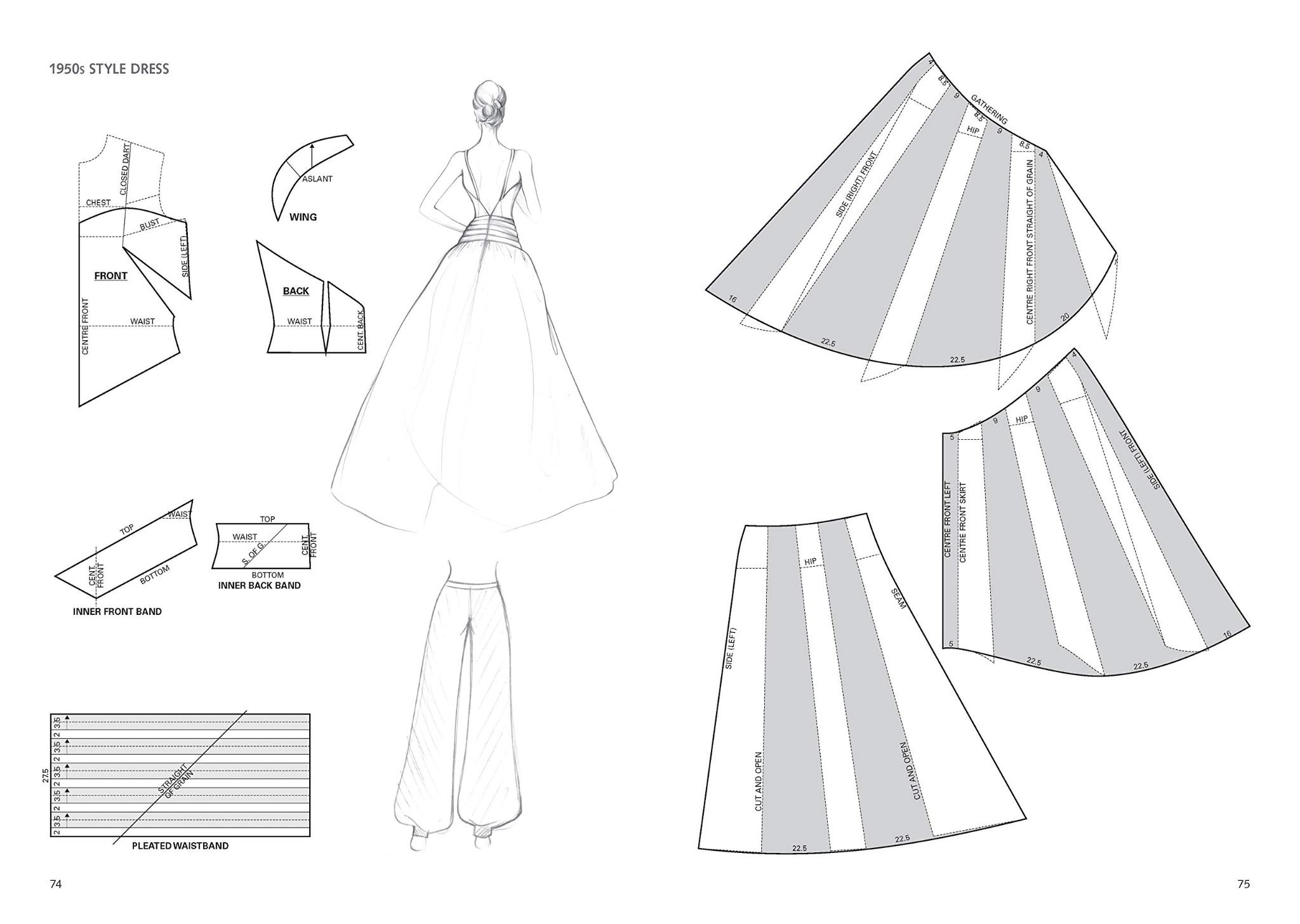
A single rectangle of fabric is a flat, two-dimensional entity. But when layered, pleated, or gathered, it gains a third dimension—depth. Couture pattern-makers understand that texture is not just about the fabric’s weave but about how it’s manipulated. Pleating, for instance, can turn a flat rectangle into a cascading waterfall of folds, as seen in the work of Issey Miyake. Gathering can create volume where there was none, as in the voluminous sleeves of a Victorian-inspired gown. Layering adds complexity, with sheer overlays creating a diaphanous effect or structured underlayers adding rigidity. The rectangle, when subjected to these techniques, becomes a canvas for experimentation. It’s a hack that turns simplicity into sophistication, where every fold and tuck tells a story. Consider the layered tulle of a ballgown, where each tier adds to the drama, transforming the wearer into a vision of ethereal grandeur. The rectangle, in the hands of a master, is not just a piece of fabric—it’s a medium for creating wearable art.
The rectangle is more than a shape. It’s a blank slate, a challenge, a canvas waiting to be transformed. These pattern-making hacks—bias cutting, invisible seaming, structural reinforcement, optical illusion, and textural alchemy—are the tools that turn the ordinary into the extraordinary. They remind us that couture is not just about clothing; it’s about reimagining the very fabric of reality. So the next time you see a gown that seems to defy gravity or a suit that fits like a second skin, remember: it all started with a simple rectangle. And the magic? It was always there, waiting to be unleashed.


Leave a Comment