

In the kaleidoscopic world of 2026, shadows no longer merely fall; they stretch, contort, and sing in surrealist symphonies. The long, lingering shadows that paint the canvases of our visual culture have become more than a play of light—they are the quiet protagonists of a new era, a place where imagination and perception blur. These shadows echo a narrative, one steeped in mystery, geometry, and the dance of luminescence, casting a spell that beckons the observer deeper into the realm of the uncanny. Welcome to the epoch of surrealist light techniques, where shadows are not just absences of light, but dynamic entities shaped by innovative artistic bravura and technological marvel.
The Metaphoric Palette: Shadows as Emissaries of the Surreal
Shadows, in their elongated forms, become metonymic pathways—veins of a vibratory universe, connecting the tangible with the intangible. Far beyond conventional chiaroscuro, the long shadows of 2026 imbue artworks with a latent narrative momentum. They act as metaphoric emissaries, revealing hidden dimensions and evoking emotions that defy linear storytelling. The stretched silhouettes serve as portals, inviting viewers to traverse a liminal space where reality folds into abstraction.
These motifs amplify a dreamlike ambiance reminiscent of a nocturnal reverie, where photographic precision meets the ethereal brushstrokes of subconscious creativity. The interplay between light and dark is no mere dichotomy; it becomes an eloquent dialogue, a whispered conversation across the canvas that teases the mind with enigmas and possibilities.
The Geometry of Illumination: Floating Shapes and Rainbow Shadows
Integral to this surrealist renaissance is the exquisite deployment of geometric shapes that levitate effortlessly within the pictorial plane. These floating geometries, illuminated by prisms of multichromatic light, cast multifaceted shadows that ripple across surfaces like a spectral tide. This technique transforms simple shapes into dynamic actors, their shadows performing a ballet of chromatic refractions and ethereal contours.
The brilliance of this approach lies not only in its technical execution but in its capacity to destabilize familiar perceptions. When a shadow itself fractures into a spectrum—casting a rainbow of colors instead of mere darkness—the artwork transcends expectation. The long shadows defy gravity and logic, orchestrating a hypnotic spectacle that draws viewers into a sensory labyrinth where dimensions overlap and narratives unfold in kaleidoscopic bursts.

Technological Renaissance: Crafting Shadows with Digital Sorcery
Behind this visual alchemy is a symbiosis of avant-garde software and groundbreaking AI-driven algorithms that empower artists to manipulate light, form, and space like never before. The digital canvas becomes a laboratory where light is bent, stretched, and refracted across time and virtual dimensions. These innovations allow for shadows that ripple with hyperreal intensity or dissolve into vaporous trails, marrying the real with the phantasmal.
Artists and creators are no longer confined by natural laws of illumination; instead, they wield digital sorcery to create surrealist realms where shadows themselves become fluid, breathing subjects. This technological renaissance not only enhances the conceptual depth of artworks but redefines the sensory experience, making the ephemeral tangible, and the invisible deeply felt.
Surrealist Iconography: The Prince of Shadows and Dreamlike Guardians
Within this luminous voyage, figures such as the enigmatic “Prince of Shadows” emerge—archetypes embodying the quintessence of surrealist storytelling. These shadowy sovereigns command the liminal space between light and darkness, wielding elongated shadows as scepters and symbols of power. They personify the delicate balance between mystery and revelation, drawing viewers into a narrative rich with layered symbolism and poetic ambiguity.
Such iconography invites contemplation on the nature of perception itself, prompting questions about the boundaries of reality and the sovereignty of the imagination. Dreamlike guardians populate this theater of light, their forms both familiar and elusive, evoking a sense of awe and an invitation to explore the unconscious corridors of thought.

Calendars as Portals: 2026 Surrealist Visions in Daily Rituals
Even in the mundane, these shadowcraft techniques infiltrate daily life, most notably through visionary calendars that transcend their temporal function. A 2026 surrealist risograph calendar, for instance, becomes more than a measure of days; it morphs into a tangible dreamscape, a cyclical voyage through fractured realities and luminous reveries. Each month unfolds as a vignette where shadows and light perform their enigmatic dance, inviting users to weave wonder into their everyday existence.
This merging of art and utility is a testament to the versatility and cultural permeation of surrealist light techniques. It transforms the act of marking time into an immersive ritual, encouraging mindfulness, imagination, and a deeper engagement with the intangible flows that govern perception and creativity.
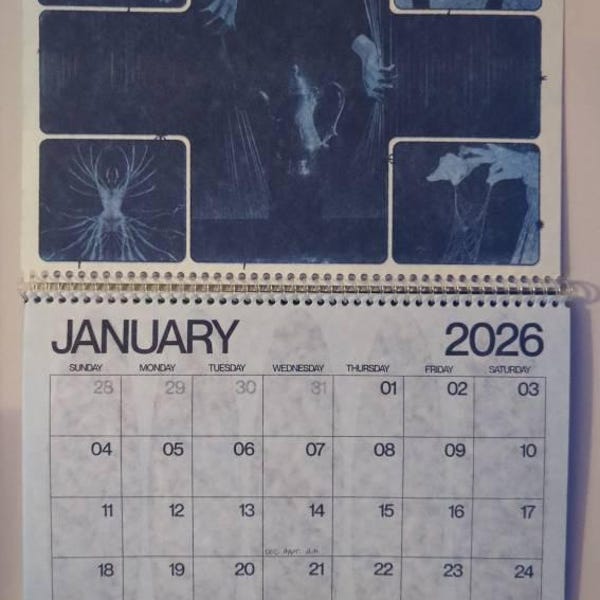
As 2026 unfolds, the long shadows wield a magnifying glass over the boundaries between the possible and the fantastical. They usher us into a universe where light itself is an artist, and shadows are its exuberant brushstrokes. Surrealist light techniques invite us to embrace the unknown, to dance within the chiaroscuro of our dreams, and to see beyond the veil of everyday appearances. Within these elongated shadows lies the promise of transformation—a luminous horizon where creativity knows no bounds and the surreal is the new reality.


Leave a Comment