

In the grand bazaar of human expression, art criticism is the shrewd merchant who haggles over the value of every brushstroke, every chisel mark, every fleeting shadow cast by a neon sign. It is not merely a transaction—it is a dance, a duel, a seduction. To navigate this marketplace is to embrace chaos, for art does not whisper; it roars, it stutters, it stumbles into brilliance. The Chaoticist’s Guide to Art Criticism is not a map, but a compass—one that spins wildly before settling into a direction all its own. It is for those who see the world not as a gallery of polished truths, but as a storm of interpretations where every viewer is both pirate and patron.
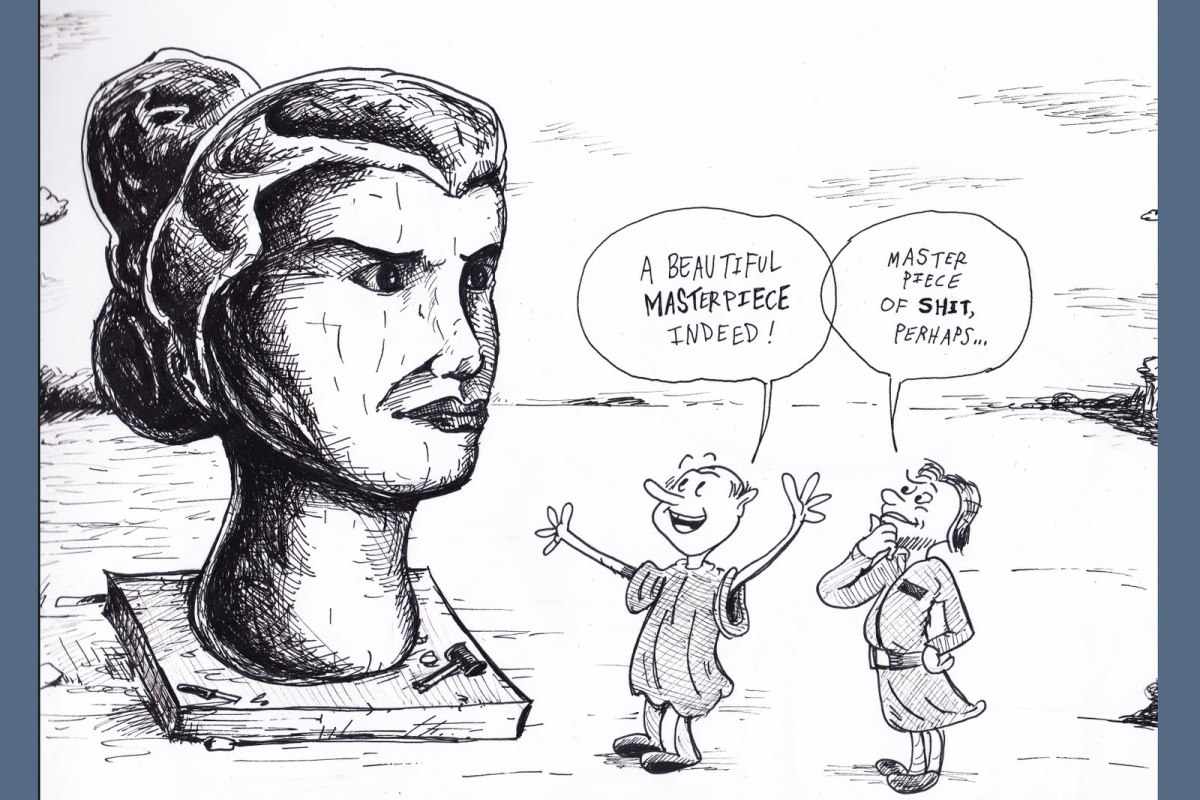
The Art Critic as Alchemist: Turning Subjectivity into Gold
Art criticism is the philosopher’s stone of culture—a quest to transmute raw perception into something luminous. The critic is not a judge, but an alchemist, stirring the cauldron of experience with the wand of insight. Every artwork is a crucible, and within its molten depths, the critic seeks not truth, but resonance. A painting is not just pigment on canvas; it is a fossil of emotion, a whisper from the artist’s subconscious, a mirror held up to the viewer’s soul.
Consider the way a critic dissects a Jackson Pollock drip painting. It is not enough to say it looks like “splattered spaghetti.” The critic must trace the trajectory of each arc, the velocity of each drop, the emotional weight of the chaos. They must ask: What invisible hand guided this storm? The critic becomes a cartographer of the unseen, mapping the emotional topography of an artist’s frenzy.
The Language of the Unseen: Crafting Criticism as Poetry
Words are the critic’s brush, and syntax is their palette. To write about art is to compose a fugue—each sentence a note, each paragraph a movement. The critic does not describe; they evoke. A sculpture is not “smooth” but “a frozen river of marble, its surface kissed by centuries of forgotten fingertips.” A photograph is not “dark” but “a vault of twilight, where light is a thief caught mid-heist.”
This is not mere ornamentation. It is survival. Art resists definition. It slips through the fingers of language like quicksilver. The critic must become a wordsmith of ambiguity, wielding metaphor like a scalpel to slice through the fog of cliché. To say a film is “visually stunning” is to yawn in the face of art. To call it “a dreamscape stitched together by the hands of a sleepwalker” is to invite the reader into the experience.
The Critic’s Dilemma: Empathy vs. Authority
There lies a tension in art criticism as taut as a violin string—between empathy and authority. The critic must wear two hats: one of the devoted admirer, the other of the unflinching examiner. To lean too far into empathy is to become a cheerleader, mistaking adoration for analysis. To lean into authority is to become a gatekeeper, wielding jargon like a velvet rope to keep the uninitiated out.
The great critic does not choose sides. They are a mediator between the artist’s intention and the viewer’s interpretation. They ask: Does this work transcend its creator’s vision? Does it speak to something universal, or is it a private language meant only for the initiated? The critic is a translator, not a translator of words, but of silence—of the unsaid, the implied, the felt.

The Aesthetic of Disruption: Why Art Criticism Thrives in Chaos
Art criticism is not a serene garden of consensus. It is a riot. It thrives in the collision of opinions, the clatter of conflicting voices. The critic does not seek harmony; they seek friction. A work of art is not a monolith, but a prism—each viewer refracts it into a spectrum of meaning. The critic’s job is to hold up the prism and say: Look. This is what you missed.
Consider the controversy surrounding a contemporary installation—a pile of rusted nails arranged in a perfect circle. To some, it is profound commentary on industrial decay. To others, it is an insult to the very idea of art. The critic does not resolve the debate. They fan the flames. They ask: What does the pile of nails reveal about our need to assign meaning to meaninglessness? The critic is not a referee, but a provocateur, daring the audience to engage.
The Critic as Time Traveler: Art in the Mirror of History
Every artwork is a time capsule, and the critic is its archaeologist. To write about art is to excavate layers of history, culture, and personal memory. A Renaissance painting is not just a depiction of saints; it is a window into the power structures of 15th-century Florence. A graffiti tag on a subway car is not just vandalism; it is a manifesto of urban identity.
The critic must ask: How does this work echo the past? How does it rebel against it? What future does it foreshadow? Art is never static. It is a living organism, breathing in the oxygen of reinterpretation. The critic is its biographer, documenting its evolution from one era to the next.
The Unspoken Contract: Criticism as a Dialogue, Not a Verdict
Art criticism is not a one-way street. It is a conversation—a spirited, sometimes heated, always evolving exchange between artist, critic, and audience. The critic does not deliver a final judgment. They extend an invitation. Come. See. Disagree. Reconsider.
This is why the best criticism feels like a performance. It is not dry analysis; it is a duet between the writer and the reader. The critic plants seeds of thought, and the audience waters them with their own experiences. A review of a ballet is not just a description of pirouettes; it is an attempt to capture the way movement can feel like a second heartbeat.
The critic must embrace vulnerability. To write about art is to risk being wrong, being misunderstood, being dismissed. But this is the price of authenticity. The critic is not a priest delivering doctrine; they are a fellow traveler, pointing out constellations in the night sky of culture.

The Final Brushstroke: Why Art Criticism Matters
In a world drowning in content, art criticism is a lifeline. It is the difference between seeing and looking, between hearing and listening. It transforms passive consumption into active engagement. It reminds us that art is not decoration; it is revelation.
The critic is not a gatekeeper, but a guide. They do not dictate taste; they cultivate it. They do not close doors; they open windows. They do not silence voices; they amplify them. In the end, art criticism is not about answers. It is about questions. It is about the thrill of the hunt, the joy of discovery, the humility of never knowing enough.
So pick up your pen. Dust off your magnifying glass. Step into the gallery of the unknown. The art is waiting. And so is the chaos.


Leave a Comment