

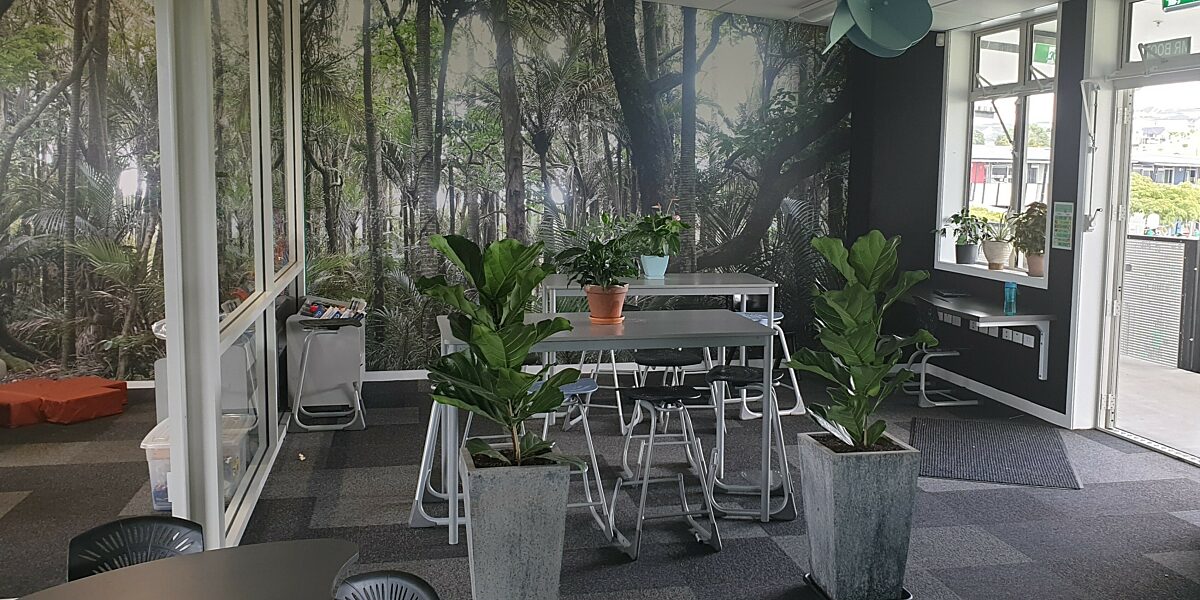
In the heart of a bustling urban school, a classroom hums with an unexpected tranquility. Sunlight filters through leaf-patterned curtains, casting dappled shadows on walls adorned with murals of towering redwoods and meandering streams. The air carries the faintest whisper of pine, a subtle fragrance diffused by a quiet, wall-mounted diffuser. Here, the rigid boundaries between indoors and outdoors dissolve, replaced by a living, breathing ecosystem where learning feels as natural as the morning dew on grass. This is the promise of biophilic art in education—a transformative approach that doesn’t just decorate spaces but redefines the very essence of how we teach and learn.
Biophilic art, rooted in the innate human affinity for nature, is more than an aesthetic trend. It’s a pedagogical revolution. By weaving natural elements, patterns, and motifs into the fabric of educational environments, it nurtures curiosity, reduces stress, and fosters creativity. Imagine a classroom where the geometry of a honeycomb inspires mathematical exploration, where the fractal patterns of ferns spark discussions on symmetry, or where the rhythmic pulse of ocean waves calms restless minds. This is where education transcends textbooks and blackboards, becoming an immersive, multisensory experience. The biophilic art of the classroom isn’t just about pretty pictures on walls; it’s about cultivating a sanctuary for the mind, a place where students don’t just absorb knowledge but *inhabit* it.
The Science Behind the Serenity: Why Nature in Classrooms Matters
Our brains are hardwired to respond to nature. Evolutionary psychology suggests that humans, as a species shaped by millennia in natural landscapes, retain an unconscious preference for environments that mimic the savannas, forests, and waterways of our ancestors. This biophilia—the innate love of life and living systems—isn’t just a feel-good concept; it’s a biological imperative. When we bring elements of the natural world into classrooms, we’re not just decorating; we’re tapping into a primal connection that enhances cognitive function, emotional well-being, and even physical health.
Studies have shown that exposure to natural light, greenery, and organic shapes can reduce cortisol levels, lower blood pressure, and improve concentration. A 2015 study published in the Journal of Environmental Psychology found that classrooms with biophilic design elements saw a 15% increase in student performance and a 10% reduction in absenteeism. The reason? Nature doesn’t just soothe; it stimulates. The irregular, organic forms of leaves and branches engage our brains in ways that straight lines and geometric patterns cannot. They invite exploration, encourage pattern recognition, and even stimulate the production of serotonin, the neurotransmitter linked to mood regulation and learning.
But the benefits extend beyond the individual. Biophilic classrooms foster a sense of community. When students are surrounded by representations of interconnected ecosystems—where every element, from the dappled light to the textured bark, tells a story of interdependence—they begin to see themselves as part of a larger whole. This holistic perspective is the bedrock of systems thinking, a critical skill in an era where complex global challenges demand innovative solutions.
From Walls to Wonder: Integrating Biophilic Art into Educational Spaces
The magic of biophilic art lies in its versatility. It can be grand or subtle, permanent or ephemeral, but it must always serve a purpose beyond mere decoration. The key is intentionality—every brushstroke, every texture, every color should be chosen to evoke a response, to spark a question, or to create a sense of place. Here’s how educators and designers can weave biophilic art into the fabric of classrooms, transforming them from sterile boxes into vibrant ecosystems of learning.
1. The Power of Patterns: Fractals, Fibonacci, and the Language of Nature
Nature speaks in patterns—from the spiral of a nautilus shell to the branching veins of a leaf. These fractal designs, which repeat at different scales, are not just visually captivating; they’re mathematically profound. Introducing students to the Fibonacci sequence through art, for example, can bridge the gap between abstract math and tangible beauty. A mural depicting a sunflower’s spiral seed arrangement can serve as a gateway to discussions on the golden ratio, while a ceiling installation mimicking the branching of a tree can inspire lessons on graph theory or even urban planning.
Teachers can take this further by encouraging students to create their own biophilic art. A project where students design a classroom mural based on local flora and fauna doesn’t just beautify the space; it deepens their connection to the environment and their understanding of ecological systems. The act of creation itself becomes a form of active learning, where students don’t just memorize facts but internalize concepts through artistic expression.
2. Light, Shadow, and the Dance of Illumination
Light is the lifeblood of biophilic design. Natural light doesn’t just illuminate; it animates. It casts shadows that move with the sun, creating a dynamic canvas that changes throughout the day. Classrooms can harness this by incorporating elements like stained glass, perforated screens, or even simple leaf-shaped cutouts in windows to cast intricate patterns on walls and floors. These light-and-shadow plays aren’t just visually stunning; they’re educational tools. Students can track the movement of the sun, study the properties of light, or even use the shadows as a canvas for storytelling or mathematical exercises.
For spaces where natural light is limited, artificial lighting can mimic the qualities of daylight. Tunable LED systems that adjust color temperature throughout the day can replicate the warm hues of sunrise or the cool blues of twilight, helping to regulate students’ circadian rhythms and improve focus. Even the humble desk lamp can become a biophilic element when designed with organic shapes or materials like bamboo or cork.
3. Tactile Textures: Engaging the Sense of Touch
In a world dominated by screens, the sense of touch is often overlooked—but not in a biophilic classroom. Textured walls, woven tapestries, or even furniture crafted from reclaimed wood invite students to engage with their environment physically. A tactile mural depicting the bark of different trees can become a lesson in biodiversity, while a rug with a river-like pattern can inspire discussions on erosion or water cycles. These textures don’t just please the fingertips; they stimulate the brain, enhancing memory retention and cognitive processing.
Teachers can leverage tactile elements in hands-on projects, such as creating clay models of natural forms or designing textured collages from recycled materials. The act of touching and manipulating these materials reinforces learning by engaging multiple senses, making abstract concepts more concrete and memorable.
Beyond Aesthetics: Biophilic Art as a Catalyst for Curriculum
Biophilic art isn’t confined to the walls of a classroom; it can be a springboard for interdisciplinary learning. When integrated thoughtfully, it becomes a thread that weaves together subjects as diverse as science, art, mathematics, and social studies. Here’s how educators can harness its potential to create a cohesive, immersive curriculum.
1. Science and the Study of Life
A biophilic classroom is a living laboratory. The plants on the windowsill aren’t just decorations; they’re living organisms that can be studied, measured, and nurtured. Students can track growth patterns, measure photosynthesis, or even design experiments to test the effects of different light conditions on plant health. A mural of a local ecosystem can serve as a backdrop for lessons on food webs, symbiosis, or the water cycle. Even the air quality can become a topic of study, with students monitoring CO2 levels and discussing the role of plants in purifying the air.
The natural world is also a gateway to discussions on sustainability and conservation. By bringing elements of nature indoors, educators can foster a deeper appreciation for the environment and inspire students to become stewards of the planet. Projects like designing a school garden or creating art from recycled materials can translate biophilic principles into action, empowering students to make a tangible difference.
2. Mathematics in the Wild
Nature is the ultimate mathematician. From the hexagonal cells of a beehive to the spiral of a galaxy, the universe is governed by patterns and proportions. A biophilic classroom can turn these natural phenomena into a playground for mathematical exploration. Students can calculate the angles of a leaf’s veins, measure the symmetry of a butterfly’s wings, or explore the Fibonacci sequence in the arrangement of seeds in a sunflower. These hands-on activities make abstract mathematical concepts tangible and relatable, demystifying numbers and formulas in the process.
Geometry takes on a new dimension when students are surrounded by organic shapes. A lesson on tessellation can be enriched by examining the interlocking patterns of a turtle’s shell or the hexagonal tiles of a honeycomb. By connecting math to the natural world, educators can help students see the subject not as a series of rote exercises but as a language that describes the very fabric of reality.
3. Art as a Bridge to the Natural World
Art is the most direct way to bring the outdoors in, but it can also be a tool for students to express their understanding of nature. Biophilic art projects can range from realistic depictions of local flora and fauna to abstract interpretations of natural processes like erosion or metamorphosis. Students can experiment with different mediums—watercolors, clay, digital art, or even soundscapes—to capture the essence of the natural world.
These artistic endeavors aren’t just about creating pretty pictures; they’re about developing observational skills, critical thinking, and creativity. When students are tasked with painting a landscape, they must observe the interplay of light and shadow, the textures of different surfaces, and the subtle hues of the sky. This close attention to detail translates into improved focus and a deeper appreciation for the world around them.
4. Language and Literature in a Living Context
A biophilic classroom can also enrich language arts by providing a rich, sensory backdrop for storytelling and poetry. The rustle of leaves, the scent of rain, the sight of a bird in flight—these natural elements can inspire vivid descriptions, metaphors, and similes. Students can write haikus about the changing seasons, craft narratives set in enchanted forests, or compose odes to the humble dandelion. The natural world becomes a muse, a setting, and a character in their literary explorations.
Even grammar lessons can be infused with biophilic themes. Students can practice sentence structure by describing a natural scene, or they can explore the concept of personification by giving human qualities to plants and animals. The classroom itself becomes a living textbook, where language comes alive through the beauty of the natural world.
The Future of Learning: A Biophilic Revolution
The classrooms of tomorrow won’t be defined by rows of desks and chalkboards. They’ll be dynamic, adaptive spaces where nature and education intertwine seamlessly. The biophilic art of the classroom is more than a trend; it’s a paradigm shift—a recognition that learning is not a passive act but an active, sensory, and deeply human experience. As educators and designers continue to explore the possibilities of biophilic design, we can expect to see classrooms that are not just places of instruction but sanctuaries of wonder, creativity, and connection.
Imagine a school where every hallway tells a story of the local ecosystem, where the cafeteria’s ceiling mimics the canopy of a forest, or where the gymnasium’s walls are adorned with murals of ocean waves to inspire movement and play. These aren’t distant dreams; they’re the next frontier of educational innovation. By embracing biophilic art, we’re not just redesigning classrooms—we’re reimagining the very act of learning. We’re creating spaces where students don’t just study nature but *become* part of it, where curiosity is nurtured, and where the boundaries between the classroom and the world outside blur into something beautiful and transformative.
The biophilic classroom is a promise—a promise that education can be joyful, that learning can be immersive, and that the natural world is not just a subject to be studied but a companion on the journey of discovery. It’s time to step inside and let the adventure begin.


Leave a Comment