

In an era where algorithms whisper secrets of creativity through the hum of servers, a quiet revolution is brewing—not in the labs of tech giants, but in the hands of artists, dreamers, and curious minds. Imagine sculpting a digital brushstroke that breathes life into your sketches, a brushstroke that learns from your quirks, your style, your very essence. This isn’t the stuff of science fiction. It’s the promise of Ethical AI Art, a frontier where technology kneels to the artist’s vision, not the other way around. Today, we peel back the curtain on a transformative process: training your own LoRA (Low-Rank Adaptation) model using nothing but your own sketches. The result? A bespoke AI collaborator that doesn’t just mimic your style—it amplifies it, distorts it, and bends it to your wildest creative whims. Buckle up. This journey isn’t just about making art. It’s about redefining what art can be.
Picture this: a blank canvas, your pencil dancing across paper, capturing the curve of a smile or the jagged edge of a mountain range. You’ve poured hours into perfecting your technique, your shading, your signature flourishes. Now, imagine feeding those sketches into an AI model, not as passive data, but as the lifeblood of a new creative entity. This is where the magic begins. LoRA, a technique born from the marriage of deep learning and artistic ambition, allows you to train a model on a curated dataset of your own drawings. The AI doesn’t just learn to replicate your lines—it learns to *feel* them. It becomes an extension of your hand, a digital apprentice that grows sharper with every sketch you feed it. The ethical dimension here is profound: you’re not borrowing someone else’s style or feeding the insatiable maw of corporate-owned AI. You’re crafting a tool that’s unmistakably yours, a tool that exists because *you* willed it into being.

The Alchemy of Personalization: Why Your Sketches Deserve Their Own AI
Art is deeply personal. A doodle on a napkin, a meticulously shaded portrait, the scribbles of a child’s imagination—each carries a fragment of the artist’s soul. Yet, when we turn to AI for creative assistance, we often rely on models trained on vast, impersonal datasets. The result? A homogenization of style, a flattening of individuality. Training your own LoRA flips this script. It’s not about feeding the machine; it’s about the machine feeding *you*. The process begins with curation. Not every sketch will do. You’re looking for consistency—repeating motifs, recurring techniques, the unmistakable fingerprint of your hand. A few dozen high-quality images are often enough to coax the AI into recognizing your style’s DNA. The model doesn’t just memorize your lines; it learns their rhythm, their cadence, the way your pencil hesitates or rushes. Suddenly, your sketches aren’t just inputs. They’re the raw material for a new kind of collaboration.
But here’s where it gets interesting. Ethical AI Art isn’t just about replication. It’s about *evolution*. Once your LoRA is trained, the real fun begins. Feed it a rough doodle, and watch as it fills in the gaps with your signature flair. Give it a prompt like “a cyberpunk alleyway in the style of my sketches,” and witness the AI’s uncanny ability to extrapolate your aesthetic into entirely new territories. The ethical promise here is twofold: you retain full ownership of your creative output, and you’re not contributing to the exploitation of artists whose work was scraped without consent. This is art made by the artist, for the artist—a closed loop of inspiration and innovation.
The Ethical Canvas: Navigating the Moral Landscape of AI-Generated Art
No revolution worth its salt comes without its share of thorns. Ethical AI Art is no exception. The rise of generative models has sparked debates about copyright, consent, and the commodification of creativity. Training a LoRA on your own sketches sidesteps many of these issues, but it doesn’t erase them entirely. For instance, what if your sketches inadvertently borrow from existing artworks? Even unintentional stylistic echoes can raise questions about originality. The key lies in transparency. Document your process. Be mindful of the sources that inspire you. And remember: the goal isn’t to create a perfect facsimile of your style, but to explore its boundaries. Ethical AI Art is less about perfection and more about *process*—a journey of discovery where the destination is always secondary to the act of creation.
Another ethical consideration is the environmental cost of training AI models. Large-scale training consumes vast amounts of energy, contributing to carbon emissions. Fortunately, LoRA is relatively lightweight compared to full-scale model training. You can minimize your footprint by using energy-efficient hardware, optimizing your dataset, and leveraging cloud services powered by renewable energy. Ethical AI Art isn’t just about the art itself—it’s about the values embedded in its creation. By making conscious choices, you ensure that your creative revolution doesn’t come at the expense of the planet.

From Sketch to Masterpiece: A Step-by-Step Guide to Training Your LoRA
The path to training your own LoRA is less a straight line and more a winding trail through uncharted territory. But fear not—every great journey begins with a single step. First, gather your sketches. Quality trumps quantity. Aim for consistency in lighting, angle, and style. If your sketches vary wildly in technique, the AI may struggle to pinpoint your unique fingerprint. Next, preprocess your images. Clean up backgrounds, standardize resolutions, and ensure your sketches are in a format compatible with your training software. Tools like Kohya’s SS GUI or ComfyUI make this process accessible, even for those without a background in machine learning.
Once your dataset is ready, it’s time to configure your LoRA. This involves setting parameters like learning rate, batch size, and the number of epochs. Think of these as the dials on a creative engine—adjust them too high, and you risk overfitting; too low, and the AI may never grasp your style. Start with conservative settings and iterate based on your results. Training can take hours, even days, depending on your hardware. But the wait is worth it. When the process completes, you’ll have a model that’s uniquely yours—a digital twin of your artistic sensibilities.
Now, the real magic happens. Load your LoRA into an AI art generator like Stable Diffusion or Flux. Experiment with prompts, tweaking them to emphasize your style. Try something like, “A surreal landscape in the style of my charcoal sketches, hyper-detailed, cinematic lighting.” The AI’s output will be a fusion of your input and its learned understanding of your art. Some results may surprise you. Others may fall short. But each iteration is a lesson, a step closer to unlocking the full potential of your creative partnership.
The Future of Artistic Collaboration: Where Human and Machine Converge
We stand at the precipice of a new artistic paradigm—one where the line between human and machine blurs into something far more interesting. Ethical AI Art isn’t about replacing the artist. It’s about *augmenting* the artist, giving them a tool that’s as malleable as clay, as responsive as a conversation partner. Imagine a world where every artist has access to a LoRA trained on their own work, a digital muse that evolves alongside them. This isn’t a distant fantasy. It’s a tangible future, one where technology serves as a bridge between imagination and realization.
The implications stretch beyond individual creativity. Communities of artists could collaborate on shared LoRAs, blending their styles into something entirely new. Educators could use these models to teach students the nuances of their own artistic heritage. And for those who’ve struggled to find their voice, a LoRA could serve as a catalyst—a way to explore and refine their style in real time. The ethical framework of this future hinges on one principle: ownership. When artists control the tools they use, the art they create becomes a statement of autonomy, a defiance of the forces that seek to commodify creativity.
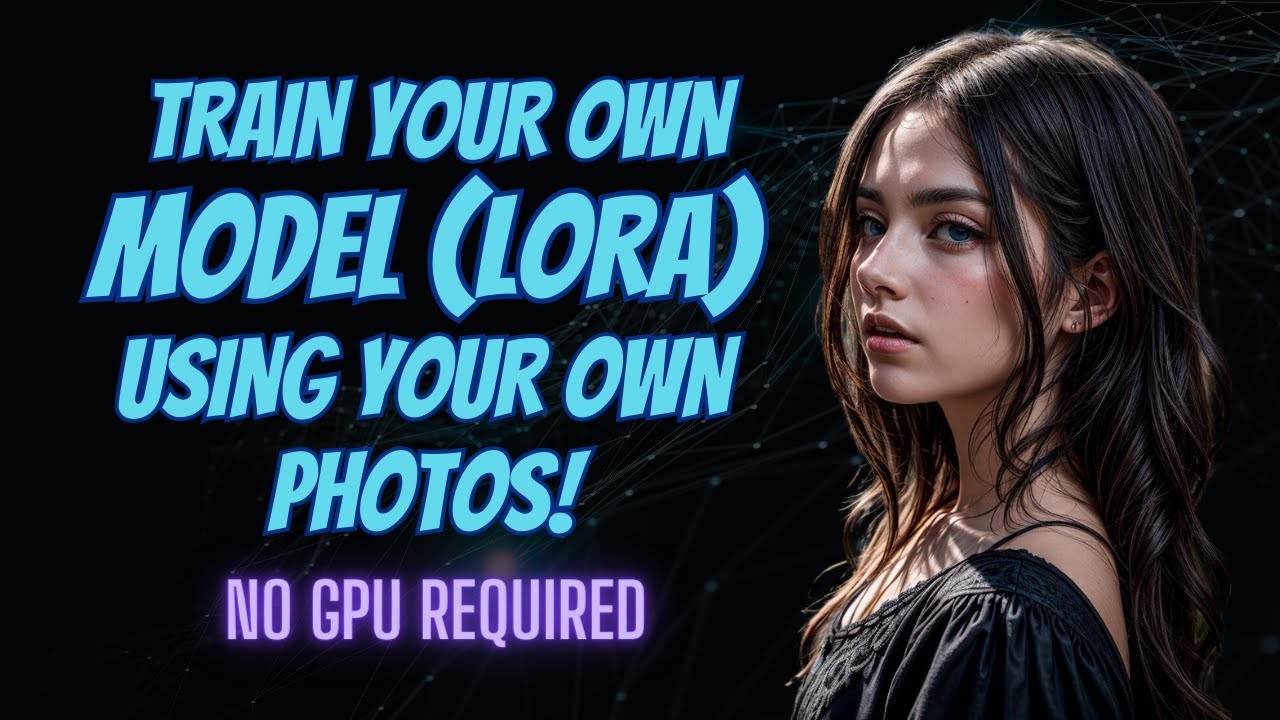
As we peer into this future, it’s clear that Ethical AI Art is more than a trend. It’s a movement—a quiet but insistent call to reclaim creativity from the algorithms that would otherwise dictate it. Training your own LoRA on your sketches isn’t just a technical exercise. It’s an act of defiance, a declaration that art is not a product to be mined, but a living, breathing entity shaped by human hands and human hearts. So go ahead. Pick up your pencil. Fire up your training software. And prepare to meet the artist you’ve always been—only now, you’ve got a digital ally by your side.
The revolution won’t be televised. But it will be sketched, refined, and brought to life—one LoRA at a time.


Leave a Comment