

What if I told you that the avant-garde isn’t lurking in the neon-lit galleries of Berlin or the loft spaces of Brooklyn, but rather in the vibrant, unapologetic strokes of contemporary Indigenous art? That the same hands that once wove baskets for sustenance now sculpt digital masterpieces that shimmer with futuristic hues? That the voices once silenced by colonial narratives now command global stages with performances that blur the lines between protest and poetry? Contemporary Indigenous art isn’t a relic of the past—it’s a rebellion in real time, a living, breathing testament to resilience, innovation, and unbridled creativity. So, let’s ask the question that lingers like smoke over a campfire: What happens when the margins become the center, and the artifacts of oppression are reclaimed as weapons of subversion?
The Canvas as Battleground: Where Tradition Meets the Unconventional
Picture this: a canvas stretched taut, not with the weight of history, but with the electric charge of the present. Contemporary Indigenous artists aren’t just painting—they’re rewriting. They’re taking the motifs of their ancestors—those sacred circles, those undulating lines that once adorned hides and pottery—and infusing them with neon, with pixelation, with the raw energy of street art. Take, for instance, the bold, geometric patterns that once told stories of migration and survival. Now, they pulse with the rhythm of electronic beats, their colors bleeding into the kind of hyper-saturated hues that make you question where the digital ends and the organic begins.
This isn’t just art for art’s sake. It’s a cultural exorcism. Artists like Kent Monkman, with his lush, cinematic canvases that mash up 19th-century European portraiture with Indigenous queer narratives, or Jaune Quick-to-See Smith, whose collages layer newspaper clippings with traditional ledger drawings, are doing more than creating beautiful objects. They’re dismantling the very frameworks that have kept Indigenous art trapped in the dusty vitrines of anthropology museums. The challenge? Convincing the world that this isn’t just art—it’s a corrective, a way to see Indigenous people not as relics of a bygone era, but as architects of the future.

The Sculptor’s Hand: From Stone to Steel, From Clay to Code
Sculpture, too, has undergone a radical transformation. Gone are the days when Indigenous art was reduced to “primitive” carvings meant to satisfy the colonial gaze. Today, artists like Brian Jungen take discarded Nike sneakers and transform them into towering totemic figures that critique consumerism while paying homage to ancestral forms. Others, like the collective behind Postcommodity, create site-specific installations that merge sound, light, and architecture to challenge borders—both physical and psychological.
The materials are as diverse as the ideas. Bronze gleams next to recycled plastics. Glass refracts light like the shimmer of a desert mirage. Even digital realms are being colonized, with artists like Skawennati crafting immersive virtual worlds where Indigenous futures unfold in real time. The question isn’t whether these works belong in the hallowed halls of contemporary art—it’s whether those halls can expand enough to hold them without suffocating their radical potential.
And yet, the challenge persists: How do you display a sculpture that’s as much about sound as it is about form? How do you convey the weight of a piece made from 500 hand-painted skateboards without reducing it to a mere spectacle? The answer lies in the willingness of curators and audiences alike to listen—not just with their eyes, but with their entire bodies.
Performance as Protest: The Body as the Ultimate Medium
If art is a language, then performance is its most visceral dialect. Contemporary Indigenous performance artists are rewriting the rules of engagement, turning their bodies into living manifestos. Take Rebecca Belmore’s Fountain, where she stood naked in a fountain, her mouth filled with water, as a silent scream against the erasure of Indigenous women. Or the work of Tanya Lukin Linklater, whose choreography weaves together Yup’ik dance, experimental movement, and the politics of land reclamation.
These aren’t just performances—they’re interventions. They disrupt the passive consumption of art by forcing the audience to confront their own complicity in systems of oppression. The challenge? Not every viewer is ready to be confronted. Not every gallery is prepared to host the kind of discomfort that comes with witnessing a body in revolt. But that’s the point. Art isn’t supposed to be comfortable. It’s supposed to unsettle.
And yet, the risk is real. The more radical the performance, the louder the backlash. How do you balance the need to shock with the need to be heard? How do you ensure that the message doesn’t get lost in the spectacle? The answer, perhaps, lies in the repetition—the relentless return to the body, the land, the unspoken histories that refuse to stay buried.
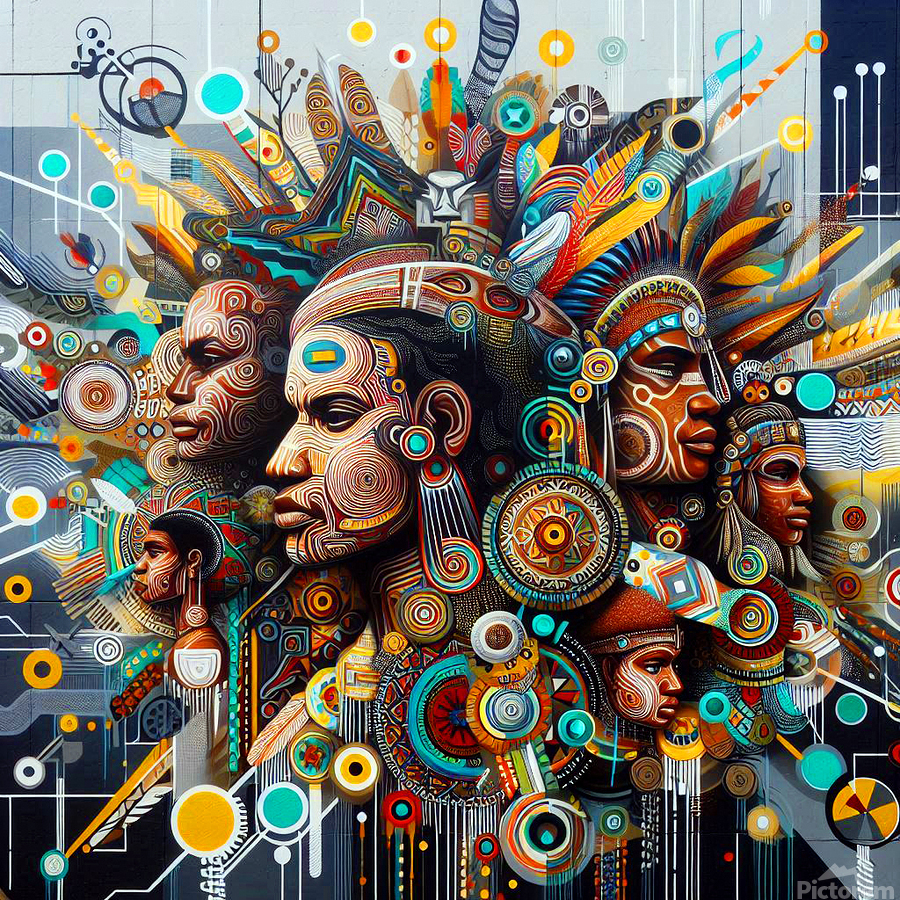
The Digital Frontier: When Art Escapes the Gallery Altogether
The internet is the new frontier, and Indigenous artists are staking their claim with a ferocity that would make even the most seasoned digital nomad pause. Social media platforms have become galleries unto themselves, where artists like Christi Belcourt share her intricate beadwork patterns with millions, or where the #IndigenousTwitter community turns memes into acts of resistance. Even video games are being reclaimed, with titles like Never Alone (developed in collaboration with the Cook Inlet Tribal Council) weaving traditional Iñupiaq stories into an interactive experience that educates while it entertains.
But here’s the rub: the digital world is a double-edged sword. On one hand, it democratizes access, allowing artists to bypass gatekeepers and reach global audiences. On the other, it opens the door to exploitation—NFTs that strip away cultural context, algorithms that flatten complexity into clickbait, and the ever-present threat of cultural appropriation in the form of stolen digital designs.
The challenge? How do you navigate a space that’s as boundless as it is treacherous? How do you protect the sacred while embracing the infinite possibilities of the virtual? The answer may lie in the creation of Indigenous-led digital spaces—platforms where the rules are written by those who understand the weight of their own stories.
The Market’s Gaze: Can Capitalism Co-opt the Avant-Garde?
Let’s talk about money, because in the art world, money talks—and it often does so in a language of exclusivity. Contemporary Indigenous art is no exception. Auction houses like Sotheby’s now feature Indigenous artists alongside blue-chip names, and galleries in major cities clamor to represent them. But at what cost? When an artist’s work sells for six figures, does it liberate them—or does it tether them to the very systems they’ve spent a lifetime critiquing?
The tension is palpable. On one side, there’s the undeniable power of visibility. When an artist like Jeffrey Gibson, whose vibrant, text-based paintings blend powwow regalia with queer theory, graces the cover of Artforum, it sends a message: Indigenous art isn’t just relevant—it’s essential. On the other side, there’s the creeping fear that the market will reduce this work to mere trendiness, stripping it of its political teeth in the name of profit.
The challenge? How do you thrive within a system that was never designed to accommodate you? How do you play the game without becoming a pawn? Some artists, like the collective behind REDOUBT, have taken the radical step of rejecting the market altogether, opting instead for community-based models of support. Others, like Maria Hupfield, navigate the system with a shrewdness that borders on subversion, using their platform to fund Indigenous-led initiatives while still playing the game. The answer, it seems, lies in a delicate balance—one part strategy, one part stubborn refusal to be co-opted.
Conclusion: The Future is Indigenous, and It’s Already Here
So, where does that leave us? In a world that’s still catching up to the fact that Indigenous art isn’t a relic—it’s a revolution. A movement that’s as much about reclaiming space as it is about inventing new languages, new forms, new ways of seeing. The challenge isn’t just for the artists, though they bear the brunt of the fight. It’s for all of us—to unlearn the narratives that have kept Indigenous creativity confined to the past, to open our eyes to the fact that the avant-garde isn’t a distant dream, but a living, breathing reality.
The next time you find yourself in a gallery, ask yourself: What am I really looking at? Is it a painting, or is it a manifesto? Is it a sculpture, or is it a demand? Because contemporary Indigenous art isn’t just art. It’s a challenge. It’s a question. It’s the sound of a drumbeat echoing through the halls of a museum that was never meant to hear it—and yet, here it is, louder than ever.
The future of art isn’t in the past. It’s in the hands of those who refuse to be silenced. And it’s here, now, waiting for you to catch up.


Leave a Comment