

In the pantheon of classical music, few works possess the mesmerizing, almost supernatural pull of Maurice Ravel’s Boléro. A mere 15 minutes long, this orchestral tour de force has captivated audiences for nearly a century, its relentless rhythm and hypnotic crescendo leaving listeners spellbound. Yet, for all its fame, the piece is often dismissed as simplistic—a repetitive loop of the same melody, endlessly layered with increasing intensity. But here’s the paradox: the so-called “wrong” note in Boléro isn’t a mistake at all. It’s the secret ingredient that transforms a straightforward composition into a masterpiece of psychological and emotional resonance.
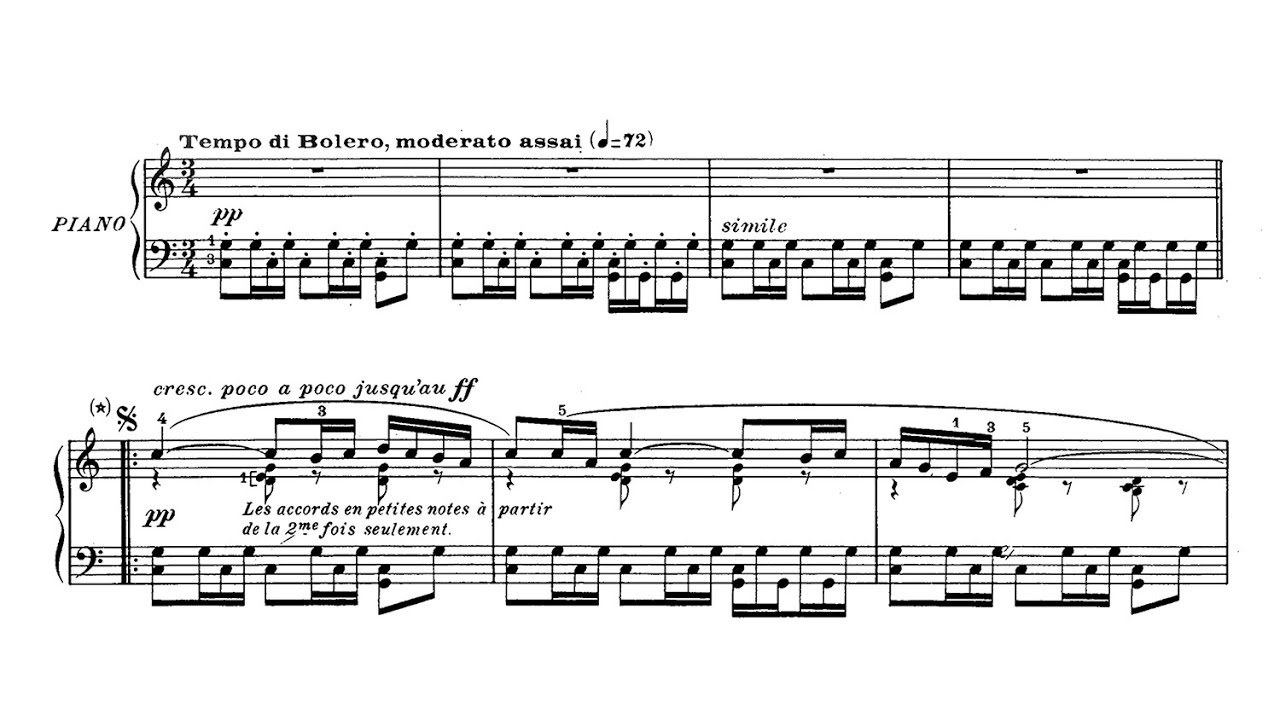
This singular note, tucked away in the ninth bar of the piece, is not an error but a deliberate provocation. It disrupts the otherwise seamless harmonic progression, injecting a moment of tension that feels almost visceral. To understand why this note—this fleeting dissonance—is the linchpin of Boléro’s hypnotic allure, we must peel back the layers of its construction, its cultural context, and the uncanny way it mirrors the human experience of anticipation and release.
The Illusion of Repetition: Why Familiarity Feels New
At first listen, Boléro appears to be a study in monotony. The same two-bar melody cycles endlessly, each repetition layered with additional instruments, crescendoing in volume and texture. The snare drum, that relentless heartbeat, anchors the piece, ensuring that no moment of respite exists. Yet, this repetition is not stagnation—it’s a slow-burning fuse. The hypnotic effect arises not from the sameness of the melody but from the subtle variations introduced with each iteration. The orchestration shifts, the dynamics swell, and the listener’s ear is trained to anticipate the next twist.
This is where the “wrong” note enters the fray. Positioned in the ninth bar, it arrives without warning, a jarring E natural in a context where an E flat would be expected. The dissonance is fleeting, but its impact lingers. It’s as if Ravel has inserted a single, unexpected breath into a lung that should be filling steadily. The note doesn’t resolve immediately; instead, it lingers, a ghost in the harmonic fabric, before the melody continues its inexorable march. This moment of tension is the crack in the dam—it makes the eventual release feel earned, even cathartic.
The Psychology of Anticipation: How the Brain Craves Resolution
Human psychology is wired to seek patterns and resolve uncertainty. When we hear Boléro, our brains latch onto the repetitive structure, lulling us into a false sense of security. We expect the melody to continue as it has before, but Ravel’s “wrong” note shatters that expectation. This disruption triggers a cognitive response—our minds scramble to reconcile the dissonance, searching for a logical explanation. The momentary discomfort is fleeting, but it primes us for the emotional payoff that follows.
This phenomenon is akin to the Zeigarnik effect, a psychological principle where interrupted tasks are more likely to be remembered than completed ones. The “wrong” note acts as an interruption, a cognitive hiccup that heightens our engagement. As the piece progresses, the crescendo amplifies this effect, each repetition feeling more urgent, more necessary. By the time the final, thunderous climax arrives, we’re not just hearing a melody—we’re experiencing a collective release, a shared exhale that feels almost physical.
The brilliance of Ravel’s composition lies in its ability to manipulate time. The repetition creates a sense of timelessness, a liminal space where minutes stretch into eternity. Yet, the “wrong” note punctuates this eternity, reminding us that time is passing, that change is inevitable. It’s a paradox: the piece feels both eternal and fleeting, a snapshot of a moment that refuses to end.
The Cultural Echo: Boléro as a Mirror of Human Obsession
Boléro’s hypnotic power extends beyond the concert hall. Its structure has been co-opted by filmmakers, choreographers, and even advertisers, each iteration reinforcing its status as a cultural touchstone. Yet, its most enduring appeal may lie in its reflection of human obsession—the way we fixate on a goal, the way we chase a climax that seems perpetually just out of reach. The piece doesn’t just mimic obsession; it embodies it. The relentless rhythm, the incremental build, the inevitable crescendo—all of these elements mirror the way we pursue desires, whether artistic, personal, or emotional.
Consider the way Boléro has been used in cinema. In films like 10 and The Thomas Crown Affair, the piece underscores moments of seduction and conquest, its crescendo mirroring the mounting tension of a romantic or heist narrative. The “wrong” note, in these contexts, becomes a metaphor for the obstacles that must be overcome, the disruptions that must be endured before reaching a climax. It’s no wonder that the piece has been adopted as a shorthand for intensity, for the kind of all-consuming focus that borders on the transcendent.

The Alchemy of Simplicity: Why Less Can Be More
In an era where musical complexity is often equated with sophistication, Boléro stands as a testament to the power of simplicity. Ravel stripped his composition down to its barest essentials—a single melody, a repetitive rhythm, a gradual build—and yet, the result is anything but simplistic. The “wrong” note is the key that unlocks this alchemy. Without it, the piece would be a mere exercise in orchestration, a technical showcase devoid of emotional depth. With it, Boléro becomes a meditation on the human condition, a sonic representation of the push and pull between order and chaos.
This is the essence of Ravel’s genius: he understood that the most powerful art doesn’t just entertain—it unsettles. The “wrong” note is a deliberate provocation, a challenge to the listener to engage more deeply. It’s a reminder that perfection is an illusion, and that beauty often lies in the cracks, the imperfections, the moments where the expected gives way to the unexpected.
The Legacy of the “Wrong” Note: A Composition That Never Dies
Decades after its premiere, Boléro continues to captivate, its hypnotic pull undiminished. The “wrong” note remains a point of fascination for musicians and scholars alike, a testament to Ravel’s unparalleled understanding of harmony and psychology. It’s a reminder that the most enduring works of art are not those that play it safe, but those that dare to disrupt, to challenge, to leave a mark.
Perhaps that’s why Boléro feels so timeless. It doesn’t just tell a story—it invites the listener to become part of it. The repetition, the crescendo, the fleeting dissonance—all of these elements conspire to create an experience that feels both personal and universal. It’s a piece that doesn’t just demand attention; it demands participation. And in that participation, we find something profound: a reflection of our own obsessions, our own struggles, our own relentless pursuit of resolution.
So the next time you hear Boléro, listen closely. That single, “wrong” note isn’t a mistake. It’s the heartbeat of the piece, the spark that ignites its hypnotic power. It’s the reason why, after all these years, we’re still under its spell.


Leave a Comment