

In the quietude of a 19th-century French atelier, a humble fruit basket became the fulcrum upon which the tectonic plates of art history shifted. Paul Cézanne’s The Basket of Apples, with its audacious disregard for classical perspective, was not merely a still life—it was a seismic tremor. The apples, once round and obedient, now teetered in defiance of gravity, their forms fractured into facets that whispered of a new visual language. This was no mere rebellion; it was the birth pangs of Cubism, a movement that would dismantle the tyranny of the single viewpoint and reconstruct reality in shards of light and shadow. What began as a painter’s meditation on perception would evolve into a revolution that shattered centuries of artistic convention, leaving in its wake a world where shapes no longer obeyed the dictates of the eye but instead danced in the kaleidoscopic mind of the artist.
The Apple as the First Rebel: Cézanne’s Subversive Geometry
Cézanne’s apples were not content to sit passively on a table. They rolled, they tilted, they seemed to defy the very laws of physics. This was no accident. The artist, often dismissed as a grumpy outsider in his lifetime, was in fact a visionary dissecting the world with the precision of a surgeon. His brushstrokes were not strokes at all but tectonic shifts, each one a fault line redefining the terrain of form. The tablecloth, once a flat expanse, now buckled under the weight of his scrutiny, its folds a topography of tension. The wine bottle, rendered with a skewed perspective, became a totem of his refusal to kneel before Renaissance perspective. In this quiet still life, Cézanne was already laying the groundwork for a new visual grammar—one where objects were not static but dynamic, where space was not a container but a malleable entity.
The genius of Cézanne’s approach lay in his ability to see the world as a constellation of shapes rather than a fixed tableau. His apples were not merely fruit; they were geometric enigmas, their curves and contours a puzzle to be solved. By breaking down their forms into interlocking planes, he transformed the mundane into the monumental. This was not abstraction for abstraction’s sake but a radical reimagining of how we perceive the world. The eye, he seemed to say, does not see in neat, linear slices but in fractured, overlapping glances. His work was a manifesto disguised as a painting, a declaration that reality was far more complex—and far more beautiful—than the rigid confines of tradition allowed.
From Still Life to Shattered Reality: The Cubist Metamorphosis
If Cézanne’s apples were the first whispers of Cubism, then Pablo Picasso and Georges Braque were the thunder that followed. Where Cézanne had fractured form with a painter’s subtlety, the Cubists would obliterate it entirely, reassembling the pieces into a new, disorienting whole. The still life became a playground for experimentation, where fruit baskets morphed into jagged collages of color and line. The apples, once round and inviting, now stared back in angular defiance, their facets slicing through space like the edges of a shattered mirror. This was not art that flattered the eye; it was art that challenged it, forcing the viewer to engage in a mental gymnastics of reconstruction.
The Cubist universe was a place of paradoxes. It was both familiar and alien, a world where a guitar could be both an object and a series of overlapping planes, where a newspaper clipping could coexist with a painted still life. The movement’s dual pioneers, Picasso and Braque, pushed each other into ever more radical territory, their canvases becoming dense forests of symbol and structure. They borrowed from African masks, from Cézanne’s geometric musings, from the fractured light of a prism—all to create a language that spoke in riddles. The result was a visual revolution that demanded participation. The viewer was no longer a passive observer but an active co-creator, piecing together the fragments of meaning from the chaos of brushstrokes and collage.
What made Cubism so revolutionary was its rejection of the single, fixed viewpoint. In a world where photography had already begun to capture reality with unnerving precision, the Cubists sought to depict not what the eye saw but what the mind understood. A face, for instance, was not a static portrait but a series of angles and planes, a temporal snapshot of perception. This was art as a cognitive puzzle, a challenge to the viewer’s preconceptions. The movement’s appeal lay in its ability to make the familiar feel strange, to transform the ordinary into the extraordinary through the alchemy of deconstruction and reconstruction.
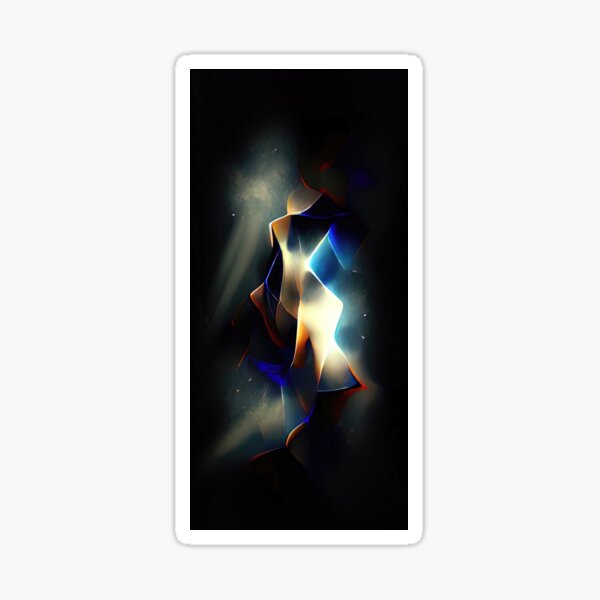
The image above captures the spirit of this transformation—a cubist universe where shapes twist and collide in a dance of pure abstraction. Here, the boundaries between object and environment dissolve, leaving only the raw energy of form. It is a visual echo of the Cubist ethos: that reality is not a fixed entity but a fluid, ever-shifting phenomenon, best captured not in a single glance but in the cumulative experience of perception.
The Lingua Franca of Modern Art: How Cubism Reshaped the Visual World
Cubism was not merely a style; it was a seismic shift that reverberated across the entire landscape of modern art. Its influence seeped into movements as diverse as Futurism, Constructivism, and even Surrealism, each borrowing its language of fractured forms to express their own revolutionary ideas. The Dadaists, with their collages of found objects, took Cubism’s love of fragmentation and ran with it into the absurd. The Futurists, obsessed with speed and dynamism, saw in its angular planes a way to depict the chaos of modern life. Even in architecture, the echoes of Cubism could be heard in the bold, geometric lines of Bauhaus design and the deconstructivist structures of Zaha Hadid.
But perhaps the most enduring legacy of Cubism was its democratization of art. By breaking down the barriers between high and low art, between the sacred and the profane, it paved the way for movements that embraced the everyday—the Pop Art of Warhol, the street art of Basquiat, even the digital art of today. The cubist apple, once a symbol of artistic rebellion, became a metaphor for the endless possibilities of reinvention. In a world where images bombard us from every angle, Cubism reminds us that perception is not a passive act but an active, creative process. It teaches us to see the world not as it is presented to us but as we choose to interpret it.
The movement also challenged the very notion of what art could be. No longer confined to the canvas, Cubism embraced collage, sculpture, and even performance as valid forms of expression. Artists like Juan Gris and Fernand Léger pushed the boundaries further, their works becoming labyrinths of meaning where every angle revealed a new layer of complexity. The cubist universe was not a place of answers but of questions, a visual labyrinth where the journey was as important as the destination.
The Timeless Allure of the Cubist Aesthetic
Why, after more than a century, does the cubist aesthetic continue to captivate? Perhaps it is because it taps into a fundamental human desire—to make sense of the chaos. In a world that often feels fragmented and disjointed, Cubism offers a kind of order, a way to impose structure on the seemingly random. Its angular forms and bold contrasts are a balm to the eye, a visual rhythm that soothes even as it challenges. There is a thrill in deciphering its codes, a satisfaction in piecing together the puzzle of its compositions.
There is also something deeply democratic about Cubism. It does not require the viewer to be an expert to appreciate its beauty. A child can be drawn to its bright colors and bold shapes; an art historian can lose themselves in its layers of meaning. It is art that invites participation, that rewards curiosity. In an era where art is often commodified and reduced to soundbites, Cubism remains refreshingly complex—a reminder that beauty can be both accessible and profound.
The cubist universe is, in many ways, a mirror of our own. It reflects the fractured nature of modern life, the way we juggle multiple identities, multiple perspectives, in a single moment. It is an art of multiplicity, of simultaneity, where the whole is greater than the sum of its parts. And perhaps that is why it endures—because it speaks to the way we live now, in a world where nothing is fixed, where everything is in flux.
The Legacy: A World Reimagined in Shapes
The journey from Cézanne’s apples to the cubist universe is not just a story of artistic evolution; it is a testament to the power of perception. It is a reminder that reality is not a given but a construct, one that we shape with every glance, every brushstroke, every act of creation. The cubists did not merely change the way we see art; they changed the way we see the world. They taught us to look beyond the surface, to embrace the complexity of form, to find beauty in the broken and the fragmented.
Today, as we navigate a world awash in images and information, the lessons of Cubism are more relevant than ever. In an age of deepfakes and digital manipulation, where reality is increasingly fluid, the cubist ethos offers a way forward—a call to question, to deconstruct, to reconstruct. It is an invitation to see the world not as it appears but as it could be, to find meaning in the chaos, to create order from the fragments.
The cubist universe is not a place of endings but of beginnings. It is a starting point, a blank canvas upon which we can project our own visions, our own dreams. It is a reminder that art is not a static thing but a living, breathing entity, one that evolves with us, that challenges us, that inspires us to see the world—and ourselves—in new and unexpected ways. So let us raise a glass to the apples that started it all, to the shapes that changed everything, and to the endless possibilities that lie ahead.


Leave a Comment