

In the hallowed halls of the Louvre, where whispers of history echo against marble floors, one painting commands an almost mythical reverence. The Mona Lisa—Leonardo da Vinci’s enigmatic masterpiece—has long been shrouded in mystery, not just for her enigmatic smile, but for the secrets hidden within her brushstrokes. What if I told you that this iconic work wasn’t merely a painting, but a lifelong obsession? A canvas that refused to be finished, a puzzle that haunted its creator for sixteen years? The truth is far more fascinating than the legend suggests.
Leonardo da Vinci was a man of relentless curiosity, a polymath whose mind danced between art, science, and philosophy. Yet, even he was not immune to the paralyzing grip of perfectionism. The Mona Lisa was not a swift creation; it was a slow, deliberate dance between genius and doubt. Imagine, if you will, a painter who could spend months perfecting the curl of a single lock of hair, who would abandon projects midway if they failed to meet his exacting standards. This was Leonardo. And the Mona Lisa? She was his magnum opus—a work that refused to be confined by time.
The Genesis of a Masterpiece: A Portrait Born from Obsession
The story of the Mona Lisa begins in 1503, when Leonardo was commissioned to paint the portrait of Lisa Gherardini, the wife of Florentine merchant Francesco del Giocondo. At the time, Leonardo was already a celebrated artist, his reputation cemented by works like The Last Supper and Vitruvian Man. Yet, something about this commission struck a different chord within him. Perhaps it was the challenge of capturing not just a likeness, but an essence—an elusive spark that would make the portrait immortal.
From the outset, Leonardo approached the task with unparalleled meticulousness. He eschewed traditional methods, opting instead for a technique known as sfumato, a smoky, hazy blending of colors that would give the painting its ethereal quality. He spent countless hours studying the play of light on Lisa’s face, capturing the subtle shifts in expression that made her smile so mesmerizing. But as the years passed, the painting evolved from a simple portrait into something far more profound—a meditation on humanity itself.
By 1517, Leonardo had been living in France for three years, serving under King Francis I. The Mona Lisa was by his side, a constant companion in his studio. Yet, despite his best efforts, the painting remained unfinished. Some historians speculate that Leonardo’s perfectionism was the culprit; others suggest that he simply lost interest in the mundane task of completing a portrait when his mind was consumed by grander visions. Whatever the reason, the Mona Lisa became a silent witness to his genius, a work that grew more legendary with each passing day.
The Science Behind the Unfinished: A Canvas of Layered Secrets
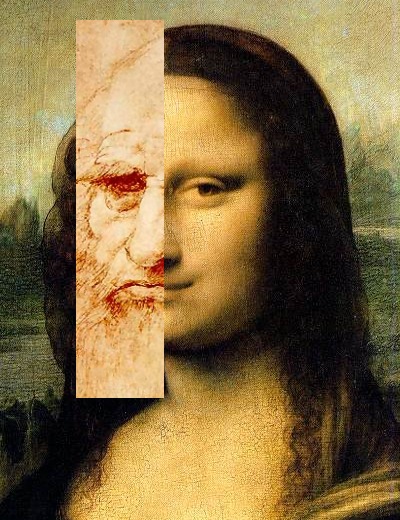
To understand why the Mona Lisa was never finished, we must delve into the technical intricacies of Leonardo’s process. Infrared and X-ray analyses have revealed a labyrinth of underdrawings, abandoned compositions, and layers of paint that tell a story of constant revision. Leonardo was not one to settle; he would scrape away sections, repaint entire areas, and experiment with new techniques until he was satisfied—or until time ran out.
One of the most fascinating discoveries is the presence of multiple versions of Lisa’s face beneath the final layer of paint. Infrared reflectography has shown that Leonardo initially painted her with a more pronounced smile, her lips curled in a way that was less enigmatic and more overtly joyful. Over time, he softened the expression, layering glaze upon glaze until the smile became a whisper—a fleeting glimpse of emotion that would haunt viewers for centuries.
But the unfinished nature of the Mona Lisa is not merely a result of Leonardo’s perfectionism; it is also a reflection of his evolving artistic philosophy. By the time he left Italy for France, his focus had shifted from realism to something far more abstract. He was no longer interested in capturing a fleeting moment; he was chasing an idea, a concept that transcended the boundaries of portraiture. The Mona Lisa became a vessel for his thoughts, a canvas where he could explore the interplay of light, shadow, and human emotion without the constraints of a commission.
The Psychological Enigma: Why Did Leonardo Never Finish Her?
Perfectionism is a double-edged sword, and Leonardo da Vinci wielded it with both brilliance and burden. To understand why he never completed the Mona Lisa, we must consider the psychological landscape of a man who was never satisfied. Leonardo was known to abandon projects when they failed to meet his exacting standards—The Battle of Anghiari, for instance, was left incomplete due to his dissatisfaction with the fresco technique. The Mona Lisa was no different; it was a work that grew in complexity with each passing year, until it became a symbol of his own unresolved genius.
Some art historians suggest that Leonardo’s perfectionism was intertwined with a deeper existential struggle. He was a man who sought to understand the universe, to unravel the mysteries of nature and human existence. The Mona Lisa, with her enigmatic smile and piercing gaze, became a metaphor for the unknown—a puzzle that could never be fully solved. Perhaps Leonardo realized, deep down, that no painting could ever capture the full essence of a human being. And so, he left her unfinished, a silent testament to the futility of absolute perfection.
Others argue that external factors played a role. Leonardo’s later years were marked by financial struggles, political upheaval, and the demands of his royal patrons. The Mona Lisa may have simply been a casualty of circumstance—a project that was set aside in favor of more pressing matters. Yet, even if this were the case, the painting’s unfinished state only adds to its mystique. It is as if Leonardo knew, intuitively, that some mysteries are meant to remain unsolved.
The Legacy of the Unfinished: How a Painting Became a Legend
The fact that the Mona Lisa was never completed did not diminish its power; if anything, it amplified it. In the centuries that followed Leonardo’s death, the painting became a cultural phenomenon, a symbol of artistic genius and human intrigue. The unfinished state of the work only deepened its allure, inviting viewers to project their own interpretations onto the canvas. Was she smiling because she knew a secret? Was her gaze a challenge, a silent dare to unravel the mysteries of her creator?
By the time the Mona Lisa was installed in the Louvre in 1804, she had already achieved near-mythical status. The painting’s theft in 1911 and subsequent recovery in 1913 only cemented her legend, turning her into a global icon. Today, millions flock to the Louvre each year, drawn not just by the painting’s fame, but by the sense that they are witnessing something beyond art—a fragment of Leonardo’s soul, frozen in time.
The unfinished nature of the Mona Lisa also raises profound questions about the nature of art itself. Is a masterpiece defined by its completion, or by the journey that led to its creation? Leonardo’s reluctance to finish the painting forces us to confront the idea that some works are meant to remain in a state of perpetual becoming—a testament to the artist’s ongoing dialogue with their craft.

The Modern Obsession: Why the Unfinished Still Fascinates Us
In an era where instant gratification is the norm, the Mona Lisa stands as a relic of a time when art was a slow, deliberate process. Her unfinished state is a reminder that greatness is not always about reaching a destination, but about the journey itself. It challenges us to embrace imperfection, to see beauty in the incomplete, and to recognize that some mysteries are meant to linger.
Today, artists and scholars continue to study the Mona Lisa, using cutting-edge technology to uncover new secrets hidden beneath her surface. Each discovery adds another layer to the painting’s legend, proving that Leonardo’s genius was not just in his brushstrokes, but in his ability to leave us wanting more. The Mona Lisa is not just a painting; she is a conversation between the past and the present, a dialogue that will never truly end.
So the next time you stand before the Mona Lisa, take a moment to consider the sixteen years of hesitation, the layers of paint, and the unspoken thoughts that went into her creation. She is not just a masterpiece; she is a testament to the power of the unfinished, a reminder that sometimes, the most profound works of art are the ones that refuse to be confined by time.
The Mona Lisa may never have been finished, but in her incompleteness, she became immortal. And perhaps that is the greatest mystery of all.


Leave a Comment