

The first time I laid eyes on a found object diorama, it felt like stumbling upon a secret language whispered by the universe itself. There, nestled in a thrift store’s dusty corner, was a tiny world crafted from discarded keys, bent spoons, and the faded remnants of a vintage postcard. It wasn’t just an arrangement of objects—it was a story, a rebellion against waste, and a testament to the alchemy of perception. This wasn’t art as we knew it; it was art as a dare, a challenge to see the extraordinary in the overlooked. And the most astonishing part? You could replicate this magic with a $100 budget, a scavenger’s intuition, and a willingness to defy convention.
Found object design isn’t just a trend—it’s a quiet revolution. It’s the art of turning the mundane into the magnificent, the broken into the beautiful, and the forgotten into the unforgettable. It’s a practice that demands curiosity, patience, and a touch of audacity. Imagine transforming a pile of rusted nails, a chipped teacup, and a yellowed map into a miniature landscape that evokes the grandeur of a lost civilization. Or crafting a sculpture from the detritus of a city street—a ballet of bottle caps, wire, and shattered glass that dances with the rhythm of urban decay. This is the power of found object design: it doesn’t just decorate space; it redefines it. And the best part? You don’t need a trust fund or a gallery to make it happen. All you need is a keen eye, a little ingenuity, and the courage to see the world differently.

The Alchemy of Perception: Why Found Objects Demand a Second Glance
At its core, found object design is a rebellion against the disposable culture that surrounds us. In a world where everything is designed to be replaced, these creations are a defiant act of reclamation. They force us to pause, to question, and to reconsider the value we place on objects—and, by extension, on ourselves. When you pick up a discarded item and see its potential, you’re not just repurposing trash; you’re rewriting its narrative. A chipped ceramic shard isn’t a fragment of a broken mug—it’s a relic of a forgotten afternoon tea, a piece of history waiting to be resurrected.
This shift in perspective is what makes found object design so transformative. It’s not about creating something new from scratch; it’s about uncovering the hidden stories within what already exists. Consider the humble bottle cap. To most, it’s a nuisance, a piece of litter to be tossed aside. But to an artist, it’s a tiny canvas, a disc of metal that can be hammered, painted, or arranged into patterns that mimic the scales of a dragon or the petals of a flower. The magic lies in the transformation—the moment when an object’s past collides with its future, and something entirely unexpected emerges.
Found object design also taps into a primal human instinct: the thrill of the hunt. There’s a childlike joy in foraging for treasures, in sifting through flea markets, thrift stores, and construction sites with the hope of stumbling upon a gem. But it’s more than just nostalgia. It’s a reminder that beauty isn’t confined to pristine galleries or polished storefronts. It’s in the cracks of a sidewalk, the peeling paint of an old door, the tangled mess of a garden overgrown with weeds. By embracing found objects, we reclaim a sense of wonder that modern life often strips away.

From Trash to Treasure: The $100 Blueprint for Found Object Mastery
You don’t need deep pockets to dive into found object design—just a strategic approach and a willingness to experiment. With a $100 budget, you can embark on a journey that will not only fill your space with unique creations but also fill your mind with new ways of seeing. The key is to start small, think creatively, and let your materials guide you. Here’s how to make the most of every dollar.
The Scavenger’s Toolkit: Where to Hunt for Your Raw Materials
Your first stop should be the places where discarded things go to be forgotten. Thrift stores, flea markets, and estate sales are goldmines for objects with character. Look for items that evoke emotion—an old typewriter key, a chipped teacup, a rusted hinge. Don’t overlook the mundane; a pile of keys can become a miniature forest, a collection of spoons might transform into a flock of birds. Construction sites, dumpsters (with permission, of course), and even your own home can yield unexpected treasures. The goal is to amass a diverse collection of textures, colors, and shapes that can play together in your final piece.
The Art of the Unusual: Materials That Defy Expectations
While traditional art supplies like glue, wire, and paint are essential, the real magic happens when you incorporate unconventional materials. Think outside the box—or rather, outside the art store. Old jewelry, broken electronics, fabric scraps, and even food packaging can become integral parts of your design. A circuit board might serve as the base for a futuristic cityscape, while a collection of mismatched buttons could form the petals of a surreal flower. The more unexpected the material, the more striking your final piece will be. Challenge yourself to use at least three items in your next project that you wouldn’t typically associate with art.
Budget Breakdown: Maximizing Impact Without Breaking the Bank
With $100 in hand, allocate your funds strategically. Spend roughly 40% on found objects themselves—prioritize items with unique textures or histories. Allocate 30% for adhesives, wires, and tools like pliers or a hot glue gun. Reserve 20% for paints, varnishes, or sealants to unify your piece and add depth. The remaining 10% can go toward any specialty items you might need, like a small LED light for dramatic effect. Remember, the goal isn’t to spend lavishly but to spend wisely. A single striking object can anchor an entire piece, while a handful of inexpensive supplies can elevate it from ordinary to extraordinary.
The Creative Process: Letting the Materials Lead the Way
Found object design thrives on spontaneity. Start by laying out your collected items and playing with their arrangements. Don’t force a narrative; let one object suggest the next. A rusted nail might inspire a tree trunk, while a piece of lace could become the wings of a mythical creature. Embrace imperfection—crooked lines, uneven textures, and asymmetrical forms often lead to the most compelling results. If you hit a creative block, step away and return with fresh eyes. Sometimes, the solution lies in rearranging what you already have rather than adding more.
The Emotional Resonance: Why Found Object Art Feels Like a Love Letter to the Past
There’s an ineffable quality to found object art that resonates on a deeply emotional level. It’s not just about aesthetics; it’s about connection. Each piece carries the weight of its past—the fingerprints of its previous owner, the wear and tear of time, the stories embedded in its very existence. When you create with found objects, you’re not just making art; you’re curating a dialogue between the old and the new, the broken and the whole. It’s a practice that invites introspection, forcing both the creator and the viewer to confront the passage of time and the beauty of resilience.
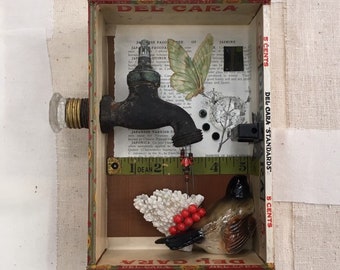
Consider the emotional pull of a found object diorama. Each tiny detail—a chipped teacup, a yellowed photograph, a bent spoon—evokes a sense of nostalgia, a longing for a past that may never have existed. It’s a bittersweet reminder that everything, even the most mundane objects, carries a story. By repurposing these items, you’re not erasing their history; you’re honoring it. You’re giving them a second life, a chance to be seen and appreciated in a new light. In a world that often prioritizes the new and the shiny, found object art is a radical act of preservation.
This emotional resonance extends to the viewer as well. When someone encounters a piece of found object art, they’re not just seeing an arrangement of objects—they’re seeing a reflection of their own experiences. The rusted hinge might remind them of a childhood home, the faded fabric could evoke memories of a loved one’s favorite dress. Found object art is a mirror, a catalyst for personal stories and shared connections. It’s why these pieces often feel so intimate, so deeply human. They don’t just occupy space; they invite you to step inside their world and linger.
Breaking the Rules: How Found Object Design Challenges Conventional Art
Found object design isn’t just an artistic practice; it’s a philosophical statement. It challenges the very foundations of what we consider art, who gets to create it, and what materials are deemed worthy. In a traditional art world that often values technical skill and pristine materials, found object design is a breath of fresh air—a reminder that art isn’t confined to canvas and paint. It’s a celebration of resourcefulness, a testament to the idea that creativity isn’t about having the right tools but about seeing the potential in what’s already around you.
This rebellious spirit is what makes found object design so compelling. It democratizes art, making it accessible to anyone with a curious mind and a willingness to experiment. You don’t need a degree or a studio; you just need a willingness to look at the world differently. Found object artists often operate outside the traditional art world, creating in basements, garages, and backyards. Their work isn’t bound by the rules of galleries or the expectations of critics. Instead, it’s driven by intuition, instinct, and a deep connection to the materials at hand.
Found object design also challenges our notions of value. In a consumerist society that equates worth with price tags, these creations flip the script. A discarded item, once deemed worthless, becomes a priceless artifact in the hands of an artist. This shift in perspective is liberating. It reminds us that value isn’t inherent in objects but is instead a construct of our perceptions. By repurposing found objects, we’re not just creating art; we’re redefining what it means to be valuable.

The Ripple Effect: How Found Object Design Transforms More Than Just Your Space
The impact of found object design extends far beyond the walls of your home or studio. It’s a practice that ripples outward, inspiring others to see the world with fresh eyes and encouraging a more sustainable approach to creativity. When you create with found objects, you’re not just making art—you’re making a statement. You’re saying that beauty can be found in the overlooked, that history has value, and that waste doesn’t have to be the end of the story.
This ripple effect is particularly powerful in communities. Found object art can bring people together, sparking conversations about sustainability, creativity, and the stories hidden in everyday objects. Workshops and collaborative projects often emerge from this practice, where participants share their finds and inspire one another to see the potential in the discarded. It’s a reminder that art isn’t a solitary pursuit but a communal experience, one that thrives on connection and shared inspiration.
Found object design also has the power to shift perspectives on waste. In a world drowning in plastic and fast fashion, this practice offers a tangible solution—a way to reclaim, repurpose, and reimagine. It’s a call to action, a gentle nudge to reconsider our habits and embrace a more mindful approach to consumption. By creating with found objects, you’re not just making art; you’re participating in a larger movement toward sustainability and intentional living.
And let’s not forget the personal transformation that comes with this practice. Found object design teaches patience, adaptability, and resilience. It encourages you to embrace imperfection and find beauty in the unexpected. It’s a practice that nurtures creativity, not as a fleeting hobby but as a lifelong journey. The more you create, the more you’ll see the world through the lens of possibility. What was once trash becomes treasure. What was once ordinary becomes extraordinary. And what was once a pile of discarded objects becomes a story waiting to be told.
The $100 set that looked like a million bucks wasn’t just a collection of objects—it was a testament to the power of perception. It was proof that with a little ingenuity and a lot of curiosity, you can transform the world around you. So the next time you’re tempted to toss something aside, pause. Ask yourself: What could this become? The answer might just surprise you.


Leave a Comment