

What if I told you that a relic from half a millennium ago could humble the most advanced 3D scanning rigs, baffle AI-driven restoration algorithms, and leave conservators scratching their heads in bewildered awe? It’s not some arcane grimoire or a lost manuscript—it’s a sculpture. Not just any sculpture, but one carved from stone, bronze, or perhaps even jade, its surfaces whispering secrets that modern technology struggles to decode. This isn’t a tale of futuristic marvels outpacing antiquity; it’s a paradox where the past wields a mastery that contemporary ingenuity can’t replicate. Welcome to the enigma of the 500-year-old sculpture that still defeats modern technology.
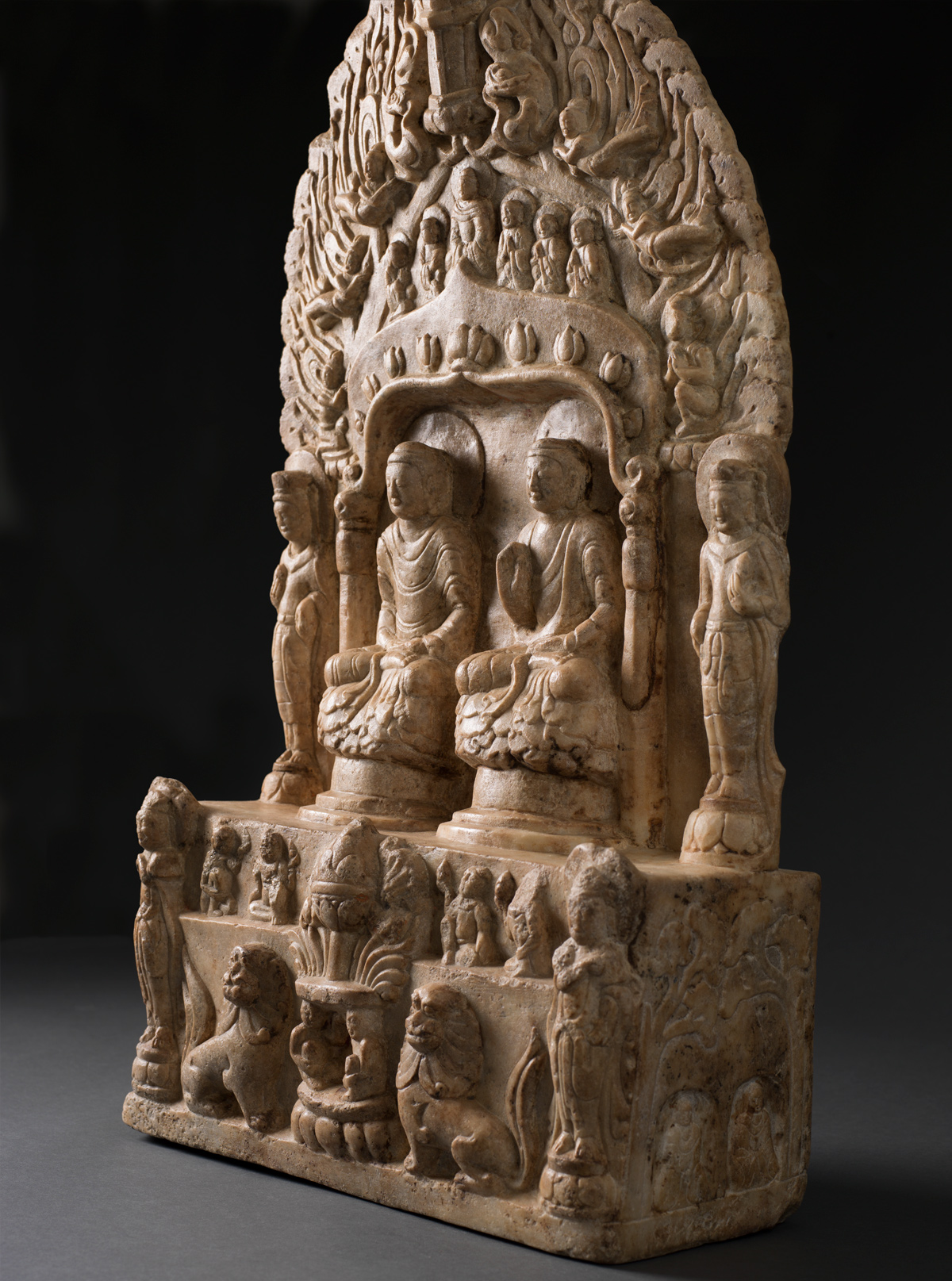
Imagine standing in a dimly lit gallery, the air thick with the scent of aged wood and polished stone. Before you rises a figure—perhaps a deity, a warrior, or a mythical beast—its form so exquisitely rendered that it seems to breathe. The craftsmanship is impeccable: every curve, every contour, every minute detail appears to have been coaxed from the material with a tenderness usually reserved for poetry. Yet, when you peer closer, something feels… off. Not in the sculpture itself, but in the way your modern eyes and tools struggle to fully grasp it. This is the paradox of ancient sculpture: it’s both breathtakingly familiar and profoundly alien, a masterpiece that modern technology can admire but not entirely comprehend.
The Illusion of Precision: Why 3D Scans Fail the Test
You might assume that a 3D scanner, with its laser precision and computational might, would unravel the mysteries of such a sculpture. After all, these devices can map the surface of Mars or reconstruct the intricate lattice of a spider’s web with eerie accuracy. Yet, when applied to a 500-year-old sculpture, they often stumble. The issue isn’t the scanner’s resolution—it’s the sculpture’s surface itself.
Ancient sculptures weren’t carved with the expectation of being scanned. Their creators worked with tools that left behind subtle, organic imperfections: the faintest ridges from a chisel’s edge, the ghostly traces of a rasp’s passage, or the microscopic pitting of weathered stone. These details aren’t just aesthetic flourishes; they’re the fingerprints of history, the silent witnesses to centuries of touch, light, and erosion. Modern scanners, designed to capture clean, geometric data, often smooth over these nuances or misinterpret them as noise. The result? A digital replica that’s technically accurate but emotionally hollow—a shadow of the sculpture’s true essence.
Consider the way light dances across the sculpture’s surface. In real life, it creates a symphony of highlights and shadows that shift with the viewer’s movement. A 3D scan flattens this dynamic interplay into a static, uniform texture. The sculpture’s “presence” evaporates in the digital realm, leaving behind a hollow shell that lacks the intangible magic of the original.
The AI Conundrum: Restoration Without Understanding
Artificial intelligence has revolutionized art restoration, from reconstructing damaged frescoes to colorizing black-and-white photographs. Yet, when it comes to ancient sculptures, AI often stumbles into a labyrinth of ambiguity. The problem? These algorithms are trained on modern data, where the rules of form, proportion, and material behavior are well-defined. Ancient sculptures, however, operate under a different set of principles—ones that defy conventional logic.
Take, for instance, the way ancient sculptors achieved a sense of movement in static stone. A modern observer might marvel at the lifelike drapery of a marble figure, only to realize that the folds were carved with a deliberate asymmetry, mimicking the way fabric behaves in real life. An AI trained on contemporary sculptures might “correct” this asymmetry, smoothing it into a more symmetrical, “pleasing” form. The result? A sculpture that looks polished but lifeless, stripped of its ancient soul.
Then there’s the issue of material degradation. Over centuries, bronze sculptures develop a patina—a layer of oxidation that can range from a delicate green to a deep, almost blackened hue. This patina isn’t just a cosmetic feature; it’s a protective layer that preserves the sculpture beneath. Yet, when an AI attempts to “restore” the sculpture to its original appearance, it often strips away this patina, leaving the metal exposed to further decay. The AI doesn’t understand that the patina is part of the sculpture’s history; it sees only what it’s been trained to see.
The Hand of the Master: Why No Machine Can Replicate the Craft
At the heart of this enigma lies the unparalleled skill of the ancient sculptor. These artisans didn’t just carve stone or cast bronze—they engaged in a dialogue with their material, coaxing it into submission through a combination of intuition, experience, and sheer audacity. Their tools were rudimentary by modern standards, yet their results were anything but primitive.
Consider the technique of lost-wax casting, used to create bronze sculptures. The process involves sculpting a model in wax, encasing it in clay, and then melting the wax away to leave a hollow mold. Molten bronze is poured into the mold, and once cooled, the clay is broken away to reveal the sculpture. The precision required to execute this process flawlessly is staggering. A single miscalculation could result in a sculpture riddled with flaws or, worse, one that collapses under its own weight. Yet, ancient sculptors achieved this with nothing more than fire, sand, and an unshakable belief in their craft.
Modern technology, for all its sophistication, lacks this kind of organic, adaptive intelligence. A CNC machine can carve a block of stone with micrometer precision, but it can’t replicate the subtle variations in pressure and angle that a human hand applies. A 3D printer can reproduce a sculpture’s form, but it can’t capture the tactile warmth of aged stone or the cool, smooth finish of polished bronze. The ancient sculptor’s touch is irreplaceable—a quality that no algorithm or machine can emulate.
The Mystery of the Missing Context: Why We’ll Never Fully Understand
Even if we could perfectly scan and restore a 500-year-old sculpture, we’d still be missing the most crucial piece of the puzzle: its context. Ancient sculptures weren’t created in a vacuum. They were part of a larger cultural, religious, and social tapestry, their meanings woven into the fabric of their time. Without this context, the sculpture becomes a mute object, its story reduced to a series of technical specifications.
Take, for example, a sculpture of a deity. To the ancient viewer, it wasn’t just a representation of a god—it was the god itself, a vessel for divine presence. The sculpture’s pose, its adornments, even the materials used, all carried symbolic weight. A modern observer might admire its aesthetic beauty, but they’ll never truly grasp its spiritual significance. The sculpture’s power lies in its ability to transcend the physical, a quality that modern technology can’t quantify or replicate.
This is the ultimate paradox of ancient sculpture: the more we try to understand it, the more it slips through our fingers. We can measure its dimensions, analyze its composition, and even recreate its form—but we can never fully capture its soul. It’s a reminder that some mysteries are meant to remain unsolved, that the past holds secrets that the present can never fully unlock.
The Future of the Past: Can Technology Ever Catch Up?
So, is there hope for modern technology to bridge this gap? Perhaps—but not in the way we might expect. The key lies not in trying to outdo the ancient sculptors but in learning from them. Researchers are beginning to explore ways to integrate traditional craftsmanship with modern techniques, using AI not to replace the sculptor’s touch but to augment it. For example, AI could be used to analyze the wear patterns on a sculpture’s surface, providing insights into how it was handled or displayed over the centuries. This data could then inform conservation efforts, helping to preserve the sculpture’s authenticity while extending its lifespan.
There’s also a growing appreciation for the imperfections that make ancient sculptures unique. Rather than viewing weathering and patina as flaws to be corrected, conservators are now embracing them as integral parts of the sculpture’s history. This shift in perspective reflects a broader cultural movement toward valuing authenticity over perfection—a recognition that the passage of time is not something to be erased but something to be celebrated.
Yet, even with these advancements, the gap between ancient and modern will remain. The 500-year-old sculpture will continue to defy our best efforts, its mysteries lingering just beyond the reach of technology. And perhaps that’s for the best. In a world obsessed with speed, precision, and control, the ancient sculpture reminds us that some things are meant to be experienced, not dissected. It’s a lesson in humility—a gentle nudge to acknowledge that the past, with all its imperfections, still holds secrets that the future may never fully uncover.
So the next time you stand before an ancient sculpture, take a moment to look beyond its surface. Marvel at the craftsmanship, yes, but also listen to the whispers of history embedded in its every curve. And remember: no machine, no algorithm, no amount of technological prowess will ever fully capture what makes it truly extraordinary.


Leave a Comment