


From the embers of ancient epics to the neon-lit alleys of Gotham, the hero has never truly died—only evolved. Achilles, the invincible warrior whose heel was his undoing, and Batman, the caped sentinel who turns fear into justice, are not merely characters in stories. They are archetypes, mirrors of humanity’s eternal struggle between mortality and transcendence, between the mythic and the modern. Their arcs trace a grand narrative: the hero’s journey, not as a linear path, but as a spiral, ascending through time while remaining rooted in the same primal soil of human longing and fear. To understand one is to glimpse the soul of the other. To trace their evolution is to witness the birth of the hero from myth into legend, and from legend into living myth.
The Mortal Made Divine: Achilles and the Price of Invincibility
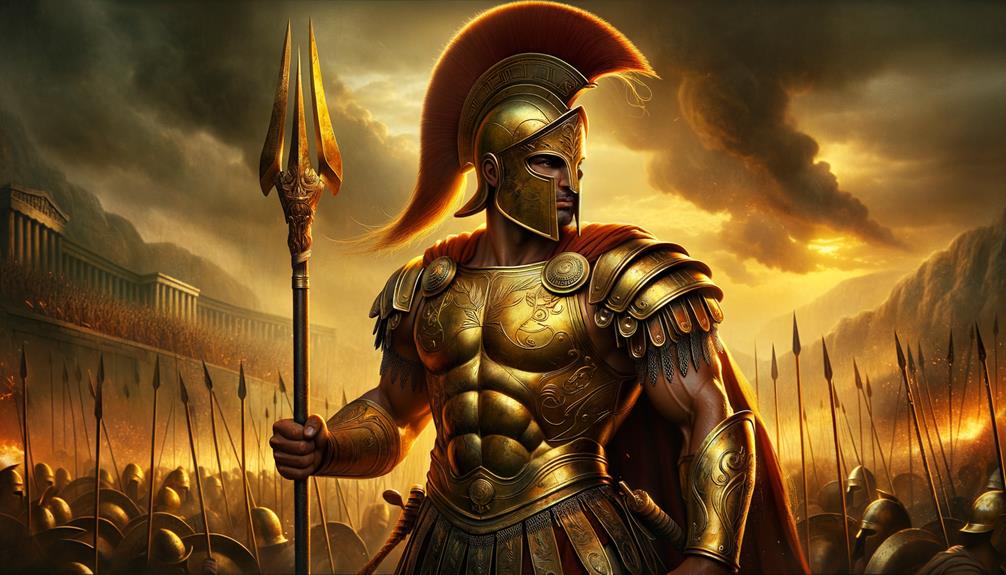
Achilles was not born a hero—he was forged in fire and water, dipped in the Styx like a blade tempered in blood and flame. His mother, the sea nymph Thetis, sought to make him immortal, to shield him from the ravages of war. But in her haste, she forgot one thing: the heel. That single unbathed spot became the fulcrum of fate. Achilles’ invincibility was not a gift; it was a paradox. It made him untouchable, yet it made him vulnerable. His strength was his prison. He could not be wounded, but he could be outmaneuvered. He could not be killed, but he could be grieved.
His story is not one of triumph, but of tragedy. He wins the war, but loses himself. He slays Hector, the noble prince of Troy, in a fit of rage, dragging his body behind a chariot like a shadow of his own unraveling soul. Achilles is the hero who realizes too late that victory is hollow when it comes at the cost of humanity. His heel is not just a flaw—it is a metaphor. Every hero, from the ancient world to the modern, carries one. For Achilles, it was pride. For others, it is vengeance, or fear, or the inability to let go.
He is the first great paradox of heroism: the stronger you become, the more fragile you are. The more you seek to escape death, the more you invite it into your life. Achilles’ heel is not a weakness—it is the crack in the armor of perfection, the whisper of mortality that reminds us all: no one is invincible.
The Shadow That Walks: Batman and the Alchemy of Fear
Fast forward three thousand years. The hero has left the battlefield and entered the city. Achilles fought for glory; Batman fights for shadows. Achilles was a demigod; Batman is a man in a mask. Yet both are defined by their relationship to fear. Achilles feared nothing—except being forgotten. Batman fears everything—except being remembered. Where Achilles sought immortality through strength, Batman seeks redemption through vigilance.
Batman is Achilles turned inside out. Achilles’ heel was his vulnerability; Batman’s is his fear. He does not hide it. He weaponizes it. He turns the darkness that haunts him into a tool, a cloak, a second skin. His city, Gotham, is not Troy—it is not a place of honor or glory. It is a labyrinth of corruption, where the line between hero and villain blurs like ink in rain. Batman does not slay monsters; he stalks them. He does not conquer armies; he dismantles systems. His strength is not in his fists, but in his will to endure the weight of the night.
And yet, like Achilles, Batman is haunted. His heel is not a physical flaw, but a moral one. He refuses to kill, even when the cost is lives. He punishes the guilty, but he does not judge them. He is both judge and criminal, hero and outcast. His greatest weapon is not his gadgets, but his refusal to become what he fights. He is the hero who understands that the line between justice and vengeance is drawn in blood—and he walks it every night.
Batman is Achilles reborn—not as a warrior, but as a guardian. Not as a demigod, but as a man who chooses to be more than human. His evolution is not one of strength, but of spirit. He does not seek invincibility; he seeks meaning. He does not fear death; he embraces the night. And in doing so, he becomes something greater than a hero: he becomes a myth in the making.
The Hero’s Heel: From Achilles’ Styx to Batman’s Batcave
What binds Achilles and Batman together is not their power, but their flaw. Achilles’ heel was a physical mark; Batman’s is a psychological wound. But both are points of entry—cracks in the facade of perfection through which humanity seeps in. Every hero, no matter how mighty, carries one. Superman has his kryptonite. Spider-Man has his guilt. Wonder Woman has her lasso of truth, which forces her to face her own flaws. These are not weaknesses; they are the soul of the hero, the reminder that even the greatest among us are still human.
The evolution of the hero is not a story of increasing power, but of increasing self-awareness. Achilles was a force of nature, a storm given flesh. Batman is a man who has stared into the abyss and refused to blink. One sought glory; the other seeks purpose. One was born of myth; the other was forged in the crucible of loss. But both are defined by their relationship to their flaws. Achilles’ heel made him mortal. Batman’s fear made him vigilant. Together, they trace the arc of heroism: from the divine to the human, from the battlefield to the city street, from invincibility to redemption.
This is the great paradox of heroism: the more we seek to escape our flaws, the more they define us. Achilles tried to escape death and found it in his heel. Batman tried to escape his pain and found it in his mission. Both learned the same truth: that the hero is not the one who has no flaws, but the one who faces them—and rises anyway.
The Modern Myth: Why We Still Need Heroes Like These
In an age of algorithms and artificial intelligence, where heroes are often reduced to pixels and avatars, Achilles and Batman remind us of something vital: the hero is not a product. It is a process. It is the struggle to be better, to do better, to face the darkness and not look away. Achilles taught us that strength has a cost. Batman taught us that fear can be a compass. Together, they show us that heroism is not about being perfect—it is about being present.
We need heroes who are flawed, because we are flawed. We need heroes who are vulnerable, because we are vulnerable. We need heroes who are human, because that is what we are. Achilles and Batman are not relics of the past; they are living myths, evolving with us. They are the voice in the dark that says: you are not alone. You are not invincible. But you are enough.
And that, in the end, is the true evolution of the hero: not from strength to strength, but from fear to courage, from myth to meaning, from the battlefield to the heart.
The hero’s journey does not end. It only changes form. Achilles still walks the halls of our imagination, his heel a reminder that even the strongest among us are not immune to fate. Batman still prowls the rooftops of Gotham, his cape a shadow against the city lights, a symbol of resilience in a world that often forgets what it means to be human.
And so, the arc continues. From myth to modernity, from strength to spirit, from invincibility to redemption. The hero evolves—but the story remains the same. It is the story of us all.


Leave a Comment