

The Fair Use Defense for Parody: Lessons from the 2 Live Crew Case
In the pantheon of legal battles that have shaped the boundaries of artistic expression, few cases resonate as profoundly as the landmark dispute involving 2 Live Crew and their audacious reinterpretation of Roy Orbison’s classic, “Oh, Pretty Woman.” This saga, which unfolded in the hallowed corridors of the U.S. Supreme Court, became a crucible for testing the limits of parody under copyright law. At its core, the case illuminated the delicate balance between protecting intellectual property and fostering creative innovation—a tension that continues to define the cultural landscape today. For artists, legal scholars, and enthusiasts alike, the lessons gleaned from this litigation serve as a compass, guiding them through the labyrinthine terrain of fair use and parody. This article delves into the multifaceted dimensions of the 2 Live Crew case, unraveling its legal intricacies while celebrating the audacity of artistic rebellion that it both challenged and championed.
The Genesis of a Cultural and Legal Earthquake
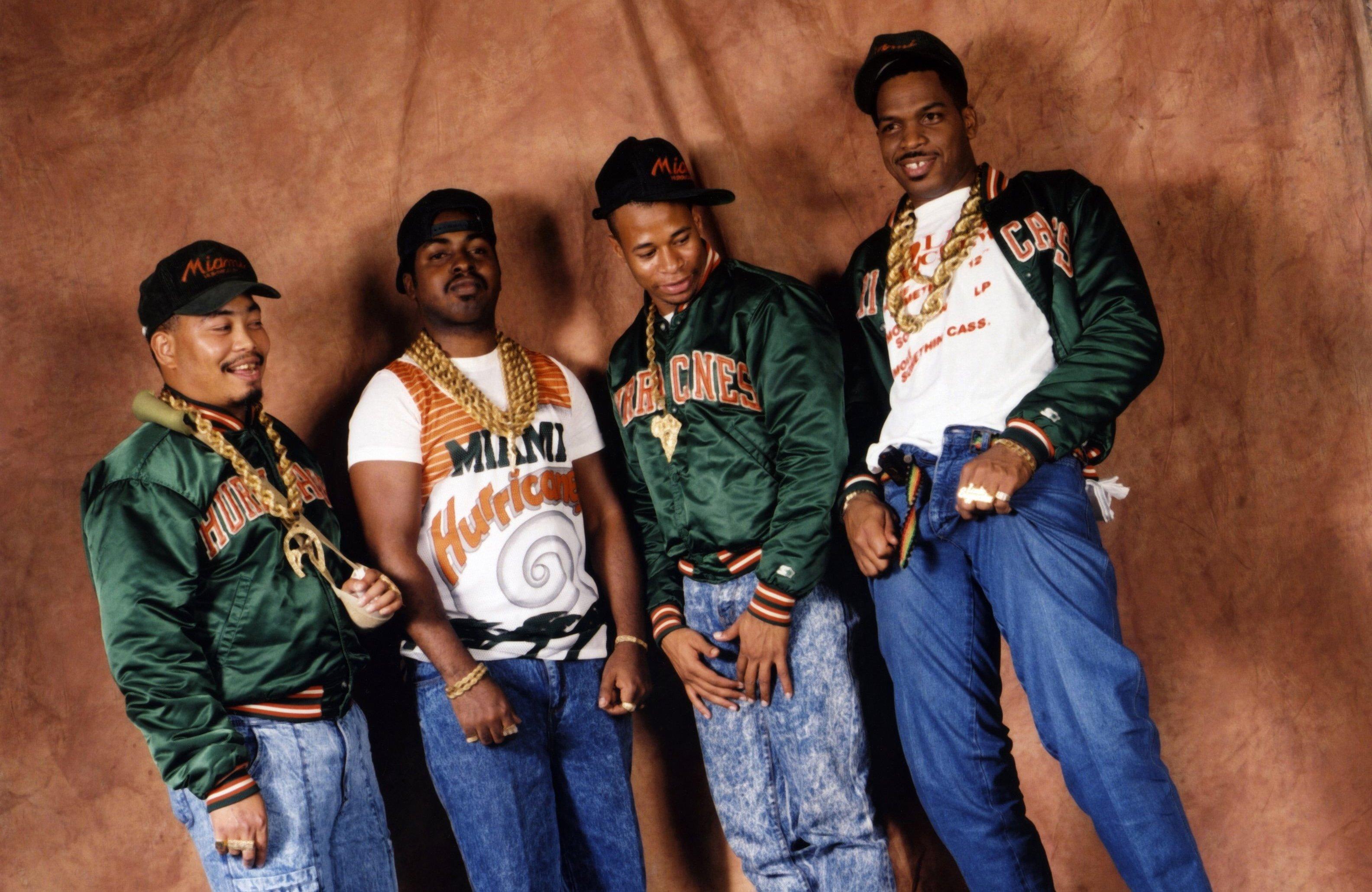
The story begins in 1989, when Luther Campbell and his rap group, 2 Live Crew, released their album As Nasty As They Wanna Be, which included a track titled “Pretty Woman.” This track, a parody of Roy Orbison’s 1964 hit “Oh, Pretty Woman,” was a deliberate and unapologetic subversion of the original’s romantic balladry. Instead of serenading a woman with poetic devotion, 2 Live Crew’s version transformed the melody into a raucous, sexually explicit anthem that lampooned the very notion of chivalry. The juxtaposition was stark: where Orbison’s lyrics celebrated conventional beauty and courtly love, 2 Live Crew’s lyrics reveled in crass humor and unfiltered vulgarity. This stark contrast was not merely artistic whimsy; it was a calculated provocation designed to provoke laughter, discomfort, and, ultimately, legal scrutiny.
The backlash was swift and severe. Acuff-Rose Music, the copyright holder of Orbison’s song, filed a lawsuit against 2 Live Crew, alleging copyright infringement. The case quickly escalated into a battle over the very soul of parody—a genre that thrives on distortion, exaggeration, and irony. For Acuff-Rose, the parody was nothing more than thinly veiled theft, a cynical exploitation of Orbison’s work. For 2 Live Crew, it was a legitimate form of social commentary, a critique of the sanitized romanticism that Orbison’s song embodied. The legal skirmish that followed would force courts to grapple with a fundamental question: Could parody, with its inherent reliance on borrowed elements, ever be considered fair use under copyright law?
The Legal Alchemy of Fair Use: Transforming Borrowed into Bold
The fair use doctrine, enshrined in Section 107 of the Copyright Act, provides a legal sanctuary for certain uses of copyrighted material without permission. To qualify, a use must be “transformative,” meaning it adds new expression or meaning to the original work. Parody, by its very nature, is transformative. It takes a familiar work and recontextualizes it, often to ridicule, critique, or pay homage. Yet, the doctrine’s application is rarely straightforward. Courts must weigh four statutory factors: the purpose and character of the use, the nature of the copyrighted work, the amount and substantiality of the portion used, and the effect of the use upon the market for the original.
The 2 Live Crew case forced the Supreme Court to confront these factors head-on. In its unanimous decision in Campbell v. Acuff-Rose Music (1994), the Court ruled in favor of 2 Live Crew, affirming that parody could indeed qualify as fair use. The justices reasoned that the group’s use was transformative, as it “held up to ridicule” the original song’s romanticized portrayal of love. The Court also dismissed concerns about market harm, noting that the parody’s commercial success did not diminish the original’s value but instead catered to a distinct audience. This ruling was a watershed moment, establishing parody as a protected form of artistic expression and setting a precedent that would echo through subsequent legal battles.

The Anatomy of Parody: Dissecting the Art of Subversion
Parody is a chameleon, adapting its form to the cultural moment while retaining its core function: to mock, mimic, or critique. It operates on a spectrum, from gentle satire to scathing indictment, and its success hinges on the audience’s ability to recognize the original work and appreciate the deviation. The 2 Live Crew case exemplifies the most confrontational end of this spectrum. Their parody of “Oh, Pretty Woman” was not a subtle nod but a full-throated assault on the original’s conventions. By replacing Orbison’s earnest lyrics with lewd, humorous verses, they exposed the absurdity of romantic idealism, particularly in the context of a hyper-masculine, hyper-sexualized rap culture.
Yet, parody is not without its pitfalls. A poorly executed parody can devolve into mere plagiarism, indistinguishable from the original save for a few tweaks. The key to its legitimacy lies in the transformation—parody must offer something new, whether through style, tone, or message. In the case of 2 Live Crew, the transformation was undeniable. Their version was a cultural Rorschach test, revealing as much about the original song’s limitations as it did about their own audacity. This duality is what makes parody such a potent tool: it forces audiences to confront the original work anew, questioning its assumptions and celebrating its flaws.
The legal recognition of parody as fair use has emboldened artists to push boundaries, knowing that their work may be protected even if it courts controversy. From Weird Al Yankovic’s comedic covers to The Onion’s satirical headlines, parody has flourished in the shadow of the 2 Live Crew precedent. Yet, the doctrine remains a double-edged sword. Courts continue to grapple with where parody ends and infringement begins, particularly in the digital age, where sampling and remixing are ubiquitous. The case serves as a reminder that fair use is not a carte blanche but a carefully calibrated exception—one that demands both artistic ingenuity and legal acumen.
Market Harm and the Paradox of Parody’s Commercial Success
One of the most contentious aspects of the 2 Live Crew case was the question of market harm. Acuff-Rose argued that the parody’s commercial success would confuse consumers and divert sales from the original. The Supreme Court, however, rejected this claim, noting that the parody’s audience was distinct from Orbison’s. This reasoning underscores a paradox: the more successful a parody is, the less likely it is to harm the original work’s market. In fact, some parodies can even enhance the original’s value by drawing renewed attention to it, albeit in a critical light.
This paradox is evident in other high-profile cases, such as Dr. Seuss Enterprises v. Penguin Books (1997), where a parody of Dr. Seuss’s The Cat in the Hat was deemed fair use despite its commercial success. The court reasoned that the parody’s audience—adults seeking humor—was entirely different from the original’s—children learning to read. This distinction highlights a crucial point: parody’s transformative nature often creates a new market, one that complements rather than competes with the original. However, this is not always the case. In some instances, a parody’s commercial success can indeed cannibalize the original’s market, particularly if the parody is so similar that consumers mistake it for the real thing. The line between homage and exploitation is thin, and courts must tread carefully to ensure that fair use does not become a loophole for unchecked appropriation.
The digital revolution has further complicated this dynamic. With the rise of memes, remixes, and AI-generated content, the boundaries of parody have expanded exponentially. Platforms like YouTube and TikTok are awash with parodies that blur the line between homage and infringement. The 2 Live Crew case, while decided in a pre-internet era, offers a foundational framework for navigating these modern dilemmas. It reminds us that fair use is not a static doctrine but a living, breathing principle that must evolve with the times.
Cultural Reverberations: The Ripple Effect of a Legal Landmark
The impact of the 2 Live Crew case extends far beyond the courtroom. It has become a cultural touchstone, cited in debates about artistic freedom, censorship, and the role of copyright in the digital age. The case emboldened artists to challenge conventions, knowing that their work might be protected under fair use. It also sparked conversations about the commercialization of parody, particularly in an era where viral content can turn a meme into a multimillion-dollar enterprise overnight.
For marginalized communities, the case took on additional significance. 2 Live Crew’s music was a defiant assertion of Black cultural identity in a landscape dominated by white, middle-class sensibilities. Their parody was not merely a legal maneuver but a political statement, one that questioned the very foundations of artistic ownership. This intersection of race, art, and law adds another layer to the case’s legacy. It reminds us that fair use is not just a legal doctrine but a tool for social critique, a way for artists to reclaim narratives and challenge dominant power structures.
Today, the case continues to resonate in unexpected ways. From the sampling of classic songs in hip-hop to the remixing of film scenes in YouTube videos, the principles established in Campbell v. Acuff-Rose Music remain a guiding light. Yet, the legal landscape is far from settled. Courts continue to grapple with new forms of parody, from deepfake videos to AI-generated art. The 2 Live Crew case serves as a reminder that the fight for artistic freedom is ongoing, and that the boundaries of fair use must be continually redefined in response to technological and cultural shifts.
The Fair Use Defense for Parody: Lessons from the 2 Live Crew Case is more than a legal history—it is a testament to the power of art to challenge, provoke, and inspire. The case stands as a beacon for artists navigating the treacherous waters of copyright law, offering a glimmer of hope that their work may be protected even when it courts controversy. It is a celebration of the audacity to subvert, to mock, and to reimagine, all while standing on the shoulders of the works that came before. In an era where creativity is both commodified and constrained, the lessons of 2 Live Crew remind us that the spirit of rebellion is alive and well—and that fair use, when wielded with care and conviction, can be a force for artistic liberation.


Leave a Comment