

The Parthenon isn’t just a relic of ancient Greece—it’s a silent architect whispering secrets into the very fabric of modern design. Walk into any home goods store, and you’ll find curtain rings, coffee tables, and even smartphone cases flaunting proportions that feel eerily familiar. That’s no coincidence. The Parthenon’s dimensions, steeped in the golden ratio, have seeped into our collective subconscious, shaping how we perceive beauty, balance, and even the mundane objects we adorn our lives with. But why does this ancient temple’s aesthetic still dictate the curves of your shower curtain hardware? The answer lies in the golden ratio’s uncanny ability to mirror the patterns of nature—and our own minds.

The Golden Ratio: Nature’s Silent Blueprint
Long before architects drafted blueprints, the golden ratio—approximately 1.618—was the universe’s favorite equation. From the spiral of a nautilus shell to the branching veins of a leaf, this proportion emerges wherever growth and efficiency collide. The Parthenon’s designers didn’t invent it; they recognized it in the wild and enshrined it in marble. This ratio, also known as phi (φ), isn’t just a number. It’s a visual shorthand for harmony, a mathematical poetry that our brains are wired to appreciate. When you pick up a curtain ring that feels “just right” in your hand, you’re unconsciously responding to a proportion that’s been optimizing survival and aesthetics for millennia.
What makes phi so magnetic? It’s the only number where the ratio of the whole to its larger part is identical to the ratio of the larger part to the smaller. This recursive elegance creates a sense of continuity, a visual echo that our eyes follow effortlessly. It’s why a spiral staircase feels more inviting than a straight one, or why a vase with a phi-based silhouette seems to “grow” naturally from its base. The Parthenon, with its carefully calculated column heights and pediment dimensions, is a three-dimensional manifestation of this principle—a frozen moment where geometry and nature kiss.
The Parthenon’s Subtle Seduction
Stand before the Parthenon’s ruins, and you’ll notice something odd: it doesn’t feel like a rigid, lifeless structure. Instead, it exudes a dynamic equilibrium, as if the columns are breathing. This isn’t accidental. The temple’s proportions were meticulously adjusted to counteract optical illusions—entasis, the slight swelling of columns, ensures they appear straight from afar. But beneath these refinements lies the golden ratio, subtly dictating the spacing between columns, the height of the entablature, and even the placement of sculptural reliefs. The result? A building that doesn’t just stand; it *performs*.
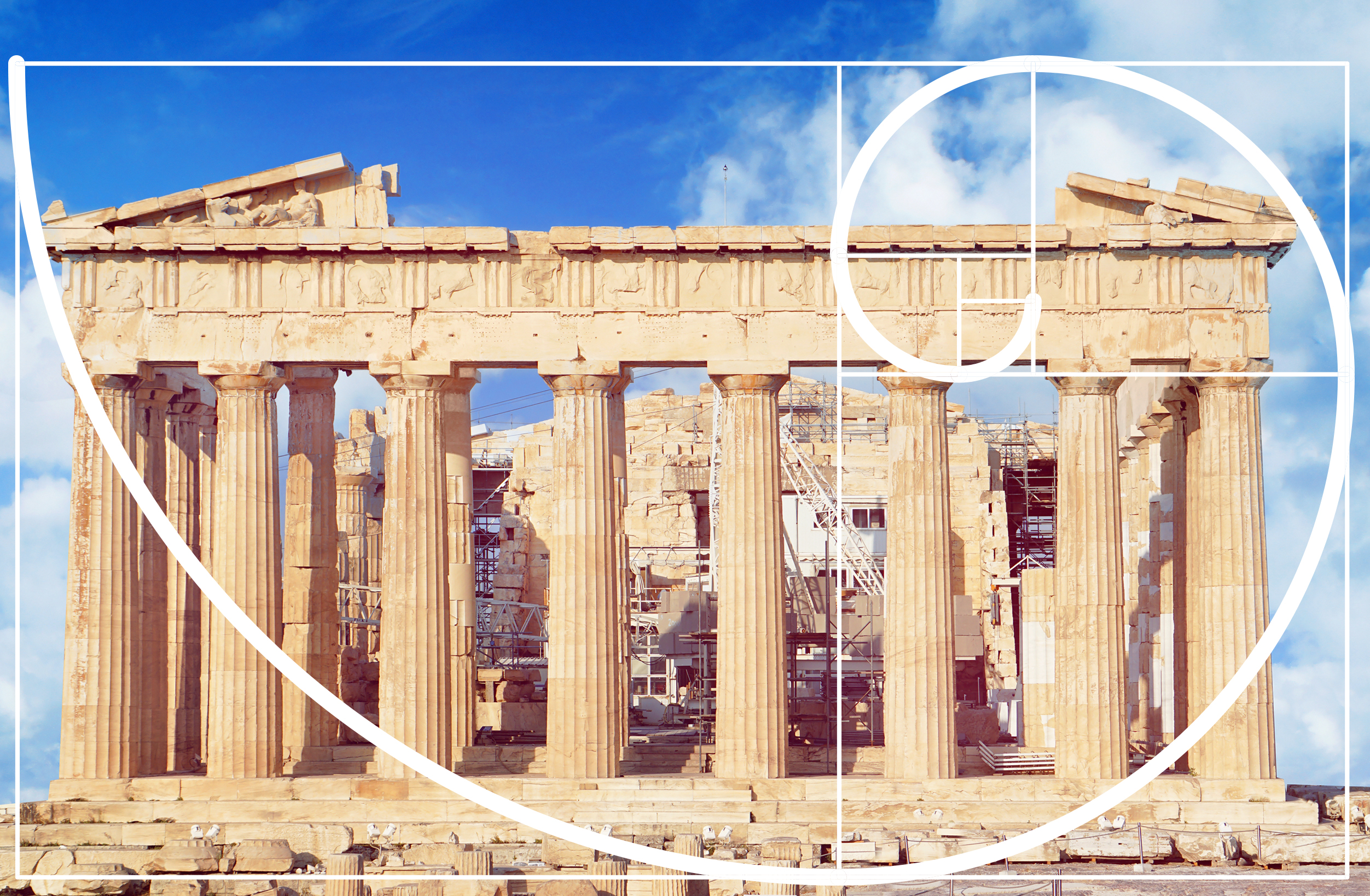
This performance isn’t limited to grand temples. It trickles down into the objects we use daily. Consider the curtain ring. A simple metal loop, yet its design often adheres to phi. Why? Because a ring with a diameter-to-thickness ratio of 1.618 feels more substantial in the hand, more “complete.” It’s the same principle that makes a wine glass elegant or a smartphone sleek. The Parthenon’s legacy isn’t in its grandeur alone; it’s in the quiet confidence of proportions that whisper, “This is how things *should* be.”
The Psychology of Phi: Why We Can’t Resist It
Our fascination with the golden ratio isn’t just aesthetic—it’s neurological. Studies show that our brains process phi-based designs faster and with less cognitive load than random proportions. It’s as if phi is a visual shortcut, a pattern our minds recognize before we’re even aware of it. This might explain why minimalist designs, from Scandinavian furniture to Apple’s product lines, often default to golden ratios. They’re tapping into a primal preference for efficiency and balance.
But there’s a darker side to this attraction. The golden ratio’s ubiquity can make it feel like a cultural mandate. Walk into an IKEA showroom, and you’ll find shelves and cabinets that, whether by design or accident, align with phi. The effect? A subconscious pressure to conform to an “ideal” shape. Even curtain rings, those humble accessories, become complicit in this silent persuasion. The message is clear: if it’s not in harmony with phi, it’s not quite right. This isn’t just about beauty—it’s about control, a subtle shaping of our environments to fit an ancient template.
From Marble to Mass Production: The Golden Ratio’s Modern Empire
The Parthenon’s proportions didn’t stay confined to ancient Athens. By the Renaissance, artists like Leonardo da Vinci and architects like Le Corbusier were wielding phi like a magic wand. Da Vinci’s *Vitruvian Man* is a love letter to the golden ratio, while Le Corbusier’s Modulor system used it to standardize human-scale design. Fast-forward to the 20th century, and phi infiltrated everything from corporate logos (think Twitter’s bird) to the dimensions of your credit card. The golden ratio became the invisible hand guiding consumer desire.
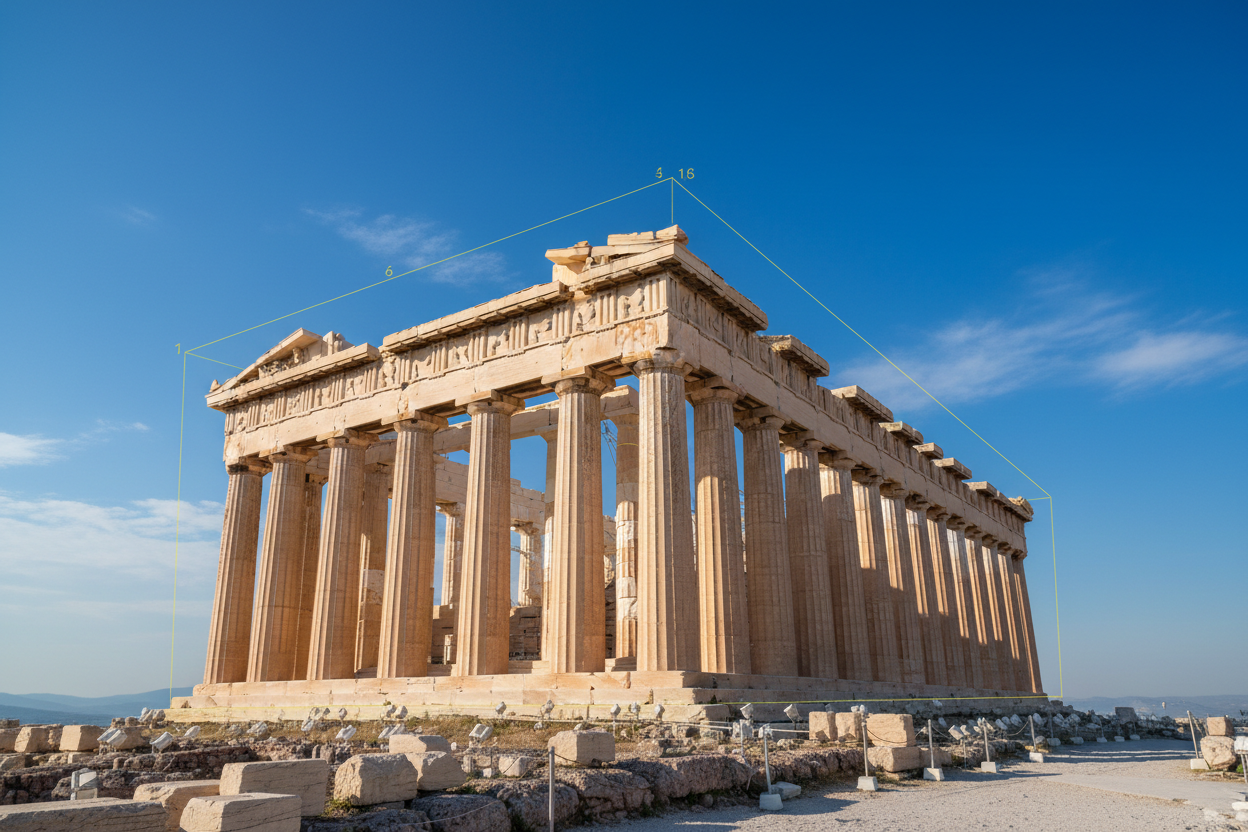
In the world of home decor, this translates to a relentless pursuit of “perfect” proportions. Curtain rings, once purely functional, now come in designs that prioritize phi. A ring with a 1.618 diameter-to-width ratio feels more luxurious, more intentional. It’s not just a ring—it’s a statement. And in a market saturated with choices, that statement is invaluable. The Parthenon’s legacy isn’t just in the buildings it inspired; it’s in the way it taught us to see beauty as a measurable, replicable ideal.
The Paradox of Perfection: When the Golden Ratio Becomes a Cage
Yet for all its allure, the golden ratio is a double-edged sword. Its dominance can stifle creativity, reducing design to a formula. The Parthenon itself is a case study in this tension. While its proportions are mathematically precise, they also reflect the limitations of its era—rigid, unyielding, and ultimately, a product of its time. Modern architecture, in response, often rebels against phi, embracing asymmetry and raw imperfection. Brutalism, deconstructivism, and even some contemporary minimalism reject the golden ratio’s tyranny, opting instead for bold, unapologetic forms.
This rebellion is healthy. It reminds us that beauty isn’t a one-size-fits-all equation. A curtain ring doesn’t *need* to adhere to phi to be functional or even desirable. Sometimes, the most captivating designs break the rules. The golden ratio’s power lies in its ability to inspire, not to dictate. It’s a tool, not a commandment. The Parthenon’s true genius wasn’t in its adherence to phi, but in its demonstration that proportion could evoke emotion—a lesson that transcends millennia.
The next time you hang a curtain ring, pause. Notice how it feels in your hand. Is it balanced? Does it draw your eye without demanding it? If so, you’re experiencing the Parthenon’s silent influence—a reminder that the ancient world’s secrets are still woven into the fabric of our daily lives. The golden ratio isn’t just a relic; it’s a living, breathing presence, shaping the way we see, the way we choose, and the way we live. And perhaps, in that realization, we find the most profound harmony of all.


Leave a Comment