

In the quiet hum of a weaving studio, where threads whisper secrets of tradition and innovation, lies a pattern that defies its simplicity. The houndstooth weave, with its distinctive broken checks and timeless elegance, has adorned everything from tweed jackets to haute couture gowns. But what if you could recreate this intricate design on a humble two-shaft loom? The prospect might seem daunting—how could such a complex pattern emerge from just two harnesses? Yet, here’s the revelation: with the right technique, the houndstooth’s geometric allure can be yours to master, even on the most basic of looms. This isn’t just about weaving fabric; it’s about unlocking a new dimension of creativity, where limitations become the canvas for something extraordinary.
Imagine the satisfaction of watching a pattern unfold, not through the precision of a computer or the expense of a multi-shaft loom, but through the rhythmic dance of your own hands. The houndstooth’s signature four-pointed star—formed by alternating light and dark threads—can emerge from the most unassuming setup. It’s a testament to the ingenuity of handweaving, where every pass of the shuttle and every lift of the shafts tells a story. This guide will take you beyond the basics, revealing how to coax this iconic design from a two-shaft loom without compromising on detail. Prepare to see weaving in a new light, where even the simplest tools can produce results that dazzle.
The Allure of Houndstooth: Why This Pattern Captivates Across Eras
The houndstooth pattern is more than a mere textile design; it’s a cultural artifact, a symbol of both rustic charm and urban sophistication. Originating in Scotland’s Lowlands, where it was woven into woolen fabrics for shepherds and hunters, the pattern’s jagged, abstract checks were initially a practical choice—camouflaging dirt and wear on outerwear. Yet, its visual rhythm soon transcended function, becoming a staple in high fashion, interior design, and even architecture. The pattern’s ability to straddle the line between bold and understated is part of its enduring appeal. It doesn’t shout; it murmurs, yet its presence is undeniable.
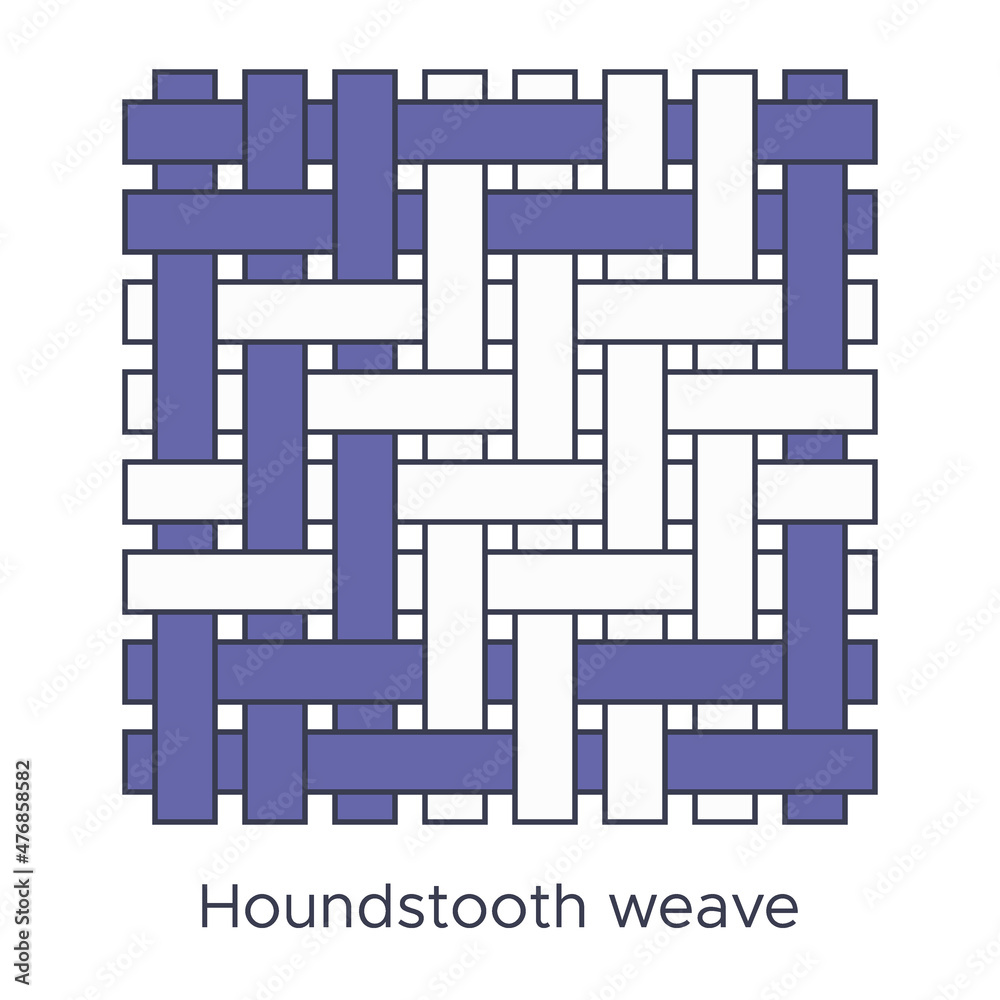
What makes houndstooth so mesmerizing is its deceptive simplicity. At first glance, it appears as a series of interlocking shapes, but upon closer inspection, the interplay of light and shadow in the weave creates a dynamic visual texture. This complexity arises from the twill structure, where threads float over and under each other in a staggered sequence, producing the characteristic four-pointed star. The pattern’s versatility lies in its adaptability—whether rendered in monochrome wool for a classic look or in vibrant hues for a modern twist, it adapts effortlessly. Yet, the challenge of weaving it on a two-shaft loom adds another layer of intrigue. It’s a puzzle that rewards patience and precision, where every mistake is a lesson in the dance of warp and weft.
The Two-Shaft Loom: Dispelling the Myth of Limitations
To the uninitiated, the idea of weaving houndstooth on a two-shaft loom might seem like an exercise in futility. After all, traditional houndstooth is often associated with complex drafts and multiple harnesses. But here’s the truth: the two-shaft loom is not a constraint—it’s a catalyst for creativity. The key lies in reimagining the pattern’s structure. Instead of relying on a multi-shaft draft to create the broken checks, you can achieve the same effect through strategic threading and treadling. This approach demands a shift in perspective, where the loom’s simplicity becomes an invitation to innovate.
The two-shaft loom, with its straightforward up-and-down motion, forces you to think in terms of binary choices: lift shaft one or shaft two. This binary system is the foundation of binary code, and in weaving, it translates to a binary of light and dark, presence and absence. By carefully planning your threading sequence, you can create the illusion of a more complex weave structure. The houndstooth’s four-pointed star, for instance, can be broken down into a series of alternating blocks, where each block is a single unit of the pattern. The trick is to see the pattern not as a continuous design but as a series of discrete, repeatable units that can be woven in sequence.

Drafting the Houndstoother: A Step-by-Step Guide to Threading and Treadling
Drafting a houndstooth pattern for a two-shaft loom begins with a clear understanding of the pattern’s repeat. The classic houndstooth is typically a 4×4 grid, where each square is a single unit of the pattern. To adapt this for a two-shaft loom, you’ll need to translate the grid into a threading sequence that can be woven using only two harnesses. The solution lies in using a twill threading combined with a twill treadling, where the interplay of the two shafts creates the illusion of a more complex structure.
Start by threading your loom in a straight twill sequence, alternating between shaft one and shaft two. For example, if you’re using a 4-shaft draft as a reference, you can simplify it to a 2-shaft draft by grouping the threading into pairs. This creates a base structure that will serve as the foundation for your houndstooth pattern. Next, you’ll need to plan your treadling sequence. The houndstooth’s broken checks are achieved by varying the order in which you lift the shafts. For instance, you might treadle in a sequence that alternates between lifting shaft one twice and shaft two twice, then reversing the order. This creates the characteristic jagged edges of the pattern.
To refine the design, experiment with different treadling variations. A pointed twill treadling can add a dynamic element to the pattern, while a broken twill sequence can enhance the houndstooth’s signature irregularity. The key is to play with the rhythm of the treadling, allowing the pattern to evolve organically. Don’t be afraid to make adjustments—weaving is as much about intuition as it is about precision. As you work, you’ll begin to see the houndstooth emerge, not as a rigid grid, but as a fluid, living design that responds to your touch.
Material Matters: Choosing Yarns That Elevate the Pattern
The choice of yarn can make or break your houndstooth project. Since the pattern relies on the contrast between light and dark threads, selecting the right materials is crucial. Wool is a classic choice for houndstooth, thanks to its natural texture and ability to hold dye well. However, cotton, linen, and even synthetic blends can also work, depending on the desired effect. For a traditional look, opt for a tightly spun wool yarn in contrasting colors, such as black and white or navy and cream. The yarn’s twist and ply will also influence the pattern’s appearance—wider, loftier yarns will create a more pronounced texture, while finer, tightly twisted yarns will yield a crisper, more defined design.
Consider the scale of your project when selecting yarn. A finer yarn will allow for more intricate detailing, while a thicker yarn will produce a bolder, more graphic effect. If you’re weaving a scarf or a piece of fabric for clothing, choose a yarn that drapes well and feels comfortable against the skin. For a decorative piece, such as a wall hanging or a table runner, you can afford to be more experimental with texture and color. Don’t shy away from mixing fibers—wool and silk, for instance, can create a luxurious sheen that enhances the houndstooth’s visual appeal. The key is to balance contrast with harmony, ensuring that the pattern remains the focal point of your piece.
Weaving the Magic: Tips for Achieving Flawless Houndstooth
Weaving houndstooth on a two-shaft loom is as much about technique as it is about patience. One of the most important aspects is maintaining consistent tension throughout your project. Uneven tension can distort the pattern, causing the checks to appear skewed or uneven. To avoid this, make sure your warp is evenly wound and that you’re using a tensioning system that allows for adjustments as you weave. A warp-weighted loom or a rigid heddle loom with tensioning capabilities can be particularly helpful for maintaining control.
Another critical factor is the beat. The houndstooth pattern relies on the precise alignment of the weft threads, so you’ll need to beat in evenly to ensure that the pattern remains crisp. Use a beater with a light touch, especially when working with delicate yarns. If the pattern starts to lose its definition, try adjusting the beat to a slightly firmer stroke. Additionally, keep an eye on your selvedges—the edges of your fabric. Uneven selvedges can pull the pattern out of alignment, so make sure to keep them straight and consistent as you weave.
As you work, periodically step back from your loom to assess the pattern’s progress. This will give you a fresh perspective and help you spot any irregularities before they become ingrained in the fabric. If you notice a mistake, don’t panic—houndstooth is forgiving in its imperfections. The broken checks can often disguise minor errors, adding to the pattern’s organic charm. Embrace the process, and remember that every pass of the shuttle is a step closer to a finished piece that’s uniquely yours.
Beyond the Basics: Creative Variations on a Classic Theme
Once you’ve mastered the traditional houndstooth, the real fun begins. The pattern’s modular nature makes it endlessly adaptable, allowing you to experiment with color, scale, and texture. Try inverting the color scheme—swap the light and dark threads to create a negative-space houndstooth. Or, play with scale by weaving a miniature houndstooth for a delicate accessory or a giant version for a statement textile. You can even combine houndstooth with other weave structures, such as leno or lace, to create a hybrid design that’s entirely your own.
Color is another area ripe for exploration. While black and white is the classic combination, don’t be afraid to introduce unexpected hues. A muted palette of sage and charcoal can lend a modern, sophisticated feel, while bold primary colors will make the pattern pop. For a subtle twist, try using a gradient yarn that shifts from light to dark, creating a houndstooth that fades in and out like a shadow. You can also experiment with metallic threads or variegated yarns to add depth and dimension to your design. The possibilities are limited only by your imagination.
The houndstooth’s geometric precision makes it an ideal candidate for incorporating into larger projects. Consider weaving a houndstooth border into a table runner or a blanket, where the pattern serves as a striking frame for a simpler central design. Alternatively, you could create a series of houndstooth squares and sew them together into a patchwork quilt, each square a unique variation on the theme. The key is to let the pattern guide you, allowing its rhythm to inspire new ideas and unexpected directions.
The Reward: A Fabric That Tells a Story
There’s something profoundly satisfying about weaving a fabric that carries the weight of tradition while embracing the spirit of innovation. When you step back and admire your houndstooth creation, you’re not just looking at a piece of cloth—you’re seeing the culmination of hours of careful planning, experimentation, and craftsmanship. Each thread, each lift of the shaft, each pass of the shuttle has contributed to a design that’s both timeless and utterly unique. This is the magic of handweaving: it transforms raw materials into something that feels alive, something that carries the imprint of your hands and your vision.
As you hold your finished houndstooth fabric, you’ll likely find that it’s more than just a textile—it’s a conversation starter, a piece of art, a testament to what can be achieved with patience and creativity. Whether it becomes a scarf draped over your shoulders, a cushion cover adding texture to your sofa, or a wall hanging gracing your home, it will carry with it the story of its creation. And in a world where mass-produced fabrics dominate, there’s a quiet rebellion in creating something by hand, something that can’t be replicated by a machine. The houndstooth weave on a two-shaft loom is more than a technical achievement; it’s a celebration of the human touch in an increasingly digital age.
So, the next time you sit at your loom, remember that limitations are merely illusions waiting to be shattered. The houndstooth pattern, with all its intricacy and charm, is yours to conquer. And when you finally see those four-pointed stars emerge from the simplest of setups, you’ll know that you’ve not just woven fabric—you’ve woven a piece of history.


Leave a Comment