

In the labyrinthine world of theater, where every script vies for the spotlight, one document often determines a playwright’s fate before the first word of dialogue is ever heard: the cover letter. It’s the silent sentinel standing between obscurity and a coveted slot in a publisher’s catalog or a festival’s lineup. Yet, despite its pivotal role, most playwrights treat it as an afterthought—a perfunctory nod to convention rather than a strategic weapon. The most successful play submissions, however, share a secret that transcends genre, experience, or pedigree. They wield their cover letters not as mere introductions, but as narrative beacons, illuminating the path to acceptance with precision and purpose.
The irony is palpable. In an art form built on the power of storytelling, the very document meant to champion a playwright’s vision is often reduced to a dry recitation of credentials. But what if the cover letter could do more than tick boxes? What if it could whisper the unspoken desires of the reader, aligning the submission with the publisher’s or producer’s deepest fascinations? The secret lies not in what is written, but in how it is framed—a subtle alchemy of empathy, clarity, and strategic revelation.
The Illusion of the Generic Cover Letter
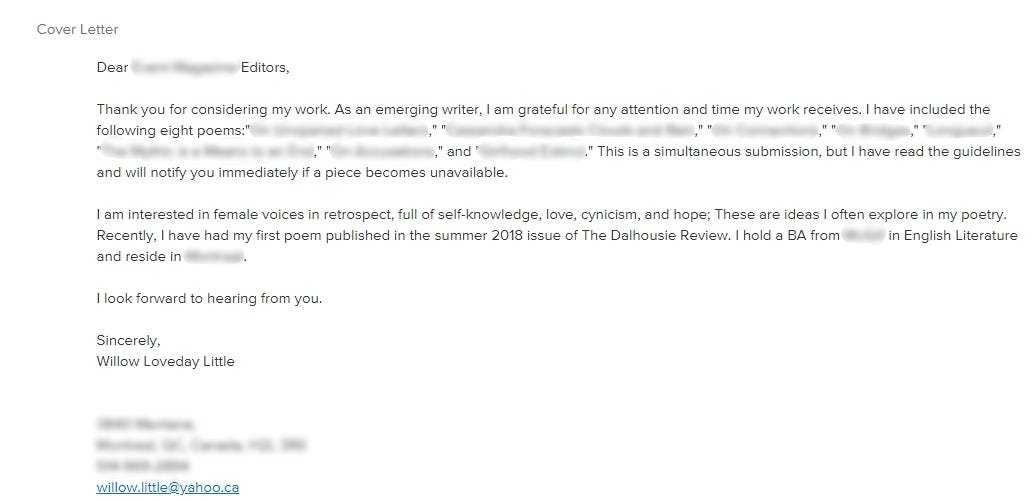
Most playwrights approach their cover letters with the same enthusiasm they reserve for tax filings. They list their degrees, their past productions, and their awards in a tone that suggests they’re performing a civic duty rather than courting artistic favor. This is the first misstep. A cover letter is not a résumé; it is an overture, a teaser, a siren call designed to make the reader lean in and whisper, “Tell me more.”
Consider the publisher who receives hundreds of submissions annually. Their eyes glaze over at the sight of another boilerplate letter that reads like a legal disclaimer. What captures their attention instead is a voice that feels alive, a perspective that feels urgent. The generic cover letter is a missed opportunity to establish a connection—one that could turn a fleeting perusal into a deeper engagement.
Take, for example, a playwright who submits a darkly comedic piece about corporate existentialism. A generic cover letter might state, “I am a graduate of the Yale School of Drama and have had my work produced at regional theaters.” But a compelling one might read, “In a world where cubicles have become the new confessionals, my play *The Algorithm of Regret* dares to ask: What happens when the spreadsheet becomes the scripture?” The latter doesn’t just introduce the playwright; it introduces the play’s soul.
The Art of Strategic Omission
Here’s a counterintuitive truth: the most effective cover letters are not exhaustive. They are surgical. They omit the extraneous and highlight the essential, not out of laziness, but out of calculated focus. A playwright with a sprawling body of work doesn’t need to list every production; they need to highlight the one that whispers to the publisher’s aesthetic sensibilities.
Imagine a publisher known for championing bold, experimental voices. A playwright submitting a surrealist piece about memory and identity might list their experimental festival wins, but they’d be wise to omit their more conventional successes. The cover letter becomes a curation of relevance, not a catalog of achievements. It’s the difference between a scattershot approach and a sniper’s precision.
This strategy requires a deep understanding of the recipient’s tastes. It demands research—not just into their past publications, but into their stated mission, their editorial slant, even their social media musings. A cover letter that aligns with these nuances doesn’t just get read; it gets remembered.
The Power of the Narrative Hook
Every great play begins with a hook—a line, a moment, a question that arrests the audience’s attention. The cover letter should function the same way. It’s not enough to say, “I’ve written a play about grief.” Instead, say, “Grief, in my play *The Hollow Choir*, isn’t a silence—it’s a cacophony of unanswered phone calls and half-finished sentences.”
This isn’t hyperbole; it’s the distillation of the play’s essence into a single, vivid image. The best cover letters don’t describe the play—they evoke its atmosphere. They make the reader feel the weight of the themes before they’ve even read a line of dialogue.
Consider the difference between these two approaches:
- Weak: “My play *The Last Broadcast* is a dystopian satire about media manipulation.”
- Strong: “In a world where the 24-hour news cycle has replaced the human heartbeat, *The Last Broadcast* asks: What if the only truth left is the static between channels?”
The first is a statement. The second is an invitation. One is a transaction; the other is a seduction.
The Subtle Art of Flattery (Without Sycophancy)
Publishers and producers are human. They crave validation. A cover letter that acknowledges their past work—without groveling—can create an immediate sense of kinship. This isn’t about empty praise; it’s about demonstrating that you’ve done your homework and understand what they value.
For instance, a playwright submitting to a theater known for its innovative staging might write, “Your recent production of *The Machine in the Garden* redefined how technology and nature can collide onstage. My play *Carbon Footprints* explores a similar tension, though through the lens of a family’s struggle to outrun their own carbon debt.”
This isn’t flattery for flattery’s sake. It’s a bridge between the publisher’s past successes and the playwright’s current submission. It signals that the playwright isn’t just sending a play into the void; they’re engaging in a conversation.
The Unspoken Contract: Clarity Over Cleverness
There’s a fine line between a cover letter that captivates and one that confuses. The most successful ones balance originality with clarity. They avoid jargon, they avoid obfuscation, and they avoid the temptation to show off at the expense of comprehension.
A cover letter that reads like a postmodern novel might dazzle in a workshop setting, but it will likely be filed away by a harried editor. The goal isn’t to impress with style; it’s to make the reader’s job easier. A clear, concise cover letter demonstrates professionalism and respect for the recipient’s time.
This doesn’t mean sacrificing voice. It means refining it. A playful tone can shine through in a single, well-chosen metaphor. A lyrical writer can hint at their craft without drowning the reader in prose. The key is to be memorable for the right reasons.
The Aftermath: What Happens When the Cover Letter Works
When a cover letter succeeds, it doesn’t just get the playwright a foot in the door—it sets the tone for the entire submission process. A publisher who is intrigued by the letter is more likely to approach the script with an open mind. They’re primed to see the play’s potential, not just its flaws.
But the real magic happens after the acceptance. A cover letter that has done its job isn’t just a formality; it’s the first chapter of a relationship. It’s the playwright’s chance to say, “This is who I am, this is what I write, and this is why I belong in your world.”
And that’s the secret, isn’t it? The most successful play submissions aren’t just about the play itself. They’re about the story the playwright tells before the play even begins. They’re about the connection forged in a single page, a connection that can echo through an entire career.
The cover letter is more than a formality. It’s a manifesto. It’s a promise. It’s the first step in a dance that could lead to standing ovations, critical acclaim, or simply the quiet satisfaction of being heard. So the next time you sit down to write one, ask yourself: Are you just introducing your play—or are you inviting someone into your world?


Leave a Comment