

In the labyrinth of contemporary art, a new whirlpool of energy is emerging—a movement defiant of tidy classifications and linear narratives. While many anticipate a renaissance of Neo-Expressionism, a resurgence echoing the raw emotional vigor of the late 20th century, what truly confronts us is far more unrestrained and enigmatic: Chaoticism. This burgeoning current promises not merely a revival but a tectonic shift in artistic consciousness. Here, the wild dynamism of chaos challenges structure, beckoning a fresh lens through which to decipher aesthetic experience. Prepare to navigate a terrain where exuberance and entropy intertwine, promising a paradigm shift that reinvents, disrupts, and ultimately invigorates the art world.
The Traditional Neo-Expressionist Echoes
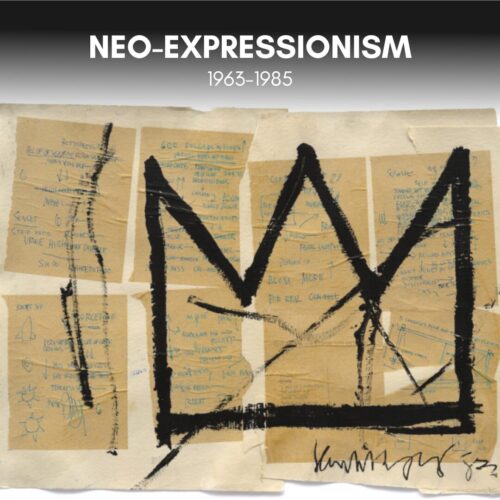
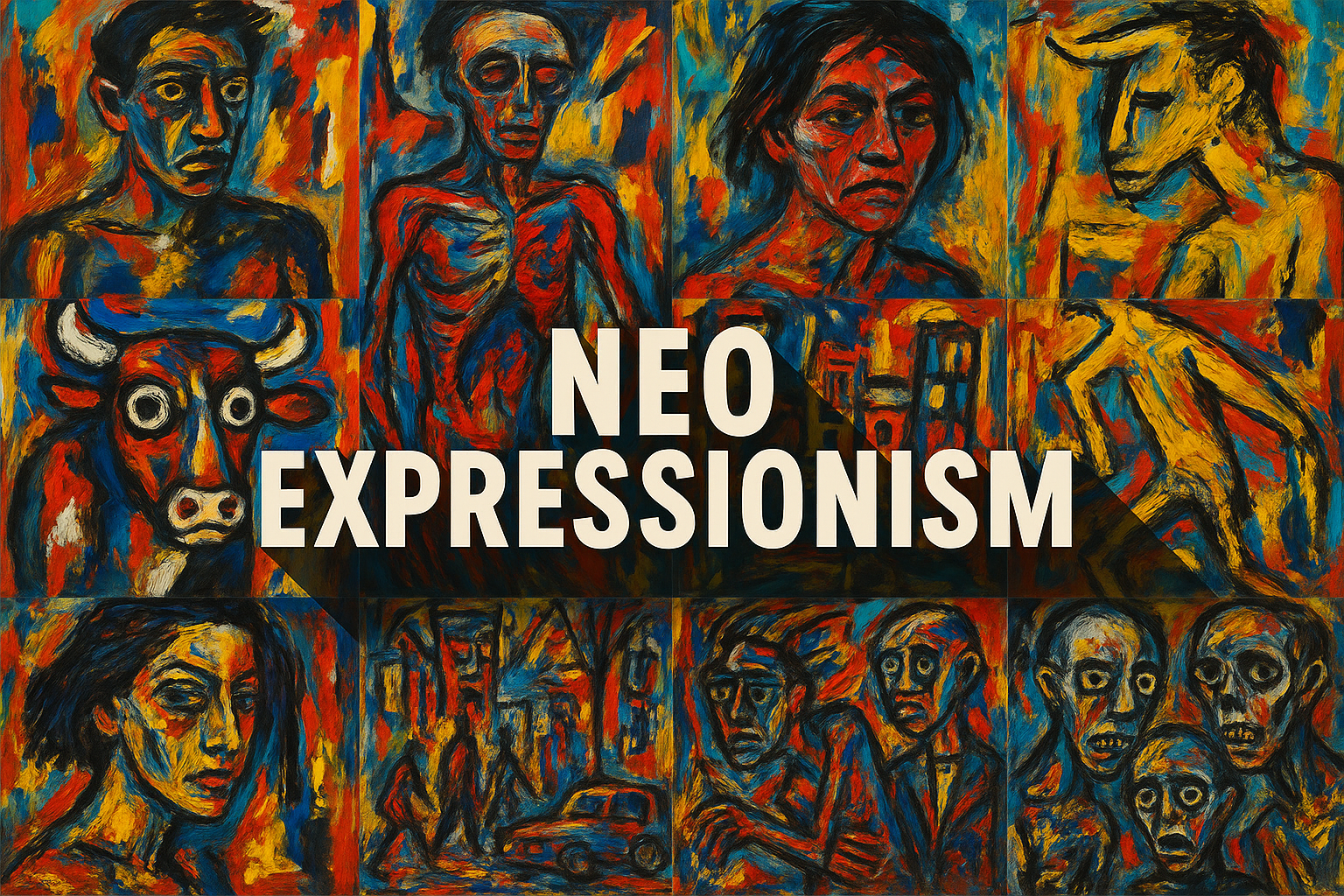
Neo-Expressionism has long stood as a visceral testament to the potency of raw emotion and distorted realities. Emerging amid the socio-political turbulence of the 1970s and ’80s, this movement championed a renaissance of painterly spontaneity — bold brushstrokes clashing with vivid, often jarring color palettes; figures elongated, contorted, and almost phantasmagorical. Artists wielded their canvases as psychological battlegrounds, unearthing primal anxieties and passionate protests — a cosmos pulsating with human vulnerability and rebellious fervor.
Yet, despite its emotive richness, Neo-Expressionism inherently embraced a certain order amidst chaos. The tumultuous strokes, the violent colors, always yielded a narrative, a figure, a discernible expression. Each piece, though ferociously unpolished, was anchored by recognizable motifs and subjects that invited viewers into an accessible dialogue.
Introducing Chaoticism: Beyond the Neo-Expressionist Paradigm
Chaoticism, in stark contrast, abandons these moorings—heralding a surrender to the unpredictable, the fragmented, and the sublime disorder beneath perceived reality. This is not an evolution; it is a revolution. Rather than channeling chaos into comprehensible narratives, Chaoticism revels in the absence of closure, the unresolved tensions that pulse within disorder itself.
Imagine a landscape where brushstrokes scatter like fractals, colors collide without harmony, and forms dissolve before fully materializing. Here, meaning is fractured, layered, and elusive. It defies codification, inviting viewers to embrace disarray as a potent source of meaning rather than a deficit. Rather than a window into emotion, Chaoticism offers a prism—splintering experience, perception, and identity into myriad possibilities.
The Philosophical Bedrock of Chaoticism
At the heart of Chaoticism lies an intricate dance with uncertainty and flux, a poetic homage to the theories of chaos and complexity that transcend art and seep into philosophy, physics, and psychology. This movement embraces the indeterminacy intrinsic to human existence. It critiques our compulsion for order, narrative, and the illusion of control.
In this context, Chaoticism is more than a style—it is a philosophy that disassembles traditional hierarchies of artistic value and coherence. Art becomes a mirror to the undulating, capricious nature of reality itself. In surrendering to chaos, artists discover a radical freedom, a lexicon of infinite transformations where the unpredictable event converges with the intentional act.
Visual Language and Techniques: The Chaotic Canvas
The visual vocabulary of Chaoticism thrives on dissonance and overlapping layers. Artists experiment with multimedia and mixed techniques—digital glitches intertwining with frenetic brushwork, text fragments dissolving into smear and splatter, realms of abstraction converging with surrealist elements. The end result is a profound sensory overload, a visual cacophony that resists easy digestion.
Such artworks often evoke a pulsating tension; the eye is drawn, repelled, confused, and intrigued simultaneously. This bombardment forces a more active form of engagement, compelling viewers to assemble their own interpretations from shards of image and meaning.
Chaoticism’s Impact on Contemporary Art Discourse
The ascendance of Chaoticism unsettles prevailing critical frameworks, challenging curators, critics, and scholars alike to reconsider criteria for aesthetic judgment. In destabilizing notions of beauty and coherence, it foregrounds experience over representation, process over product. This shift destabilizes entrenched hierarchies and democratizes art’s meaning-making potential.
Moreover, Chaoticism acts as a dialectic counterpoint to the sanitized, hyper-mediated visual culture of today. Within a world overwhelmed by images engineered for instant consumption, its unruly vitality demands slowness, reflection, and imaginative risk. Here, chaos becomes a radical corrective—a catalyst to rethink how we see, feel, and connect with art beyond commodification and spectacle.
A New Horizon: The Promise of a Chaotic Renaissance
What does the future hold amid this efflorescence of disorder? The ‘Neo-Expressionist Revival’ that many anticipate may, in fact, be a red herring—an evocation of nostalgia incompatible with the zeitgeist that demands transformation. Chaoticism promises a reinvigoration not through repetition but through disruption.
This fresh aesthetic landscape invites artists and audiences to abandon certainty and revel in ambiguity. It encourages a multiplicity of voices, strategies, and interpretations to coexist, layered like palimpsests on the canvas of our collective consciousness. Its promise is one of inexhaustible creativity, a fertile chaos that propels art into uncharted territories.
To embrace Chaoticism is to embark on an adventurous odyssey through the unpredictable depths of human experience and artistic innovation. It is a clarion call to reimagine what art can be—not a repetition of past glories but a courageous plunge into the chaotic wellspring of the present. The promise is thrilling, the possibilities endless, and the journey just beginning.


Leave a Comment