

In the pantheon of American literature, few novels are as revered—or as misunderstood—as F. Scott Fitzgerald’s The Great Gatsby. For generations, readers have been spellbound by its glittering prose, its tragic hero, and the intoxicating allure of the Roaring Twenties. Yet, beneath the shimmering surface of champagne-soaked parties and golden dresses lies a narrative that is far more unsettling than it first appears. What if The Great Gatsby isn’t a love story at all? What if it’s something far darker—a psychological horror tale disguised as a romance, where obsession curdles into madness, and the American Dream curdles into a nightmare?
This isn’t just a critique of Gatsby’s idealization of Daisy Buchanan. It’s an exploration of how Fitzgerald weaponizes the language of love to expose the rot beneath the gilded facade. The novel’s failure as a love story is not a flaw; it’s a masterstroke. By subverting our expectations, Fitzgerald crafts a story that lingers like a bruise—beautiful on the surface, but excruciating beneath. Let’s dissect why The Great Gatsby is, at its core, a horror story in disguise.
The Illusion of Romance: When Love Becomes a Haunting
The first chilling revelation is that Gatsby’s love for Daisy is not a passion—it’s a haunting. From the moment Nick Carraway meets him, Gatsby is described as a man who “[fixes] everything just the way it was before.” This isn’t love; it’s necromancy. Gatsby isn’t in love with Daisy. He’s in love with the idea of Daisy—the girl she was five years ago, the girl who never truly existed in the way he imagines. Their reunion is less a romantic spark and more a séance, where Gatsby attempts to resurrect a past that dissolved the moment Daisy married Tom Buchanan.
The horror lies in the realization that Gatsby’s devotion is not reciprocal. Daisy, a woman of “voice full of money,” is not a person to him but a symbol—a golden idol he worships from afar. When they finally reunite, the scene is dripping with unease. Gatsby, trembling, can barely speak. Daisy, meanwhile, is “appalled” by the gaudy excess of his mansion, a place he built solely to lure her back. The love story we’ve been sold is a mirage. What we’re witnessing is the grotesque spectacle of a man who has spent years constructing a cathedral to a ghost.
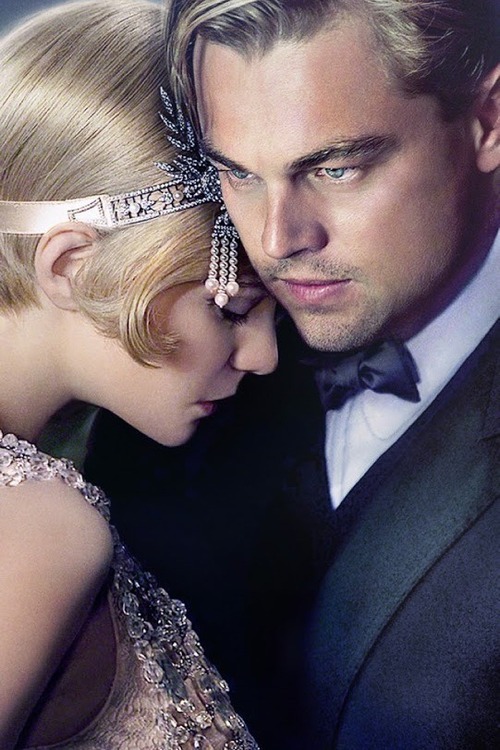
The American Nightmare: Obsession as a Slow Poison
If Gatsby’s love is a haunting, then his obsession is the slow-acting toxin that kills him. The novel’s second act is less a love story and more a psychological unraveling, where Gatsby’s every action is dictated by an insatiable need to control the uncontrollable. His parties, his pink suits, his mansion—all are desperate attempts to recreate a moment that slipped through his fingers like sand. This isn’t romance; it’s compulsive behavior, the kind that borders on delusion.
Consider the scene where Gatsby, drunk and disheveled, shows Daisy his shirts. The moment is often read as romantic, but it’s actually a breakdown. Gatsby, in his desperation, is performing for her approval, as if wealth alone can rewrite history. Daisy, ever the pragmatist, weeps not out of love but out of discomfort. The horror here is in the realization that Gatsby’s entire identity is built on a foundation of wishful thinking. He’s not a lover; he’s a man who has replaced his own life with a performance, and the audience—Daisy—isn’t even paying attention.
The Green Light: A Beacon of Dread, Not Hope
The green light at the end of Daisy’s dock is one of literature’s most iconic symbols. But what if it’s not a symbol of hope? What if it’s a warning? Gatsby stares at it night after night, not with longing, but with a kind of hypnotic dread. The light is always just out of reach, a taunt, a reminder that his dreams are built on quicksand. Fitzgerald never lets us forget that Gatsby’s pursuit of Daisy is a doomed endeavor from the start. The green light isn’t a lighthouse guiding him home; it’s a siren’s call, luring him toward the rocks.
This inversion of a classic romantic trope is where the horror truly takes root. In a love story, the obstacle is external—a rival, a misunderstanding, a cruel twist of fate. In The Great Gatsby, the obstacle is Gatsby himself. His love isn’t a force for growth; it’s a prison. Every step he takes toward Daisy is a step closer to his own destruction. The green light isn’t a beacon of hope. It’s the flickering glow of a man’s sanity, and it’s about to go dark.

The Violence Beneath the Glamour: Love as a Crime Scene
Love stories are supposed to be tender, even when they’re tragic. But The Great Gatsby is steeped in a violence that simmers beneath the surface, ready to erupt. Consider the scene where Tom Buchanan breaks Myrtle Wilson’s nose with a single “short deft movement.” The act is brutal, sudden, and utterly devoid of remorse. It’s a moment that shatters the illusion of the novel’s glamour, reminding us that beneath the champagne and jazz, this is a world where men exert power through fear and women are collateral damage.
Even Gatsby’s death is a violent unraveling. He’s gunned down in his pool, a symbol of his own excess, while the people who once idolized him abandon him without a second thought. The horror here isn’t just in the murder—it’s in the realization that Gatsby’s entire life was a performance, and when the curtain fell, there was no one left to care. Love, in this world, is not a redemptive force. It’s a transaction, a currency, a weapon. And like all weapons, it leaves carnage in its wake.
The Final Twist: Why the Horror Resonates
So why does The Great Gatsby fail as a love story but succeed as a horror story? Because Fitzgerald understood something fundamental about human nature: love, when stripped of its idealism, is often indistinguishable from obsession, delusion, and violence. The novel’s power lies in its refusal to romanticize its central relationship. Gatsby doesn’t die for love. He dies because he mistook possession for passion, and in doing so, he became a cautionary tale.
The horror of The Great Gatsby is that it’s not just a story about a man who loved too much. It’s a story about a man who loved the wrong thing entirely. Daisy Buchanan is not a prize to be won; she’s a mirror, reflecting back Gatsby’s own emptiness. And when the mirror shatters, all that’s left is the wreckage of a life built on lies.
The next time you read The Great Gatsby, don’t look for romance. Look for the cracks in the gilded frame. Look for the green light’s eerie glow. Look for the violence beneath the velvet. What you’ll find is not a love story, but a ghost story—one where the only thing haunting Gatsby is his own reflection.


Leave a Comment