

The codpiece was not merely an article of clothing—it was a declaration, a phallic exclamation mark in the margins of history, a bold assertion of masculinity that dared to shout its presence into the silence of the Renaissance court. Four centuries later, its spirit has not dissipated; it has merely transmuted, slithering through the corridors of time to resurface in the electric pulse of ballroom culture. Here, in the mirrored halls where vogueing arms carve arcs through the air like compass needles seeking magnetic north, the codpiece’s legacy lives on—not as a relic of patriarchal posturing, but as a shimmering, subversive emblem of gender power reclaimed. This is the story of how ballroom culture, in all its glittering defiance, has resurrected the codpiece not as a symbol of domination, but as a canvas for reinvention, a manifesto stitched into sequins and sweat.
The codpiece’s original purpose was twofold: functional and performative. It padded the groin, yes, but it also padded the ego, transforming the male form into a walking billboard of virility. In the 16th century, it was the ultimate power accessory, a visual cue that the wearer was not to be trifled with. Fast-forward to the late 20th century, and the ballroom scene in New York City became its own kind of court, a queer kingdom where the rules of gender were not dictated by kings or cardinals, but by the dancers themselves. Here, the codpiece’s spirit was reborn—not as armor, but as art. The “dip” in vogueing, the arch of the back, the precision of a hand placement—these are modern codpieces, sculpted from flesh and fabric, each movement a deliberate assertion of presence, a refusal to be erased.
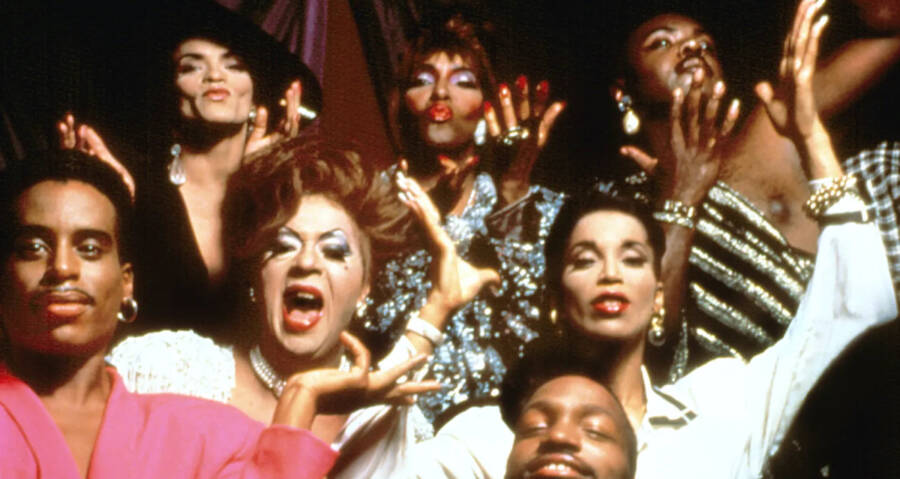
The House as Cathedral: Where Gender is a Blueprint, Not a Cage
In the pantheon of ballroom, the “house” is not merely a social structure—it is a cathedral, its stained-glass windows the shimmering gowns of its members, its pews the polished floors where battles are waged and legends are forged. Houses like Xtravaganza, Ninja, and Balenciaga are not just familial units; they are ideological fortresses, each with its own manifesto etched into the very fabric of its existence. Here, gender is not a fixed identity but a malleable medium, a clay to be shaped by the hands of those who refuse to be confined by the binary cages of the outside world.
Consider the “butch queen,” a term that once carried stigma but now carries swagger. In the ballroom lexicon, it is not an insult but an identity, a reclamation of power that flips the script on traditional masculinity. The butch queen’s walk is a codpiece in motion—each stride a deliberate assertion of agency, each gesture a brushstroke in the portrait of a self-defined masculinity. She does not ask for permission to exist; she demands it, her presence a living rebuttal to the idea that gender must be static or singular.
The ballroom’s houses are also microcosms of intersectionality, where race, class, and sexuality collide in a kaleidoscope of identities. The “realness” categories—“butch queen realness,” “femme queen realness,” “shante realness”—are not about deception but about transcendence. To achieve realness is to master the art of passing not as someone else, but as the best version of oneself. It is the ultimate codpiece moment: the external manifestation of an internal truth, a sartorial and performative armor that says, “I am here, and I am unapologetic.”
The Vogue Armor: Crafting Power from the Fragments of Oppression
Vogueing is not merely a dance; it is a martial art, a choreographed battle where the body becomes both sword and shield. The sharp angles of the arms, the frozen poses, the sudden drops—each movement is a strike, a parry, a declaration of dominance. In the world of ballroom, the body is not a vessel of submission but a weapon of liberation. The codpiece’s legacy is writ large in every dip, every death drop, every moment where the dancer’s form contorts into a shape that defies expectation.
This is where the metaphor of the codpiece truly shines. Just as the Renaissance codpiece exaggerated and celebrated the male form, vogueing exaggerates and celebrates the queer body. It takes the fragments of oppression—the stares, the slurs, the erasure—and forges them into something glorious. The “catwalk,” with its exaggerated strut and sway, is a codpiece in motion, a performance of confidence that says, “I am not here to be looked at with pity. I am here to be admired.”
The ballroom’s emphasis on “presentation” is another nod to the codpiece’s ethos. In the 16th century, the codpiece was a statement of status, a visual cue that the wearer was someone to be reckoned with. In the ballroom, presentation is a statement of self-possession. The way a dancer walks, the way they hold their head, the way they command the space around them—these are all codpieces of a sort, external manifestations of an internal power. To present oneself in ballroom is to declare, “I am not just here to survive. I am here to thrive.”
The Judges’ Gaze: Power Dynamics in the Mirror of the Ballroom
The ballroom is a stage, but it is also a courtroom, where the judges’ panel holds the gavel of validation. Their critiques are not mere opinions; they are decrees that can elevate a dancer to legend status or relegate them to obscurity. This dynamic mirrors the power structures of the Renaissance court, where the monarch’s favor could make or break a subject’s reputation. Yet in the ballroom, the judges are not kings—they are arbiters of a new order, one where the rules are written by the dancers themselves.
The tension between the dancer and the judges is a dance in itself, a push-and-pull of expectation and innovation. A judge’s critique can be a codpiece moment—a moment where the dancer must decide: Do I conform to their expectations, or do I assert my own vision? The most iconic moments in ballroom history are those where a dancer refused to be boxed in, where they took the judge’s gaze and turned it into a spotlight. This is the essence of the codpiece’s legacy: the power to reframe the narrative, to take the tools of oppression and wield them as instruments of liberation.
The ballroom’s emphasis on “category” is another layer to this dynamic. Categories like “face” and “body” are not just descriptors; they are battlegrounds where the dancer’s identity is both challenged and celebrated. To compete in a category is to engage in a dialogue with the judges, a dialogue that is as much about self-definition as it is about performance. The dancer who wins is not the one who best conforms to the judges’ expectations, but the one who best embodies their own truth.
The Legacy of the Codpiece: A Blueprint for Queer Futurity
The codpiece was never just about the groin; it was about the groin as a site of power, a symbol of dominance, a visual cue that the wearer was not to be trifled with. In the ballroom, this symbolism has been expanded, recontextualized, and reclaimed. The codpiece’s legacy is not a relic of the past but a living, breathing force that shapes the present and the future. It is a reminder that power is not given—it is taken, and ballroom culture is a masterclass in the art of taking.
This legacy is evident in the way ballroom has influenced mainstream culture. From Madonna’s “Vogue” to the fashion runways of Jean-Paul Gaultier, the echoes of ballroom’s defiance can be heard in every corner of the cultural landscape. The codpiece’s spirit is there, in the exaggerated silhouettes, the bold colors, the unapologetic self-expression. It is a testament to the fact that the most powerful statements are not made with words, but with bodies, with movements, with the sheer force of presence.
Yet the codpiece’s legacy in ballroom is more than just aesthetic. It is a political statement, a refusal to be confined by the narrow definitions of gender and power that have dominated history. In the ballroom, the codpiece is not a symbol of oppression but a tool of liberation. It is a way to assert one’s presence in a world that often seeks to erase queer and trans bodies. It is a way to say, “I am here, and I am magnificent.”
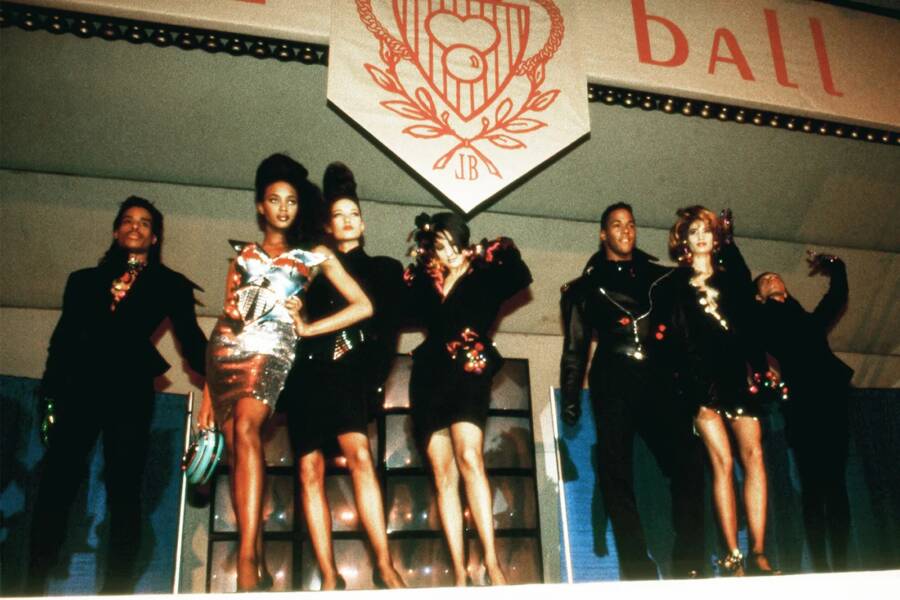
The return of the codpiece is not a regression but a revolution. It is a reminder that history is not a linear path but a spiral, where the past’s symbols are constantly being reclaimed and reimagined. In the ballroom, the codpiece is not a relic of patriarchal power but a shimmering emblem of queer resilience. It is a declaration that the body is not a cage but a canvas, and that power is not something to be given but something to be seized.
So the next time you see a dancer take the floor, remember: they are not just performing. They are wielding a codpiece, a symbol of a legacy that refuses to be silenced. They are declaring, in every dip and every drop, that the future is not something to be feared but something to be shaped. And in that moment, the codpiece is not a relic of the past—it is a promise of the future.


Leave a Comment