

What if I told you there’s a dance so powerful it can unite an entire village—literally? Not with speeches or treaties, but with something far more primal: hands clasped in a circle, feet tapping the earth in unison, and a rhythm that thrums through the soul like a heartbeat. This is the Romanian hora, a folk dance that transforms strangers into kin and turns the mundane into the magical. But here’s the twist: what happens when that circle, so steadfast and unyielding, faces an unexpected challenge? What if the music stops? What if the ground beneath them trembles? Or worse—what if someone lets go?
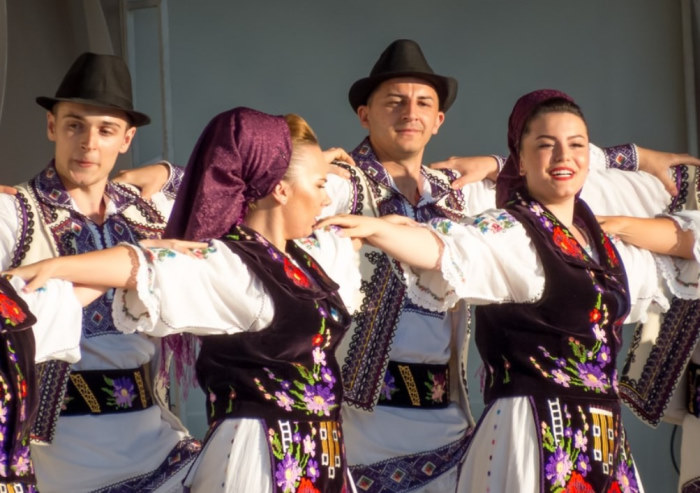
The Romanian hora isn’t just a dance. It’s a living testament to resilience, a choreographed act of defiance against chaos, and a celebration of collective strength. Imagine a hundred villagers, young and old, weaving through the streets in a spiraling vortex of color and sound, their hands never breaking contact. It’s hypnotic. It’s mesmerizing. And it’s impossible to ignore. But why does this simple act of holding hands carry such weight? Why does the hora endure, even as the world around it changes at a breakneck pace? Let’s unravel the secrets of this ancient tradition and discover why an entire village holding hands can’t—and won’t—be broken.
The Circle as a Sacred Geometry: More Than Just a Shape
The hora begins with a circle, but it’s far more than a geometric form. In Romanian folklore, the circle symbolizes eternity, continuity, and the unbroken thread of life. It’s the shape of the sun, the moon, and the earth itself. When villagers gather to dance the hora, they’re not just moving in a pattern—they’re reenacting an ancient pact with the cosmos. Every step, every sway, every clasp of hands is a silent vow: We stand together. We move as one.
This isn’t mere symbolism. The circle in the hora is a physical manifestation of unity. In agrarian societies, where survival depended on collective effort, the circle ensured no one was left behind. The weakest link was still part of the chain. The slowest dancer was still carried by the rhythm. And the outsider? They were pulled in, not by force, but by the sheer magnetism of the circle’s pull. It’s a dance that says: You belong here.
But the circle isn’t just a metaphor for unity—it’s a fortress. In a world where empires rose and fell, where wars ravaged the land, the hora remained a constant. It was a rebellion against fragmentation, a middle finger to the forces that sought to divide. Even today, in villages where modernity creeps in like ivy, the hora endures as a defiant act of cultural preservation. It’s a reminder that some traditions aren’t relics of the past; they’re the glue holding the present together.
The Music: The Invisible Conductor of the Circle
No hora is complete without its music, and the instruments that accompany it are as vital as the dancers themselves. The fiddle, with its mournful wail, sets the tempo. The cimbalom, a hammered dulcimer, adds a shimmering layer of complexity. And the accordion? It’s the heartbeat, the relentless pulse that keeps the circle spinning. But here’s the magic: the music isn’t just background noise. It’s the invisible conductor, guiding the dancers with an authority that borders on the supernatural.
Listen closely to a hora in full swing, and you’ll hear something extraordinary. The music isn’t just playing for the dancers—it’s playing through them. The fiddle’s notes seem to vibrate in the air, compelling feet to move, hands to clasp, bodies to sway. It’s as if the music itself is alive, a sentient force that refuses to let the circle break. The villagers don’t just dance to the music; they become an extension of it. Their movements are dictated by the rhythm, their energy fueled by the sound. It’s a symbiotic relationship, one where the dancers and the music are indistinguishable from each other.
But what happens when the music falters? What if the fiddle string snaps mid-song? What if the accordionist stumbles, or the cimbalom player loses their place? In that moment, the circle faces its first true test. The music isn’t just a backdrop—it’s the glue. Without it, the dancers stumble. The rhythm wavers. The circle weakens. Yet, even in these moments of vulnerability, the hora reveals its true power. The dancers adapt. They improvise. They lean on each other, their hands gripping tighter, their steps becoming more deliberate. The music may pause, but the circle never does. It’s a testament to the resilience of tradition, a reminder that even when the world stumbles, the dance goes on.
The Challenge: What If Someone Lets Go?
Now, let’s pose a question that sends shivers down the spine of every hora dancer: What if someone lets go? It’s the unthinkable. The unforgivable. The one act that could shatter the circle and leave the village in ruins. In the world of the hora, letting go isn’t just a misstep—it’s a betrayal. It’s a rejection of the collective, a declaration that the individual matters more than the whole. And yet, in the chaos of life, it happens. Someone stumbles. Someone hesitates. Someone, in a moment of weakness, pulls their hand free.
The consequences are immediate. The circle wobbles. The rhythm stutters. The dancers closest to the break must compensate, their steps becoming more urgent, their grip tightening. It’s a domino effect, a ripple that threatens to unravel everything. But here’s the paradox: the hora isn’t just about perfection. It’s about recovery. It’s about the moment when the circle, though weakened, refuses to fall. The dancers adjust. They pull the stray hand back in. They laugh, they tease, they remind each other that the circle is stronger than any single misstep. It’s a lesson in resilience, a microcosm of how communities endure.
This challenge isn’t just hypothetical. In real life, the hora has faced countless threats—assimilation, globalization, the erosion of tradition—and yet, it persists. The circle may bend, but it never breaks. It’s a metaphor for survival, a reminder that even when the world tries to pull us apart, we can choose to hold on. The hora teaches us that unity isn’t about perfection. It’s about persistence. It’s about the willingness to reach out, even when the ground beneath us trembles.
The Legacy: Why the Hora Matters in a Fragmented World
In an era where screens dominate our attention and algorithms dictate our connections, the hora feels like a relic from a simpler time. But it’s anything but obsolete. In fact, its lessons are more relevant than ever. The hora is a blueprint for how to thrive in a world that constantly tries to divide us. It’s a reminder that strength isn’t found in isolation, but in the willingness to stand side by side, to move in sync, to hold on even when the music falters.
The hora also carries a quiet defiance. In a world where individualism is often celebrated above all else, the hora insists on the opposite. It says: Your worth isn’t measured by what you achieve alone, but by what you contribute to the whole. It’s a radical idea in a culture that glorifies self-reliance. And yet, it’s the secret to the hora’s endurance. Because when you dance in a circle, you’re not just moving your feet—you’re affirming your place in the world. You’re saying: I am part of something greater than myself.
This is why the hora isn’t just a dance. It’s a lifeline. It’s a rebellion. It’s a celebration of the unbreakable bond between people. And in a world that often feels fractured, that’s a message worth holding onto.
So the next time you see a circle of dancers moving in unison, remember: it’s not just a performance. It’s a promise. A vow. A silent scream against the forces that seek to tear us apart. The hora endures because it refuses to let go. And in that refusal, it teaches us the most powerful lesson of all: Together, we cannot be broken.


Leave a Comment