

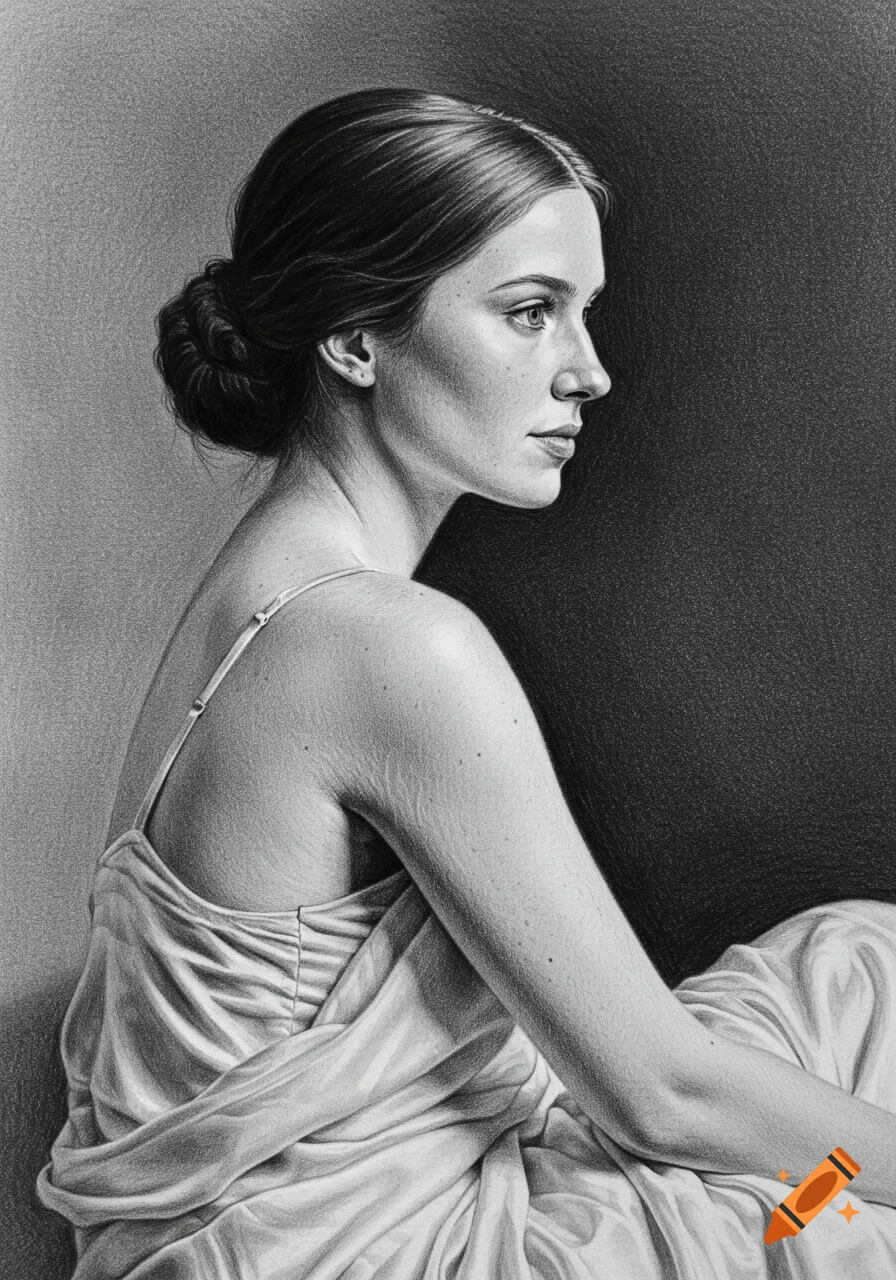
In the quiet hum of a studio, where the only sounds are the whisper of graphite on paper and the occasional sigh of an artist lost in concentration, something extraordinary happens. A blank sheet of paper transforms into a face—so lifelike, so arresting, that you’d swear it could breathe. This is the magic of hyper-realistic graphite portraits, where every pore, every strand of hair, every flicker of emotion is captured with such precision that the boundary between art and reality blurs. But how do artists achieve this? What secrets lie behind those mesmerizing portraits that seem to leap off the page? The answer isn’t just in the tools or the technique; it’s in the marriage of patience, perception, and an almost obsessive attention to detail. Let’s peel back the layers of this captivating process and uncover the hidden mechanics that turn graphite into a window to another world.
The Alchemy of Observation: Seeing Beyond the Surface
Before a single line is etched onto paper, the artist must first master the art of seeing. Hyper-realism isn’t about replicating what’s in front of you; it’s about distilling the essence of your subject into a visual language that speaks volumes without words. This begins with a shift in perspective—literally. Artists often invert their reference images or view them upside down to strip away preconceived notions of what a face *should* look like. The brain, in its eagerness to categorize, tends to simplify features into familiar shapes. But hyper-realism demands that we discard those shortcuts. Instead, the artist trains their eye to notice the subtle asymmetries of a smile, the way light fractures across a cheekbone, or the delicate web of wrinkles that tell a story of time. It’s a form of visual meditation, where every shadow and highlight becomes a clue in a larger puzzle.
This heightened observation extends beyond static features. The play of muscles beneath the skin, the way hair catches the light, even the minute variations in skin tone—all of these elements are dissected with surgical precision. The artist doesn’t just draw an eye; they draw the *reflection* in the eye, the way it interacts with the surrounding flesh. They don’t just sketch lips; they capture the way they part slightly when breathing, the faintest hint of moisture at the corners. This level of detail isn’t born from technical skill alone; it’s cultivated through an almost meditative focus, where the artist becomes one with their subject, seeing the world as it truly exists rather than as it’s perceived.
The Dance of Layers: Building Depth with Delicate Strokes
Graphite, in the hands of a hyper-realist, is far more than a humble tool—it’s a chameleon, capable of mimicking the softness of skin, the sheen of sweat, or the roughness of stubble. The secret to this versatility lies in the layering process, a meticulous dance of pressure, texture, and patience. Unlike traditional drawing where lines define form, hyper-realistic graphite portraits are constructed through a series of tonal gradients, where each layer peels back another veil of reality.
The journey begins with a light underdrawing, a skeletal framework that maps out the proportions and placement of features. But here’s where the magic starts: the artist doesn’t rush to fill in the darks. Instead, they build up layers gradually, using a range of pencils from hard (H) to soft (B), each grade offering a different weight of mark. A 2H pencil might glide across the paper to suggest the faintest hint of a shadow, while a 6B is pressed with deliberate force to carve out the deepest recesses of an eye socket. The key is in the transitions—smooth, seamless blends that erase the evidence of the artist’s hand. Tools like blending stumps, chamois cloths, or even a simple tissue become extensions of the artist’s intent, smoothing out harsh lines and creating the illusion of continuous tone.
Yet, layering isn’t just about darkness. It’s about *absence*. The most striking portraits often feature areas of pure, untouched paper—highlights that catch the light, the glint in an eye, the curve of a cheekbone. These negative spaces are just as crucial as the graphite itself, serving as the breath of life in an otherwise inanimate surface. The artist must constantly toggle between adding and subtracting, knowing when to let the paper shine through and when to bury it under a mountain of graphite. It’s a balancing act that requires an intuitive understanding of light and form, where every stroke is a calculated whisper rather than a shout.
The Illusion of Life: Breathing Soul into Graphite
Even the most technically flawless portrait can feel lifeless if it lacks something intangible—the spark of humanity. Hyper-realism isn’t just about accuracy; it’s about evoking emotion, about making the viewer *feel* the weight of a gaze or the fragility of a smile. This is where the artist’s personal connection to their subject becomes paramount. A portrait isn’t merely a copy of a face; it’s a dialogue between the artist and the person they’re drawing. The artist must ask: What does this face reveal about the soul behind it? What stories are etched into the lines around the eyes? What emotions flicker in the downturn of the mouth?
To convey this depth, artists often focus on the *subtleties* that define a person. A slight furrow between the brows might suggest contemplation. The way light catches the tip of the nose could hint at a quiet confidence. Even the texture of the skin—whether it’s the roughened pores of an elder or the smoothness of youth—becomes a narrative device. The artist doesn’t just replicate these details; they amplify them, using contrast and emphasis to guide the viewer’s eye to the heart of the story. A hyper-realistic portrait isn’t a mirror; it’s a magnifying glass, revealing truths that might otherwise go unnoticed.
This emotional resonance is often achieved through the interplay of light and shadow. A well-placed highlight can make an eye appear moist and alive, while deep shadows can lend a sense of mystery or melancholy. The artist must become a storyteller, using their tools to sculpt not just a face, but an entire persona. It’s a process that demands vulnerability—putting a piece of oneself into every mark, every nuance. The result is a portrait that doesn’t just look real; it *feels* real, as if the subject could step out of the frame at any moment.
The Unseen Struggle: Patience as the Ultimate Virtue
Hyper-realistic graphite portraits are not created in a day. They are the product of hours, sometimes weeks, of relentless focus, where the artist must resist the urge to rush or cut corners. Patience isn’t just a virtue in this craft; it’s the foundation upon which every masterpiece is built. The temptation to “just get it done” is ever-present, especially when the details seem endless. But hyper-realism rewards those who embrace the grind, who find beauty in the slow, deliberate accumulation of layers.
This patience extends beyond the act of drawing itself. It begins with the selection of the right materials—paper with the right tooth to hold graphite, pencils with the precise hardness to achieve the desired effect. It continues with the preparation of the workspace, ensuring that lighting is consistent and free from distractions. Even the act of sharpening pencils becomes a ritual, a moment of pause before diving back into the work. The artist must cultivate a mindset where every minute spent is a minute well-invested, where the journey is as important as the destination.
There’s a quiet resilience required here, too. Hours can pass without visible progress, and the artist must trust the process even when the results aren’t immediately apparent. It’s easy to become discouraged when a portrait seems to mock your efforts, its features stubbornly refusing to coalesce into something recognizable. But this is where the true test lies—not in the ability to draw, but in the willingness to persist. The hyper-realist artist doesn’t just draw; they *listen* to the paper, to the graphite, to the subtle shifts in tone that signal progress. They learn to embrace the frustration, to see it as a sign that they’re pushing boundaries rather than hitting limits.
The Final Revelation: When Graphite Transcends Itself
There comes a moment in the creation of a hyper-realistic graphite portrait when the artist steps back and realizes that something extraordinary has happened. The lines they drew have ceased to be mere marks on paper; they’ve become a living, breathing entity. The portrait no longer belongs to the artist—it has taken on a life of its own. This is the alchemy of hyper-realism: the transformation of a simple medium into something that feels almost supernatural.
What makes this moment so profound is the realization that the artist hasn’t just created a likeness; they’ve captured a fleeting instant in time. The slight squint of an eye, the way hair catches the light, the faintest flush on a cheek—all of these elements are ephemeral, yet through graphite, they’re immortalized. The viewer doesn’t just see a portrait; they’re transported into a moment, a feeling, a story. This is the power of hyper-realism: it doesn’t just depict reality; it *preserves* it, turning a transient expression into something eternal.
For those who embark on the journey of creating hyper-realistic graphite portraits, the rewards extend beyond the final piece. The process itself becomes a form of meditation, a way to slow down and truly *see* the world. It teaches patience, humility, and an unwavering attention to detail. And perhaps most importantly, it reminds us that beauty isn’t just in the grand gestures or the bold strokes—it’s in the quiet, the subtle, the almost imperceptible. In a world that moves at breakneck speed, hyper-realism offers a sanctuary, a place where time slows and every detail matters.
So the next time you find yourself staring at a hyper-realistic graphite portrait, take a moment to look closer. Notice the way the graphite mimics the sheen of sweat, the way the shadows deepen to suggest bone structure, the way the eyes seem to follow you around the room. This isn’t just art—it’s a testament to the extraordinary things that happen when human perception meets human creation. It’s a reminder that reality, when observed with enough care and devotion, can be the most surreal thing of all.


Leave a Comment