

Have you ever finished a gripping tale, only to realize the narrator’s version of events was as shaky as a Jenga tower in a toddler’s hands? The unreliable narrator has long been the darling of literary suspense, a narrative device that thrives on doubt and deception. But let’s be honest—after decades of twisty, gaslighting protagonists and memoirists with conveniently foggy memories, the trick feels a little… overdone. What if, instead of questioning the storyteller, we questioned the world itself? Welcome to the era of the unreliable world—a narrative playground where reality bends, physics falters, and the stage itself conspires against the characters.
Imagine stepping into a story where the streets rearrange overnight, where gravity flickers like a dying bulb, and where the sun rises in the west just to keep you guessing. This isn’t just a twist—it’s a full-blown ontological rebellion. The unreliable world doesn’t just mislead; it erases the very ground beneath your feet. It’s not about whether the narrator is lying; it’s about whether the universe has a sense of humor—or a vendetta. So, why settle for a fibbing guide when you can invite chaos to the dinner party?
The Unreliable Narrator: A Tired Trope with a Trusty Past
The unreliable narrator isn’t just a literary gimmick; it’s a psychological labyrinth. From Edgar Allan Poe’s madmen to Gillian Flynn’s sociopaths, this device has let readers peer into fractured minds, where truth is a shifting mirage. But here’s the catch: it’s been done. Repeatedly. The “I may be lying” confession has become so commonplace that it’s lost its sting. Audiences now approach such narrators with a knowing smirk, waiting for the rug to be pulled out from under them—again.
Consider the modern thriller, where every protagonist with a first-person voice is either a murderer, a ghost, or a figment of someone else’s imagination. The twist isn’t a revelation; it’s an expectation. The unreliable narrator has become a crutch, a shortcut to tension that no longer surprises. It’s the narrative equivalent of a jump scare in a haunted house—predictable, and ultimately, forgettable.
Worse still, the device often relies on the reader’s willingness to suspend disbelief in the narrator’s credibility, not the world’s. But what if the world itself is the liar? What if the ground is made of quicksand, not just the narrator’s words? That’s where the unreliable world steps in—with a mischievous grin and a willingness to rewrite the rules.
The Unreliable World: When Reality Becomes the Villain
Picture this: a detective chasing a suspect through a city where the streets loop back on themselves, where buildings vanish overnight, and where the suspect’s face changes with every glance. The detective isn’t unreliable—the city is. This isn’t a story about a flawed human; it’s a story about a world that refuses to cooperate. The unreliable world doesn’t just deceive; it dismantles the very fabric of logic.

The unreliable world thrives on surrealism, on the kind of logic that governs dreams. It’s the domain of Kafka’s bureaucratic nightmares, Borges’ labyrinthine libraries, and Lynch’s Twin Peaks, where the mundane becomes monstrous. In such a world, the question isn’t “Is the narrator lying?” but “Is the world even real?” This shift transforms the reader from a detective into an archaeologist, sifting through the remnants of a shattered reality to uncover the truth—or what passes for it.
Consider the potential for tension. In a traditional unreliable narrator story, the conflict is internal—the narrator’s lies create the drama. But in an unreliable world, the conflict is external, a cosmic prank that forces characters (and readers) to question everything. The stakes aren’t just about who did it; they’re about whether “it” even exists. This isn’t just a twist—it’s a paradigm shift.
Why the Unreliable World is the Ultimate Narrative Playground
The unreliable world isn’t just a fresh twist on an old trope; it’s a sandbox for creativity. It allows writers to explore themes of perception, identity, and the nature of reality itself. What does it mean to be human in a world that refuses to make sense? How do characters define themselves when the environment around them is in constant flux?
This device also opens doors for experimental storytelling. Imagine a novel where the chapters themselves are unreliable—some might be missing, others rewritten by an unseen hand. Or a video game where the physics engine glitches at random, forcing players to adapt to a reality that’s as unpredictable as it is immersive. The unreliable world isn’t just a narrative device; it’s a invitation to play.
Moreover, it challenges the reader in ways the unreliable narrator never could. Instead of passively consuming a story where the narrator’s unreliability is the central conflict, the reader becomes an active participant in piecing together the truth. Every clue is suspect. Every landmark is a potential trap. The unreliable world doesn’t just tell a story—it forces the audience to live it, to grapple with the same confusion and doubt as the characters.
The Challenges of Crafting an Unreliable World
Of course, wielding an unreliable world isn’t without its pitfalls. The biggest challenge? Clarity. If the world is too chaotic, readers will disengage, overwhelmed by the lack of anchors. The key is to establish rules—even if those rules are bizarre or contradictory. The unreliable world must feel deliberate, not arbitrary. The surrealism should be intentional, a carefully constructed illusion that only reveals its cracks at the right moments.
Another hurdle is maintaining tension without resorting to cheap shocks. The unreliable world shouldn’t just be a series of random events; it should feel like a cohesive, if warped, reality. The best examples of this device—like Haruki Murakami’s Kafka on the Shore or Mark Z. Danielewski’s House of Leaves—balance the bizarre with the profound. They make the reader question not just the world, but their own perceptions.
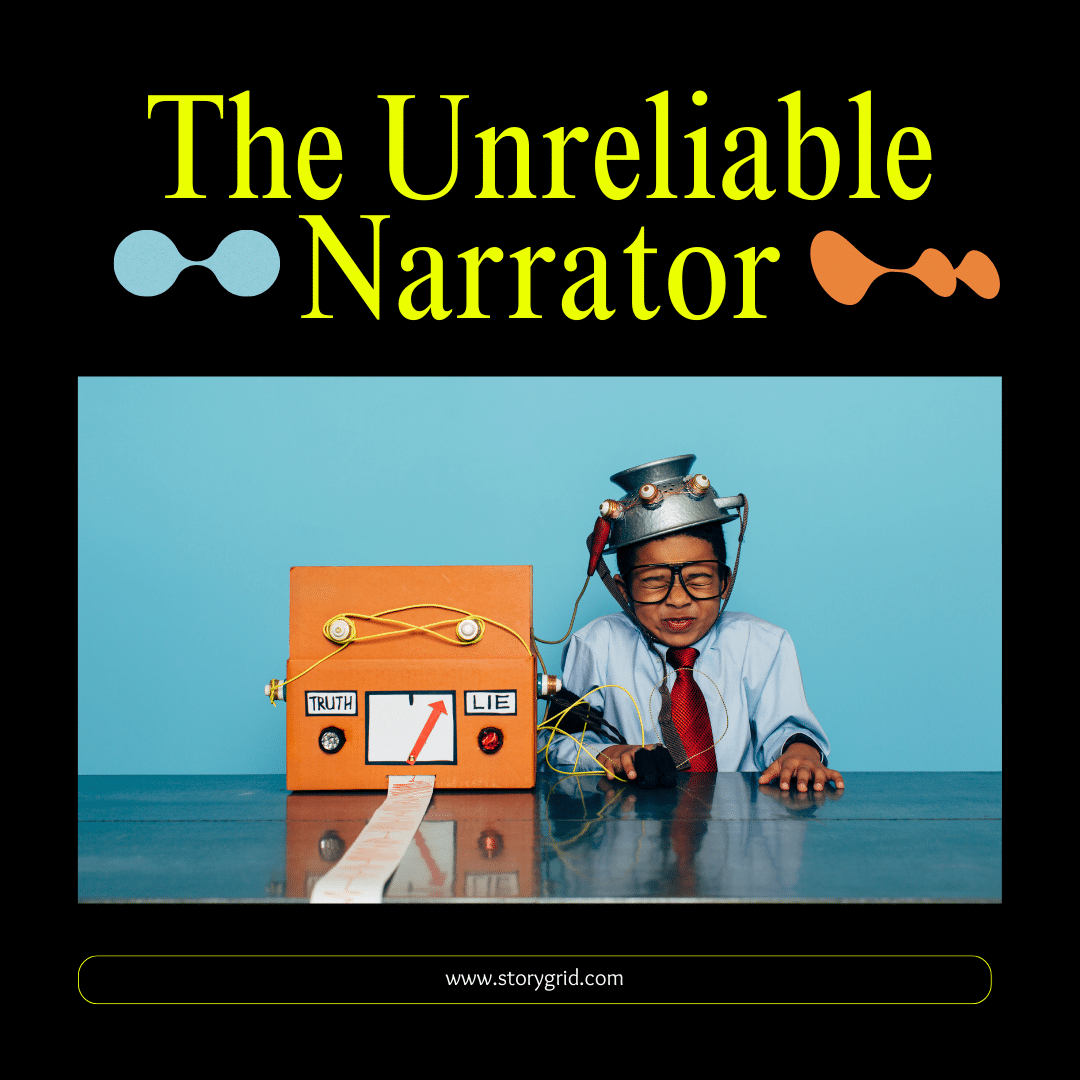
There’s also the risk of alienating the audience. Not everyone enjoys being lost in a narrative maze. Some readers crave the comfort of a reliable narrator, a steady hand guiding them through the story. The unreliable world demands more from its audience—patience, adaptability, and a willingness to embrace the unknown. But for those who rise to the challenge, the payoff is unparalleled: a story that lingers long after the final page, a reality that refuses to be forgotten.
How to Introduce the Unreliable World in Your Story
Ready to dive in? Start small. Introduce subtle inconsistencies—a character who remembers a street that doesn’t exist, a clock that runs backward, a shadow that moves on its own. Let the reader’s unease build gradually, like the slow creep of fog over a landscape. The key is to make the unreliability feel organic, a natural extension of the world rather than a gimmick.
Next, establish patterns. Even in chaos, there’s rhythm. The unreliable world should have its own logic, its own rules—even if those rules are nonsensical. Perhaps the city only rearranges itself at midnight. Maybe the protagonist’s reflection doesn’t match their movements. These details create a sense of order within the disorder, making the unreliability feel intentional rather than haphazard.
Finally, play with perspective. The unreliable world isn’t just about the environment; it’s about how characters interact with it. A detective might see the city’s glitches as clues, while a child accepts them as normal. The contrast between these viewpoints can deepen the story’s themes and add layers of complexity.
And remember: the unreliable world isn’t just a backdrop—it’s a character in its own right. Treat it with the same care and attention you’d give to any protagonist. Give it moods, quirks, and motivations. Make it feel alive, even when it’s tearing itself apart.
The unreliable narrator has had its day in the sun. It’s time to graduate to something far more exhilarating: the unreliable world. This isn’t just a narrative device; it’s a revolution. It’s a challenge to writers and readers alike to embrace the unknown, to question the very ground beneath their feet. So, are you ready to step into a story where nothing is as it seems—not even the world itself?


Leave a Comment