

In the vast literary cosmos, few debates burn as fiercely as the clash between George Orwell’s 1984 and Aldous Huxley’s Brave New World. For decades, armchair philosophers, educators, and dystopian enthusiasts have dissected these novels as if they were opposing prophecies—one warning of a boot stamping on a human face forever, the other of a world where pleasure replaces pain and soma flows like water. But what if the real tragedy isn’t the choice between these two futures, but the fact that we’ve been conditioned to see them as mutually exclusive? The fight over which dystopia looms larger is a red herring, a distraction from the far more insidious truth: we’re already living in the worst of both worlds.
This isn’t a call to abandon critical thought. Far from it. It’s an invitation to expand the conversation, to recognize that the binary between Orwell and Huxley is a false dichotomy that obscures the nuanced horrors of our present moment. Whether you’re a student dissecting these texts for an essay, a writer mining dystopia for inspiration, or simply a curious mind grappling with the state of the world, there’s a trove of content waiting to deepen your understanding—beyond the tired “which dystopia is worse?” debate. Let’s explore the multifaceted ways these novels intersect with our reality, and why the most compelling discussions about them happen when we stop treating them as rivals and start seeing them as complementary lenses.
The Satirical Mirror: How Brave New World Reflects Our Addiction to Comfort
Huxley’s vision is often caricatured as a soft dystopia, where oppression wears a smile and tyranny is disguised as convenience. But peel back the layers, and you’ll find a world that’s not just plausible—it’s eerily familiar. The citizens of the World State don’t resist their chains because they’re too busy binge-watching feel-good propaganda, popping mood-enhancing drugs, and chasing hollow pleasures. Sound like any social media feed you’ve scrolled lately? The novel’s genius lies in its ability to expose the fragility of human autonomy when it’s traded for instant gratification.
Consider the soma tablets—legal, regulated, and ubiquitous. They’re the spiritual ancestors of our own pharmaceuticalized coping mechanisms: antidepressants, ADHD meds, even the dopamine hits we get from endless scrolling. Huxley’s warning isn’t about jackboots and secret police; it’s about a society that willingly surrenders its critical faculties in exchange for the illusion of happiness. The most chilling aspect of Brave New World isn’t its futuristic technology, but its unnerving proximity to our own cultural obsession with distraction as a form of control.
For readers who crave visual aids, imagine a collage of Instagram influencers sipping lattes, TikTok stars performing choreographed dances, and Netflix binge-watchers glued to their screens. These aren’t just cultural phenomena; they’re modern manifestations of Huxley’s soma. The World State’s citizens don’t riot because they’re too busy consuming. Replace “soma” with “doomscrolling” or “algorithmically curated content,” and the parallels become impossible to ignore. The question isn’t whether we’re living in Brave New World, but how deep the rabbit hole goes.
The Iron Fist in the Velvet Glove: Orwell’s 1984 and the Specter of Authoritarian Control
If Huxley’s dystopia is a velvet glove, Orwell’s is an iron fist clad in the same fabric. 1984 is the novel that taught us to fear Big Brother—not because he’s watching, but because he’s rewriting history in real time. The Party’s power lies not in its ability to punish, but in its ability to make dissent unthinkable. Doublethink, Newspeak, the Ministry of Truth—these aren’t just plot devices; they’re metaphors for the ways power manipulates language, memory, and perception to maintain control.
In our era of deepfakes, algorithmic censorship, and state-sponsored disinformation, Orwell’s warnings feel less like fiction and more like a how-to manual for modern governance. The difference? Today’s authoritarianism doesn’t need to burn books when it can bury them in an avalanche of misinformation. Social media algorithms don’t just curate content; they curate reality, ensuring that users see only what reinforces their existing beliefs. The Ministry of Truth’s slogan—“Who controls the past controls the future; who controls the present controls the past”—could be the motto of any tech giant’s content moderation team.
But here’s where the conversation gets interesting: the most effective forms of control in the 21st century aren’t just about force or censorship. They’re about seduction. The modern equivalent of the Thought Police isn’t a secret police force; it’s the subtle pressure to conform to social norms, to self-censor out of fear of backlash, or to adopt the language of the powerful without question. Orwell’s dystopia isn’t just about jackboots and surveillance; it’s about the erosion of truth itself—a theme that resonates in an age where “alternative facts” are a cottage industry and deepfake videos can make anyone say anything.
Beyond the Binary: The Hybrid Dystopia We’re Already Living In
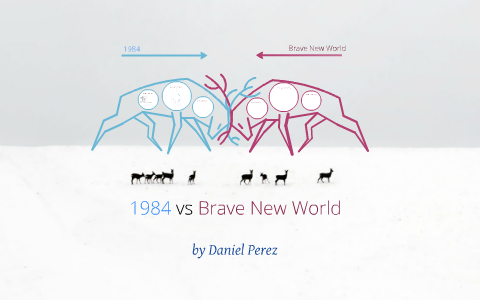
The real revelation isn’t choosing between Orwell and Huxley—it’s recognizing that we’re living in a hybrid of both. Our world isn’t just surveilled; it’s also distracted. We’re not just oppressed; we’re complicit. The most insidious form of control today isn’t the boot on our neck; it’s the algorithm whispering in our ear, telling us what to want, what to fear, and what to believe. This is the dystopia that neither Orwell nor Huxley fully anticipated: a world where pleasure and pain are engineered, where dissent is drowned out by noise, and where the line between freedom and captivity is blurred by convenience.
Consider the rise of “surveillance capitalism,” where corporations harvest our data not to oppress us, but to sell us things we didn’t know we needed. Or the way social media platforms use microtargeting to manipulate our emotions, turning us into predictable consumers of both products and propaganda. This isn’t just Huxley’s soma in digital form; it’s Orwell’s Thought Police repackaged as a personalized feed. The hybrid dystopia is one where we’re both the prisoners and the guards, where we enforce our own oppression by chasing the next dopamine hit or the next viral outrage.
For educators and students, this hybrid dystopia offers a rich vein of material. The classroom isn’t just a place to debate which novel is more prescient; it’s a laboratory for dissecting the ways these novels manifest in our daily lives. Assignments could involve tracking how social media algorithms shape political beliefs, or analyzing how language is weaponized in modern discourse. The most powerful lessons come when students realize that the dystopias they read about aren’t relics of the past—they’re blueprints for understanding the present.
The Creative Renaissance: Dystopia as a Tool for Imagining Alternatives
Dystopian literature isn’t just a warning; it’s a playground for the imagination. Writers, filmmakers, and artists have long used the tropes of 1984 and Brave New World to explore everything from climate collapse to technological singularity. But the most innovative works don’t just replicate these themes—they subvert them, blending Orwell’s paranoia with Huxley’s hedonism to create something entirely new.
Take, for example, the rise of “solastalgia” in contemporary fiction—a term coined to describe the distress caused by environmental change. Novels like Jeff VanderMeer’s Annihilation or Ling Ma’s Severance channel Orwell’s claustrophobic dread and Huxley’s sterile detachment, creating worlds where nature itself has become a dystopian force. Or consider the explosion of “cli-fi” (climate fiction), where authors imagine futures shaped by ecological collapse, often blending the psychological horror of 1984 with the existential numbness of Brave New World.
For creators, these novels are more than cautionary tales; they’re springboards for innovation. A filmmaker might juxtapose the sterile perfection of Huxley’s World State with the decaying urban landscapes of Orwell’s London, creating a visual language that captures the contradictions of modern life. A game designer could craft an interactive experience where players navigate a world where both pleasure and pain are commodified, forcing them to confront their own complicity in the system. The possibilities are as endless as they are unsettling.
Where Do We Go From Here? The Fight for a Third Way
The debate over 1984 vs. Brave New World is ultimately a distraction from the real work: building a future that resists both the boot and the soma. The most urgent question isn’t which dystopia we’re closer to, but how we can dismantle the systems that make either dystopia possible. This requires more than passive consumption of these novels; it demands active engagement with the ideas they represent.
For policymakers, it means confronting the ways surveillance and algorithmic control are eroding democracy. For technologists, it means designing systems that prioritize human agency over engagement metrics. For individuals, it means cultivating the critical thinking skills to resist both the carrot and the stick of modern life. The third way isn’t a middle ground between Orwell and Huxley; it’s a rejection of the binary entirely—a future where we’re neither crushed by force nor lulled into compliance.
The fight for this future begins with the stories we tell. Whether through literature, film, art, or activism, we must imagine alternatives that aren’t just escapes from dystopia, but pathways toward something better. The novels of Orwell and Huxley aren’t just warnings; they’re invitations to think deeply, to question relentlessly, and to demand more from the world—and from ourselves.
So the next time someone asks you to pick a side in the 1984 vs. Brave New World debate, remember this: the real dystopia isn’t choosing between them. It’s forgetting that we have the power to write our own ending.


Leave a Comment