

The Little Black Dress—Coco Chanel’s most heralded contribution to fashion—has long been draped in the soft glow of timeless elegance and understated sophistication. But what if this iconic garment, draped in myth and reverence, is not the paragon of innovation it’s made out to be? What if, beneath its chic facade, it’s a sartorial echo of something far more somber—something rooted in the rituals of death and mourning? The truth is as unsettling as it is revealing: the LBD is less a fashion revolution and more a stylistic appropriation, a borrowed silhouette steeped in Victorian grief, repackaged for modern consumption. Let’s unravel the threads of this paradox, exploring how a dress meant to symbolize life’s vibrancy is, in essence, a funeral shroud in disguise.
The Black Dress: A Victorian Relic Reborn
To understand the LBD’s shadowy origins, we must journey back to the 19th century, where black was not a color of celebration but of bereavement. The Victorian era cemented black as the definitive hue of mourning, a visual language reserved for widows and mourners. The crinoline dresses of the time, though ornate, were often rendered in black silk or wool when draped in grief. Chanel, in her 1926 debut of the LBD, didn’t invent the silhouette—she repurposed it. The straight, unadorned lines of her design mirrored the austere simplicity of mourning attire, stripping away the ostentatious trimmings of the past to reveal a stark, utilitarian elegance. In essence, she took a garment designed for death and reframed it as a symbol of liberation—a paradox that has gone largely unchallenged for nearly a century.
This appropriation isn’t merely aesthetic; it’s psychological. The LBD’s minimalism, often lauded as a triumph of modern femininity, is a direct descendant of the mourning dress’s austerity. The absence of color, the lack of embellishment—these were not choices born of liberation, but of necessity. Mourning demanded restraint, and Chanel’s design, whether intentionally or not, channeled that very restraint. The result? A dress that whispers of endings rather than beginnings, of silence rather than song.

The Myth of the “Little” Black Dress
The word “little” in the LBD’s title is a masterstroke of marketing alchemy, transforming a garment steeped in mourning into one of playful allure. But let’s dissect this linguistic sleight of hand. The term “little” implies brevity, youth, and spontaneity—a dress for cocktail parties and midnight rendezvous. Yet, historically, black dresses were anything but little. Victorian mourning attire was voluminous, heavy, and restrictive, designed to obscure the body rather than reveal it. Chanel’s “little” iteration, with its slender silhouette and knee-length hem, was a radical departure—but not in the way fashion historians claim. It was radical because it made mourning fashionable.
This rebranding is where the LBD’s true audacity lies. By shrinking the dress, Chanel didn’t liberate women; she commodified grief. The LBD’s brevity didn’t erase the dress’s origins—it merely made them more palatable. A black dress that ends above the knee is still a black dress, and black, in its purest form, is the absence of light. The LBD didn’t kill the symbolism of mourning; it merely dressed it up in a more socially acceptable package. The result? A garment that allows women to flirt with the macabre while sipping champagne, blurring the line between celebration and sorrow.
Black as a Canvas of Contradictions
Black is a color of contradictions, and the LBD thrives in that ambiguity. It’s both the color of rebellion and the color of conformity, the shade of anarchists and aristocrats. But in its most primal form, black is the color of the void—a visual representation of nothingness. The LBD, in its relentless minimalism, embraces this void. It’s a dress that doesn’t just lack color; it lacks personality. It’s a blank slate onto which women project their own narratives, whether those narratives are of empowerment, seduction, or, dare we say, mourning.
This emptiness is its power—and its curse. The LBD’s versatility is often cited as its greatest strength, but versatility in this context is just another word for erasure. A dress that can be anything to anyone is, by definition, nothing at all. It’s a sartorial chameleon, shifting its meaning with the whims of the wearer, yet never truly belonging to any one of them. In this way, the LBD is less a garment and more a mirror, reflecting back whatever the observer desires. But mirrors, as we know, can also be portals—and the LBD’s portal leads straight to the heart of grief.
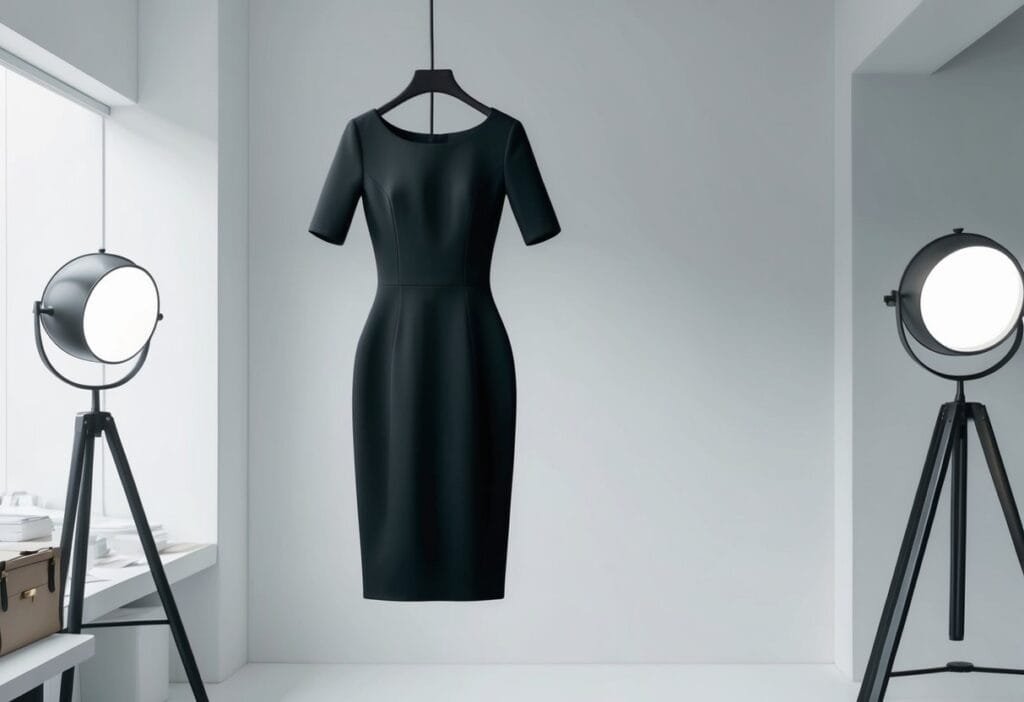
The LBD in Pop Culture: A Funeral for the Feminine
Pop culture has only deepened the LBD’s association with the macabre. From Audrey Hepburn’s iconic Givenchy dress in Breakfast at Tiffany’s to the countless noir films where women in black are either femme fatales or doomed heroines, the LBD has been cast as a character in its own right—a silent, enigmatic presence that hovers between life and death. In these narratives, the dress isn’t just clothing; it’s a costume, a visual shorthand for tragedy, mystery, or seduction. The LBD’s ubiquity in these stories isn’t accidental; it’s a testament to its ability to evoke the uncanny, to make the wearer appear both present and absent, alive and ghostly.
Consider the trope of the woman in black at a funeral—an image that’s as ingrained in our collective consciousness as the LBD itself. The dress doesn’t just mourn; it becomes the mourning. It’s a visual incantation, a spell cast to ward off joy, to embrace the solemnity of loss. And yet, in modern contexts, this same dress is worn to weddings, to galas, to first dates. The cognitive dissonance is staggering. How can a dress that signifies grief in one context signify glamour in another? The answer lies in the LBD’s ability to absorb meaning, to become whatever the moment demands. But this absorption is, at its core, a form of erasure—a refusal to acknowledge the dress’s true origins in favor of a more palatable narrative.
The Psychological Weight of the LBD
Wearing the LBD is an act of psychological negotiation. On one hand, it’s a declaration of confidence, a sartorial armor against the chaos of the world. On the other, it’s a surrender to the unknown, a silent acknowledgment of life’s impermanence. The dress’s simplicity is deceptive; it doesn’t just cover the body—it conceals the wearer’s psyche. To don the LBD is to invite scrutiny, to become a canvas for others’ interpretations. Is the wearer powerful? Mysterious? Vulnerable? The dress doesn’t answer. It only watches.
This psychological weight is why the LBD resonates so deeply. It’s not just a dress; it’s a ritual. A ritual of transformation, of shedding one identity to don another. In this way, the LBD is less a garment and more a shroud—a temporary covering that allows the wearer to emerge anew. But shrouds, by their very nature, are associated with death. They are the final layer between the living and the deceased, a boundary that is both physical and metaphysical. The LBD, in its relentless minimalism, performs the same function. It marks the transition from one state to another, from one version of the self to the next. And like a shroud, it does so with an eerie efficiency.
Breaking the Spell: Alternatives to the LBD
If the LBD is, in fact, a sartorial stand-in for mourning, then it’s time to ask: what alternatives exist? The fashion world has long been dominated by the myth of the LBD, but there are garments that embrace color, texture, and individuality without the burden of historical grief. Consider the bold hues of a red dress, a color associated with passion and vitality. Or the playful patterns of a floral print, a celebration of life’s vibrancy. Even the humble white dress, a symbol of purity and new beginnings, offers a stark contrast to the LBD’s somber palette.
These alternatives aren’t just about rejecting the past; they’re about reclaiming the future. Fashion should be a tool of expression, not a vessel for unresolved grief. By diversifying our wardrobes, we can break the cycle of sartorial appropriation and embrace garments that reflect our true selves—not the ghosts of Victorian mourners. The LBD’s reign as the ultimate fashion staple is not inevitable. It’s a choice, and one that we can challenge.
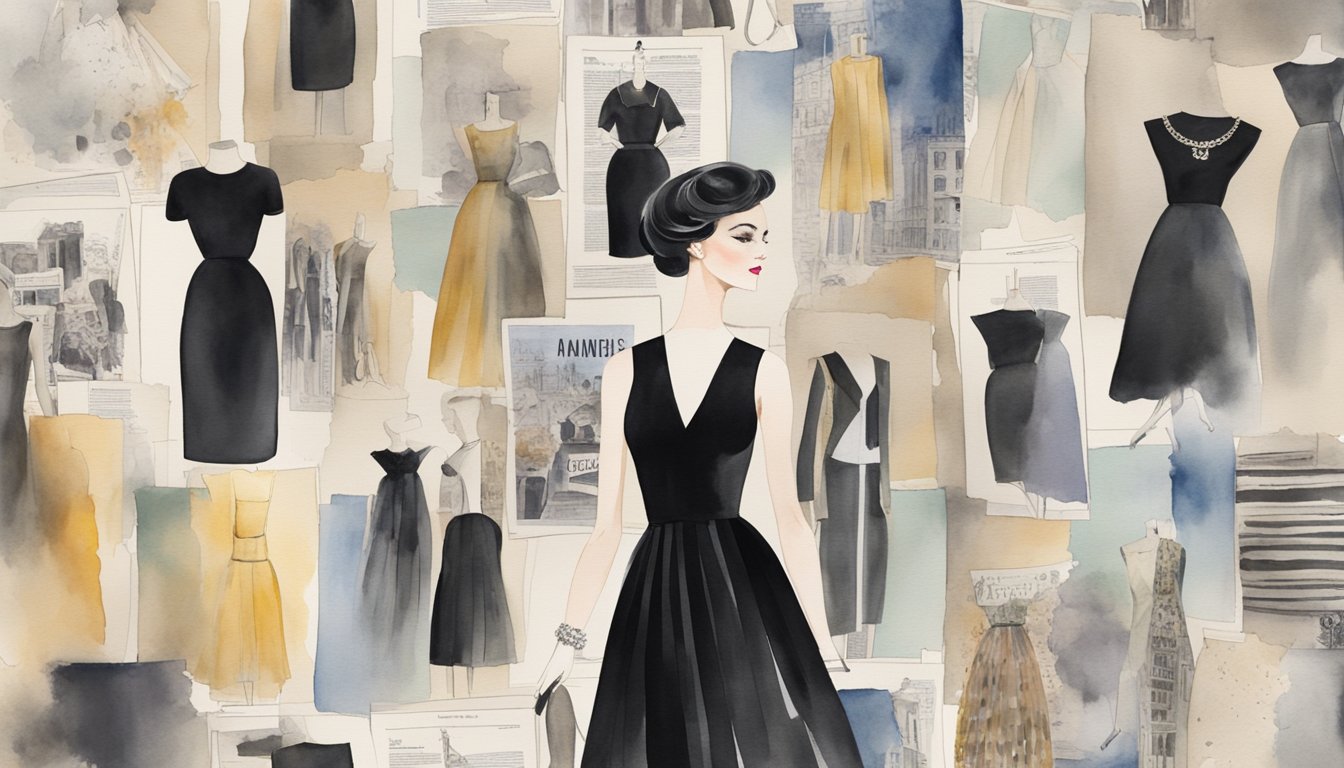
The Little Black Dress is more than a garment; it’s a cultural artifact, a relic of grief repurposed for modern consumption. Its origins in Victorian mourning attire are not a coincidence but a foundation, a buried truth that has been obscured by decades of mythmaking. The LBD’s minimalism, its versatility, its ubiquity—these are not signs of its genius but of its haunting. It is a dress that doesn’t just cover the body; it conceals the soul, wrapping the wearer in a shroud of elegance while whispering of endings. To wear the LBD is to participate in a ritual older than fashion itself, a ritual of transformation and loss. But it’s a ritual we can choose to break. By embracing color, texture, and individuality, we can step out of the shadow of mourning and into the light of true self-expression. The LBD’s reign is not eternal. It’s time to let it go.


Leave a Comment