

Have you ever scrolled past a poem on Instagram, paused mid-swipe, and felt something stir inside you—only to hear a dismissive voice in your head whisper, “That’s not real poetry.” It’s a familiar refrain, isn’t it? The gatekeepers of literary tradition have long drawn battle lines around what qualifies as “real poetry,” and in the digital age, they’ve found a new frontier to defend: the sacred page. But here’s a playful provocation: What if the gatekeepers are wrong? What if the very medium that makes poetry feel accessible—Instagram, Twitter, TikTok—is not diluting art, but evolving it? What if Insta-poetry isn’t just real poetry, but a vital, vibrant evolution of it?
Let’s embark on a journey through the glittering, often misunderstood world of Insta-poetry. We’ll explore its roots, its rebellious spirit, its emotional resonance, and why the critics who dismiss it as mere “digital fast food” are missing the point entirely. Buckle up—this isn’t just a defense. It’s a celebration.
The Birth of a Digital Renaissance: From Gutenberg to the Grid
Poetry has always been a shape-shifter. From the oral traditions of Homer to the illuminated manuscripts of medieval Europe, from the printed sonnets of Shakespeare to the beatniks scribbling in smoky cafés, poetry has thrived by adapting to the tools of its time. So why should the digital age be any different?
Insta-poetry didn’t emerge in a vacuum. It’s the offspring of a long lineage of accessible, performative, and visually driven verse. Think of the haiku, a form so concise it fits on a postcard. Think of the concrete poem, where shape mirrors meaning. Think of the spoken word movement, which turned poetry into a communal, almost theatrical experience. Insta-poetry is simply the next step in this evolution—a form that leverages the immediacy of social media to deliver poetry in bite-sized, visually arresting packages.
Platforms like Instagram democratized poetry in ways that physical books never could. Suddenly, a poem wasn’t confined to the hallowed shelves of a library or the curated pages of a literary journal. It could live in your pocket, delivered to you in the middle of your scroll, between cat videos and vacation photos. This wasn’t dilution—it was liberation. Poetry stopped being an elite ritual and became a shared experience.
The Rebellion Against the Ivory Tower: Why Gatekeepers Fear the Grid
The resistance to Insta-poetry isn’t just about aesthetics—it’s about power. For centuries, poetry has been policed by gatekeepers who decide what’s “worthy” of the title. These gatekeepers, often white, often male, often entrenched in academia or traditional publishing, have long dictated the rules: complex metaphors, dense allusions, formal structures. Anything that didn’t fit the mold was deemed “lesser.”
Insta-poetry flips the script. It rejects the idea that poetry must be obscure to be profound. It embraces plain language, raw emotion, and unapologetic vulnerability. And that terrifies the gatekeepers. Because when poetry becomes accessible, it becomes dangerous. It can challenge norms. It can give voice to the voiceless. It can make people feel seen—and that’s a threat to the status quo.
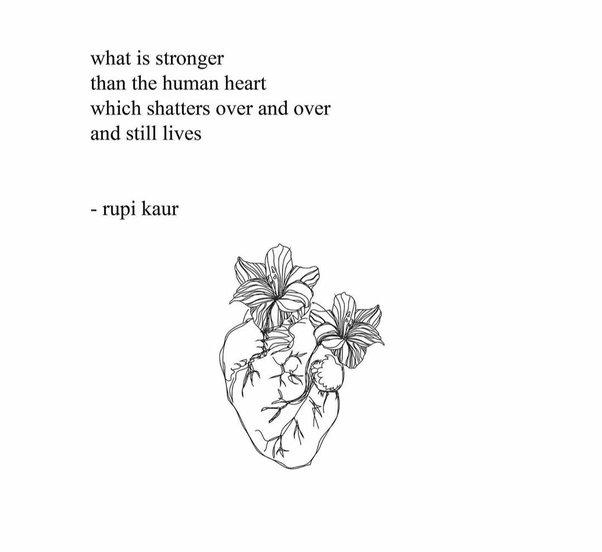
Consider the rise of poets like Rupi Kaur, Atticus, or Nikita Gill. Their work resonates with millions because it speaks in a language that feels familiar. It doesn’t require a PhD to understand. It doesn’t demand you to “earn” its meaning. It meets you where you are. And in doing so, it invites millions of people—especially young women and marginalized voices—into the world of poetry who might have otherwise been excluded.
The gatekeepers’ fear isn’t just about quality—it’s about control. When poetry escapes the ivory tower, it becomes a tool for revolution, not just reflection.
The Alchemy of Brevity: How Less Can Be More
Critics often sneer at Insta-poetry for its brevity, as if a poem’s worth is measured in its length. But brevity isn’t a flaw—it’s a feature. In a world drowning in information, poetry that distills emotion into a few lines is a lifeline.
Think of it this way: A sonnet by Shakespeare might take hours to unpack. A Rupi Kaur poem might take 30 seconds to read and a lifetime to feel. Both are valid. Both have power. The difference is in the delivery. Insta-poetry understands the modern attention span—but it also understands that brevity doesn’t mean shallowness. A well-crafted Insta-poem can pack as much emotional punch as a 200-page novel.
Consider this:
“you are not your trauma / you are not your past / you are here / and that is enough”
In four lines, this poem captures the essence of healing. It doesn’t need 500 words to make you feel. It doesn’t need dense metaphors or archaic language. It speaks directly to the heart, and that’s the magic of it.
Brevity also forces poets to be ruthless with their words. Every syllable must earn its place. There’s no room for filler. In a way, Insta-poetry is the poetry equivalent of a haiku—where precision is paramount, and every word is a brushstroke on the canvas of emotion.
The Visual Symphony: When Poetry Becomes Art
Insta-poetry isn’t just about the words—it’s about the marriage of text and image. The best Insta-poets understand that poetry is a multisensory experience. They pair their verses with striking visuals—minimalist typography, watercolor backdrops, candid photographs—that amplify the emotion of the words.
This isn’t a new concept. Think of William Blake’s illuminated poems or e.e. cummings’ playful typography. Poetry has always been visual. Insta-poetry simply updates the medium for the digital age. It turns a poem into a shareable piece of art, something that can live on a phone wallpaper or a bedroom poster. It makes poetry not just something you read, but something you experience.
The visual element also adds a layer of intimacy. When you see a poem in the context of someone’s life—on their feed, in their aesthetic—it becomes personal. It’s not just a poem anymore. It’s a piece of their world. And that’s the power of Insta-poetry: it turns poetry from a distant art form into a shared, lived experience.
The Emotional Resonance: Why Insta-Poetry Feels Like a Hug
At its core, poetry is about connection. It’s about the writer reaching out and the reader feeling seen. Insta-poetry excels at this because it speaks in a language of raw, unfiltered emotion. It doesn’t shy away from pain, love, heartbreak, or joy. It embraces it all—and in doing so, it creates a sense of community.
For many readers, Insta-poetry is the first time they’ve felt poetry resonate with their own lives. It’s the poem that gets them through a breakup. The verse that helps them process grief. The line that makes them feel less alone. And that’s not something to dismiss—it’s something to celebrate.
Insta-poetry also gives voice to experiences that have historically been silenced. Women, people of color, LGBTQ+ individuals, and other marginalized voices are using these platforms to share their stories in ways that traditional poetry often hasn’t. It’s poetry as activism. Poetry as therapy. Poetry as a lifeline.
The gatekeepers might argue that this emotional directness is a sign of shallowness. But what they’re really revealing is their own discomfort with vulnerability. Poetry isn’t meant to be cold and distant—it’s meant to move you. And Insta-poetry does that, in spades.
The Future of Poetry: A Hybrid Landscape
So, is Insta-poetry real poetry? The answer is a resounding yes—but it’s not the end of traditional poetry. It’s the beginning of something new. A hybrid landscape where the page and the screen coexist, where the sonnet and the Instagram post can both find a home.
Traditional poetry will always have its place. The weight of a physical book, the ritual of turning pages, the tactile joy of holding a poem in your hands—these are experiences that digital poetry can’t replicate. But Insta-poetry offers something equally valuable: accessibility, immediacy, and a sense of belonging.
The future of poetry isn’t a battle between the old and the new. It’s a collaboration. Imagine a world where a poet writes a sonnet, shares it on Instagram, and then invites readers to dive deeper into the themes in a traditional collection. Imagine a classroom where students analyze both Shakespeare and Atticus side by side, learning that poetry can be both timeless and timely. That’s the world we’re moving toward—and it’s a richer, more inclusive one because of it.
The gatekeepers will always cling to their hierarchies. They’ll always dismiss what they don’t understand. But poetry isn’t about gatekeepers. It’s about connection. It’s about emotion. It’s about the words that make us feel alive.
So the next time you see a poem on Instagram and feel something stir inside you, don’t let the voice in your head tell you it’s not “real.” Instead, ask yourself: Did it move me? Did it make me think? Did it make me feel? If the answer is yes, then it’s real poetry. And the gatekeepers can take their ivory towers and shatter them.


Leave a Comment