

The first chill of October arrives like a whispered secret—one that TikTok seems to hear before the rest of the world. As the leaves blush crimson and the air hums with the scent of cinnamon and nostalgia, the platform begins its annual ritual: a synchronized unveiling of the year’s most tantalizing mysteries. Not just any mysteries, but those that feel like they were plucked from the pages of a forgotten grimoire—stories so potent they could rewrite reality itself. This phenomenon, colloquially dubbed the “October Theory,” isn’t just a fleeting trend; it’s a cultural incantation, a digital séance where TikTok conjures the most intoxicating secrets of the season. But why does the platform insist on whispering these revelations every October? What alchemy transforms the app into a seasonal oracle, and why do its users lean in, breathless, as if awaiting a prophecy?
Imagine the internet as a vast, whispering forest, where every leaf is a data point and every gust of wind carries a new story. TikTok, in its infinite algorithmic wisdom, has learned to listen to the rustling of October’s particular breeze. The platform doesn’t just recommend content—it curates a mood, a vibe, a collective shiver that courses through its veins like a seasonal serum. October, with its penchant for the eerie and the enigmatic, becomes the perfect backdrop for narratives that thrive on ambiguity. Theories about hidden agendas, unsolved conspiracies, and cryptic pop culture moments flourish in this atmospheric brew. TikTok, ever the opportunist, amplifies these whispers until they crescendo into a chorus of shared obsession.

The Seasonal Seduction of the Unknown
October is the month when the veil between the mundane and the mystical thins—when the mundane becomes mystical by sheer virtue of the season’s mood. TikTok, ever the astute observer of human psychology, exploits this liminal space with the precision of a seasoned puppeteer. The platform’s recommendation engine doesn’t just push content; it engineers an experience. It knows that October’s allure lies in its ability to make the ordinary feel extraordinary. A mundane celebrity feud becomes a “secret war” when framed with the right eerie soundtrack. A forgotten 90s TV show resurfaces as a “cursed artifact” when its plot holes are stitched together with fan theories. The algorithm doesn’t just serve up content; it crafts a narrative that feels like it was plucked from the annals of a secret society.
This is the power of the October Theory: it transforms the algorithm’s cold calculations into something that feels almost supernatural. Users don’t just consume content; they participate in a ritual. They dissect, debate, and dissect again, each video a clue in a larger puzzle that may or may not have a solution. The thrill isn’t in the answer—it’s in the chase. And TikTok, with its endless scroll of half-formed ideas and tantalizing breadcrumbs, is the perfect hunting ground for those who crave the frisson of the unresolved.
The Psychology of the October Obsession
Why do we, as humans, become so enthralled by the idea of secrets during October? The answer lies in the intersection of psychology and seasonality. October taps into our primal fascination with the unknown—a trait that has served us well in evolutionary terms. Secrets, by their very nature, imply power. They suggest that someone, somewhere, holds information that could change everything. In a world where information is currency, the idea of possessing a secret is intoxicating. TikTok, with its viral theories and cryptic snippets, offers users a taste of that power. It doesn’t matter if the secrets are real or fabricated; what matters is the feeling of being in on something that others aren’t.
Moreover, October’s association with Halloween and the supernatural amplifies this psychological pull. The season is steeped in folklore, where ghosts, witches, and cursed objects lurk just beyond the edge of perception. TikTok’s October content leverages this cultural backdrop, framing mundane events as if they were lifted from a campfire tale. A celebrity’s sudden rebrand becomes a “glitch in the matrix.” A viral dance trend is recast as a “ritual” performed by an underground cult. The platform doesn’t just recommend content; it invites users to suspend their disbelief and step into a world where anything is possible.
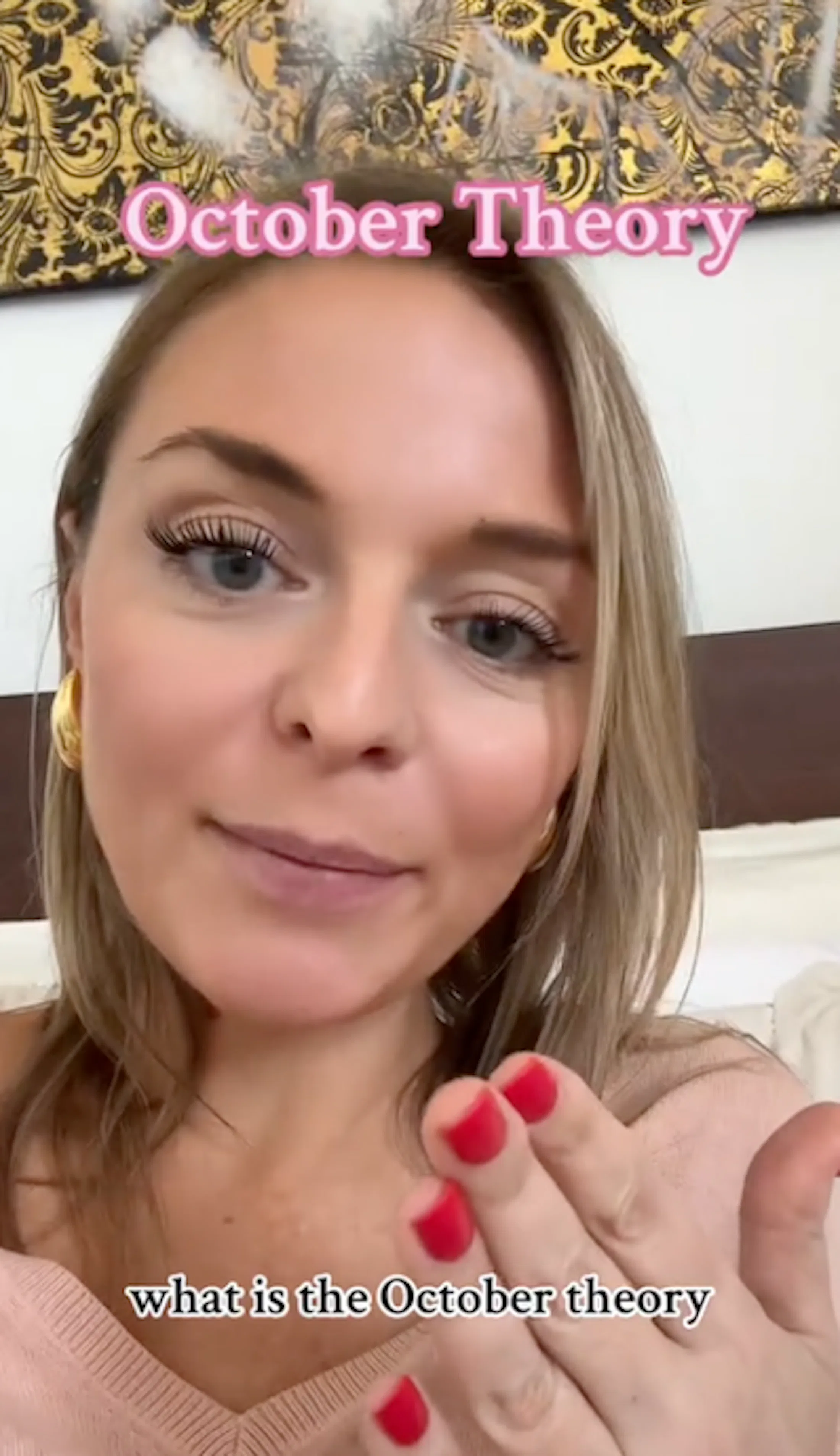
The Algorithm as the Puppeteer of Mystery
At the heart of TikTok’s October Theory lies the algorithm—a digital puppeteer that pulls the strings of user engagement with eerie precision. The platform’s recommendation system is designed to maximize dwell time, and what better way to do that than by feeding users a steady diet of intrigue? The algorithm doesn’t just push content; it curates a sense of inevitability. It knows that once a user starts down the rabbit hole of a viral theory, they won’t stop until they’ve exhausted every possible angle. And so, TikTok serves up a smorgasbord of half-baked ideas, cryptic clues, and tantalizing “what ifs,” ensuring that users remain hooked, scrolling long into the night.
But the algorithm’s role goes beyond mere engagement metrics. It’s also a cultural curator, shaping the narratives that dominate October’s digital landscape. By amplifying certain theories and burying others, TikTok doesn’t just reflect the zeitgeist—it molds it. The platform’s October content isn’t just a reflection of what users are interested in; it’s a self-fulfilling prophecy. The more a theory circulates, the more it feels like a truth waiting to be uncovered. And so, the cycle continues, year after year, with TikTok playing the role of the season’s most enigmatic storyteller.
The Allure of the Unresolved
What is it about unresolved mysteries that captivates us so deeply? Perhaps it’s the human desire to impose order on chaos—a need to believe that even the most baffling events have a hidden logic. Or maybe it’s the thrill of being part of an exclusive club, where the initiated understand something that the uninitiated do not. TikTok’s October Theory thrives on this allure. It doesn’t just present mysteries; it invites users to become detectives, piecing together clues from disparate sources to form a cohesive narrative. The problem, of course, is that the narrative is often incomplete. And that’s the point. The beauty of the October Theory lies in its ambiguity—the way it lingers, unresolved, in the back of the mind like a half-remembered dream.
This unresolved quality is what makes the October Theory so addictive. It’s the digital equivalent of a campfire story, where the teller leaves just enough unsaid to keep the listener leaning in, desperate for more. TikTok understands this dynamic implicitly. It doesn’t just recommend content; it crafts an experience that feels like a shared secret. And in a world where information is abundant, the idea of possessing a secret—even a fabricated one—is a rare and intoxicating commodity.
The Cultural Ripple Effect
The October Theory isn’t just a TikTok phenomenon; it’s a cultural force that ripples outward, influencing everything from memes to mainstream media. As the platform’s theories gain traction, they seep into the broader cultural consciousness, shaping the way we talk about everything from celebrity scandals to historical events. A forgotten 80s TV show becomes a “cursed artifact.” A celebrity’s wardrobe malfunction is recast as a “ritualistic omen.” The lines between fact and fiction blur, and suddenly, the world feels a little more mysterious, a little more magical.
This cultural ripple effect is what makes the October Theory so powerful. It doesn’t just exist on TikTok; it becomes a part of the cultural fabric, a shared language that users employ to make sense of the world. And as the season progresses, the theories evolve, mutating and adapting to fit the ever-changing landscape of the internet. What starts as a fleeting trend becomes a tradition, a yearly ritual that users look forward to with the same anticipation as the first frost.
As the last leaves of October fall to the ground, the TikTok algorithm doesn’t just shut off its October Theory machine. Instead, it lets the echoes linger, a digital afterimage that persists in the minds of its users. The secrets may fade, the theories may dissolve, but the feeling remains—the thrill of the chase, the frisson of the unknown. And when the next October rolls around, the cycle begins anew. The algorithm will whisper its secrets once more, and we, the users, will lean in, breathless, ready to be seduced all over again.
The October Theory isn’t just a trend. It’s a ritual. A tradition. A digital séance where the past, present, and future collide in a whirlwind of half-formed ideas and tantalizing clues. And as long as the leaves continue to fall and the nights grow longer, TikTok will keep whispering its secrets, ensuring that the magic of October never truly fades.


Leave a Comment