

Imagine a loom so unassuming, so deceptively simple, that it dares to whisper a secret into the ears of weavers: what if you could conjure two blankets from a single warp? Not one atop the other in a tedious layering ritual, but two distinct layers woven simultaneously, as if the loom itself had learned the art of duality. This is the magic of the doubleweave blanket—a technique that transforms the ordinary into the extraordinary, where threads become architects of illusion, and the loom, an accomplice in deception. It’s not just weaving; it’s a quiet rebellion against the limitations of single-layer cloth, a testament to the fact that even the most humble tools can birth wonders when wielded with audacity.
For those who’ve spent years coaxing single layers into submission, the doubleweave blanket is a revelation. It doesn’t just double your output; it doubles your perspective. Suddenly, the warp isn’t just a foundation—it’s a dual highway, carrying two separate narratives in parallel. The weft isn’t merely a shuttle; it’s a storyteller, weaving two tales at once. And the result? A blanket that’s not just warm, but a conversation between textures, colors, and possibilities. If you’ve ever felt the itch to push beyond the confines of conventional weaving, this is your invitation to step into a world where one layer is never enough.

The Loom’s Hidden Superpower: Why Doubleweave Changes Everything
At first glance, a loom is a loom—a frame, some string, and a patient hand guiding the shuttle. But when you peer beneath its unassuming surface, you discover a hidden superpower: the ability to manipulate two layers of cloth at once. This isn’t some arcane sorcery reserved for master weavers with decades of experience. It’s a technique accessible to anyone willing to embrace the rhythm of two. The key lies in the threading. By dividing the warp into two distinct layers—one for the top, one for the bottom—you create a canvas where two separate weaves can coexist, even dance, without ever touching.
What does this mean in practice? Imagine a blanket where the front is a plush, textured weave in deep indigo, while the back is a whisper-soft linen in ivory. Or perhaps a geometric pattern on one side, a subtle gradient on the other. The doubleweave technique doesn’t just allow for this duality; it revels in it. And here’s the kicker: you can switch between layers mid-weave, creating patterns that shift depending on which side you’re looking at. It’s as if the blanket itself is a chameleon, adapting to your whims. For the weaver, this is liberation. No longer bound by the constraints of a single layer, you’re free to explore contrasts, textures, and designs that would be impossible otherwise.
The beauty of doubleweave isn’t just in its versatility—it’s in its efficiency. While a single-layer blanket might demand hours of meticulous work, a doubleweave blanket can be completed in roughly the same time, but with twice the impact. It’s the ultimate multitasker, a testament to the fact that sometimes, doing more means doing better.
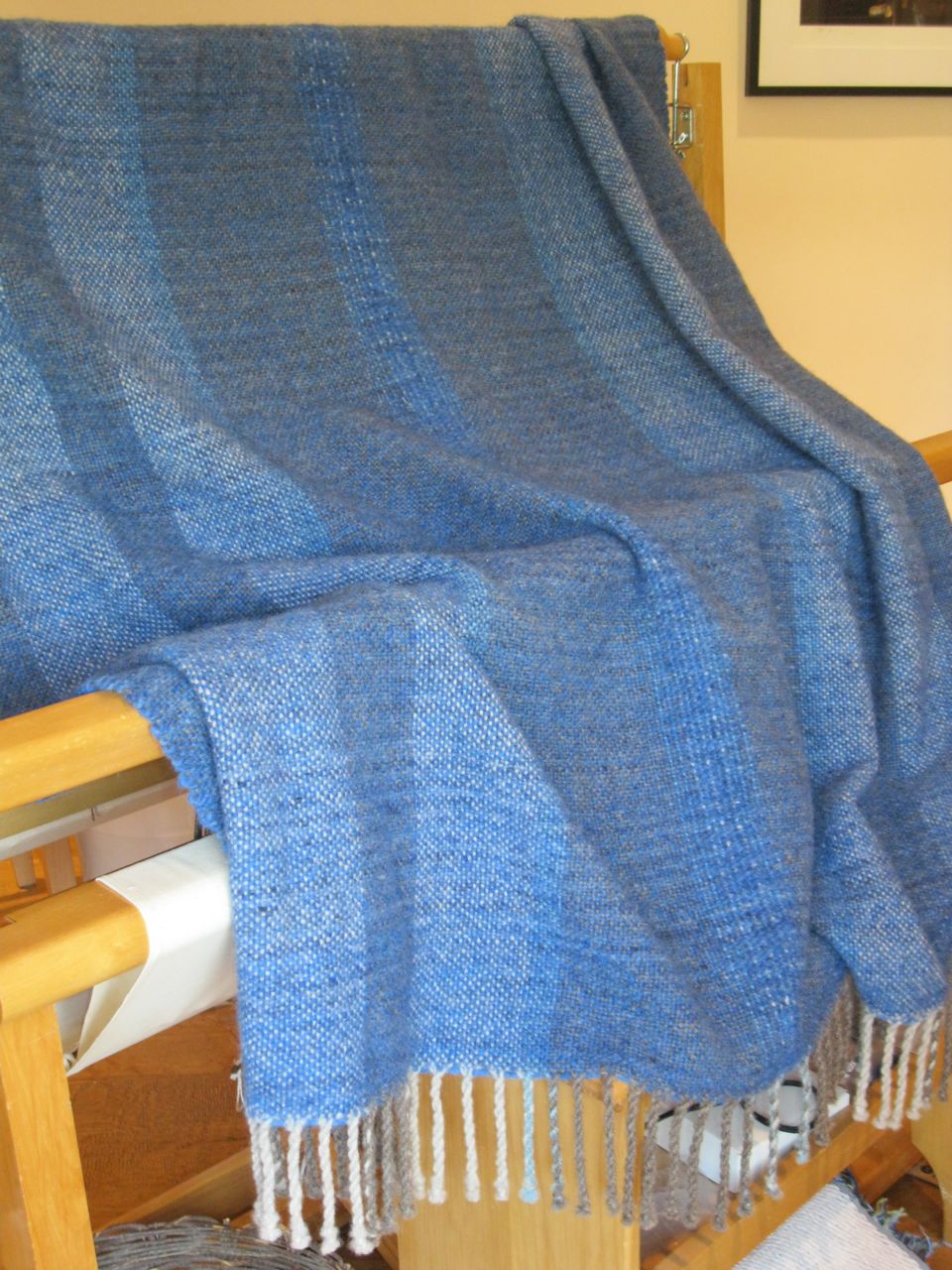
The Warp’s Dual Highway: How Threads Become Two Stories
The warp is the backbone of any woven piece, but in doubleweave, it becomes something far more intriguing—a dual highway where two separate threads of narrative are carried in parallel. To achieve this, the warp is divided into two distinct layers, each with its own set of threads. The top layer will form the face of the blanket, while the bottom layer will create the reverse side. But here’s where the magic happens: these layers don’t have to be identical. You can thread them differently, use contrasting colors, or even vary the sett (the number of threads per inch) to create entirely distinct textures.
This division isn’t just about separation; it’s about collaboration. The weft, the shuttle that carries the story, moves back and forth between the two layers, binding them together in a dance of interlacement. At certain points, the weft will switch from one layer to the other, creating a seamless transition between the two. The result? A blanket that’s not just two layers thick, but two layers rich with possibility. One side might be a bold, graphic pattern, while the other is a subtle, tonal weave. Or perhaps one layer is a crisp, structured twill, while the other is a loose, airy lace. The combinations are limited only by your imagination.
For the weaver, this means an explosion of creative potential. You’re not just making a blanket; you’re composing a duet. Each layer can tell its own story, and the weft is the conductor, guiding the narrative with every pass of the shuttle. It’s a reminder that weaving isn’t just about function—it’s about artistry, about the joy of seeing two ideas become one.
Patterns That Play Tricks: The Illusion of Infinite Design
Doubleweave isn’t just about making two layers at once; it’s about playing with perception. The patterns you create can shift depending on which side you’re looking at, or even how the light hits the fabric. A simple twill on one side might reveal a complex geometric design on the other. A plain weave on the top could hide a delicate lace pattern on the reverse. It’s a game of hide-and-seek, where the blanket itself becomes a puzzle to unravel.
One of the most enchanting aspects of doubleweave is the ability to create patterns that appear and disappear based on your perspective. For example, you could weave a blanket where one side features a bold, repeating motif, while the other side is a solid color. When you flip the blanket over, the motif vanishes, leaving only the plain weave. It’s a trick of the eye, a visual sleight of hand that turns a simple blanket into a conversation piece. Or consider a design where both sides are patterned, but the motifs are complementary rather than identical. The result is a blanket that’s endlessly fascinating, a piece of functional art that rewards closer inspection.
This play with perception isn’t just for show—it’s a testament to the weaver’s skill. Doubleweave patterns require careful planning, a deep understanding of threading sequences, and a willingness to experiment. But the payoff is worth it. You’re not just making a blanket; you’re crafting an experience, a piece that invites the viewer to look closer, to touch, to wonder. It’s weaving as storytelling, where every thread is a word, and every pattern is a sentence.

Materials Matter: Choosing Fibers for Doubleweave Mastery
The fibers you choose for your doubleweave blanket can elevate it from a simple project to a masterpiece. Because you’re working with two layers, the materials you select will influence not just the look, but the feel and durability of the final piece. Wool, for instance, is a classic choice for blankets—its natural crimp provides insulation, while its resilience ensures longevity. But wool isn’t the only option. Cotton offers a crisp, clean finish, perfect for geometric patterns. Silk lends a luxurious sheen, ideal for a blanket that’s as much a decorative piece as it is a cozy companion. And for those who love texture, linen or hemp can add a rustic, tactile quality to your work.
But materials aren’t just about aesthetics; they’re about performance. A blanket made from 100% wool will be warmer and more breathable than one made from cotton, but it might also be heavier. A silk blend could drape beautifully, but it may not hold up to heavy use. The key is to consider how the blanket will be used. Will it be a heirloom passed down through generations, or a seasonal throw for chilly evenings? Will it live on a bed, draped over a couch, or serve as a wall hanging? Each use case demands a different set of fiber characteristics.
Don’t be afraid to mix materials, either. A wool top layer paired with a cotton bottom layer can create a blanket that’s both warm and lightweight. Or try a silk warp with a wool weft for a piece that’s as soft as it is strong. The possibilities are endless, and the experimentation is half the fun. After all, doubleweave isn’t just about making two layers—it’s about making two layers that sing together.
From Skein to Snuggle: The Doubleweave Workflow
Embarking on a doubleweave blanket project can feel daunting, but breaking it down into manageable steps makes the process far more approachable. The first step is always the warp. Unlike a single-layer blanket, where the warp is a straightforward affair, doubleweave requires careful planning. You’ll need to divide your warp into two distinct layers, either by threading them separately or by using a sectional warping method. This ensures that each layer has the correct number of threads and sett for the desired outcome.
Next comes the threading. This is where the magic begins. You’ll thread the heddles in a sequence that allows for two separate layers to be woven simultaneously. The exact pattern will depend on the design you’re aiming for, but common methods include threading each layer alternately or using a doubleweave threading sequence that alternates between the two layers with each pass. Once the threading is complete, you’ll sley the reed, ensuring that the warp is evenly spaced and tensioned.
The weaving itself is where the doubleweave technique truly shines. As you weave, you’ll notice that the blanket grows in thickness, with two distinct layers forming beneath your fingers. The key here is to maintain even tension and to keep track of your pattern sequences. Doubleweave patterns can be complex, so it’s easy to get lost in the rhythm. A well-organized threading draft or a peg plan can be invaluable here, guiding you through the process step by step.
Finally, the finishing touches. Unlike single-layer blankets, doubleweave pieces require careful handling to ensure both layers are secure and the edges are clean. You may need to hem both sides separately or use a binding technique that encloses the raw edges. And don’t forget to wet-finish your blanket! This step is crucial for setting the fibers and enhancing the drape and hand of the fabric. Whether you choose to wet-finish in hot water, steam, or a gentle wash, the result will be a blanket that’s not just beautiful, but built to last.
The Doubleweave Mindset: Embracing the Unexpected
Perhaps the most transformative aspect of doubleweave isn’t the technique itself, but the mindset it fosters. When you weave two layers at once, you’re not just making a blanket—you’re embracing the unexpected. Doubleweave teaches patience, yes, but it also teaches adaptability. Plans will change. Threads will break. Patterns will reveal themselves in ways you didn’t anticipate. And that’s the beauty of it. Doubleweave isn’t about control; it’s about collaboration. It’s about letting the loom, the threads, and the process guide you, even when the path isn’t clear.
This mindset extends beyond the loom. Doubleweave is a metaphor for life—about seeing the world in layers, about finding beauty in duality, about the joy of creating something that’s more than the sum of its parts. It’s a reminder that even the simplest tools can birth the extraordinary when approached with curiosity and courage. So if you’ve ever felt stuck in your weaving, if you’ve ever longed to break free from the ordinary, doubleweave is your answer. It’s not just a technique. It’s an invitation to see the world—and your craft—in a whole new light.
Now, pick up that shuttle. Thread that loom. And let the doubleweave begin.


Leave a Comment