

In the quiet hum of a city street, where steel and glass tower like sentinels, a single leaf unfurls against a concrete ledge. It’s a fleeting rebellion—a whisper of green in a monochrome world. This is the paradox of biophilic design: it seeks to heal our fractured connection with nature, yet often does so with clinical precision, as if nature itself were a blueprint to be followed. What if, instead, we approached it with the unbridled curiosity of a dreamer? What if biophilic design didn’t just mimic the outdoors but invited the surreal, the unexpected, the *alive* into our spaces? It’s time to infuse this movement with a dose of dream logic—a philosophy that embraces the irrational, the poetic, and the transformative power of the subconscious. Let’s explore how this shift could redefine our relationship with the spaces we inhabit.
The Tyranny of the “Natural” and the Need for Whimsy
Biophilic design, at its core, is rooted in the idea of incorporating natural elements into the built environment. The logic is sound: humans thrive when surrounded by greenery, water, and organic forms. Yet, too often, this manifests as a checklist of potted plants, living walls, and daylight simulations—design choices that, while beneficial, can feel sterile, almost mechanical in their execution. Where is the room for the unexpected? The meandering vine that defies its trellis, the dappled light that dances in patterns no architect could predict? Dream logic challenges the rigidity of these conventions. It asks: what if a ceiling didn’t just mimic the sky but *became* a sky—shifting colors like a sunset, with clouds that moved in slow, hypnotic rhythms? What if a staircase spiraled not just upward but into a dreamscape, where each step revealed a new, surreal vista? The promise here is not just comfort but *wonder*—a reminder that nature isn’t just a balm; it’s a storyteller.
Consider the work of artists like Olafur Eliasson, whose installations blur the line between art and environment. His piece Your Blind Passenger immerses visitors in a fog-filled room where visibility is reduced to mere inches, forcing an intimate, almost primal engagement with space. This is biophilic design stripped of its safety net. It doesn’t just include nature; it *becomes* nature in its most disorienting, exhilarating form. Dream logic doesn’t just borrow from the natural world—it remixes it, creating hybrids that feel both alien and deeply familiar. A waterfall that flows upward. A forest where the trees grow in spirals. These aren’t just visual tricks; they’re invitations to see the world—and ourselves—differently.
The Subconscious as a Design Partner
Dream logic isn’t just about aesthetics; it’s about psychology. Our dreams are where the mind processes emotions, fears, and desires in ways that defy logic. What if buildings could do the same? Imagine an office where the walls subtly shift color based on the collective mood of its occupants, or a home where the layout subtly guides you toward spaces that align with your emotional state. This isn’t science fiction—it’s the intersection of biophilic design and affective computing, where spaces respond not just to physical needs but to the intangible currents of human experience.
Take the concept of “liminal spaces”—those in-between places, like stairwells or hallways, that exist in the periphery of our consciousness. In dreams, these spaces often become portals, thresholds between the known and the unknown. What if architects designed liminal spaces as deliberate dreamlike portals? A corridor that narrows and widens unpredictably, its walls lined with bioluminescent moss that pulses like a heartbeat. A lobby where the floor tilts imperceptibly, creating a gentle disorientation that primes the mind for creativity. These aren’t just design choices; they’re psychological tools, designed to jolt us out of autopilot and into a state of heightened awareness.
This approach aligns with the principles of neuroaesthetics, the study of how art and design affect the brain. Research suggests that environments which induce mild disorientation—what psychologists call “the uncanny valley of perception”—can trigger a state of hyper-focus, akin to the flow state described by Mihaly Csikszentmihalyi. By incorporating dream logic into biophilic design, we’re not just making spaces prettier; we’re making them *smarter*—designs that engage the mind in ways that static, predictable environments never could.
The Rebellion Against Perfection
There’s a quiet tyranny in the pursuit of “perfect” biophilic design. The flawless living wall. The immaculate water feature. The precisely pruned indoor garden. These spaces are undeniably beautiful, but they lack the raw, unfiltered vitality of the natural world. Dream logic, by contrast, embraces imperfection—the gnarled branch that refuses to conform, the moss that creeps where it pleases, the light that filters through a cracked skylight in uneven, poetic streaks. It’s a rebellion against the sterile ideal of control, a celebration of the organic chaos that makes life—and nature—so endlessly fascinating.
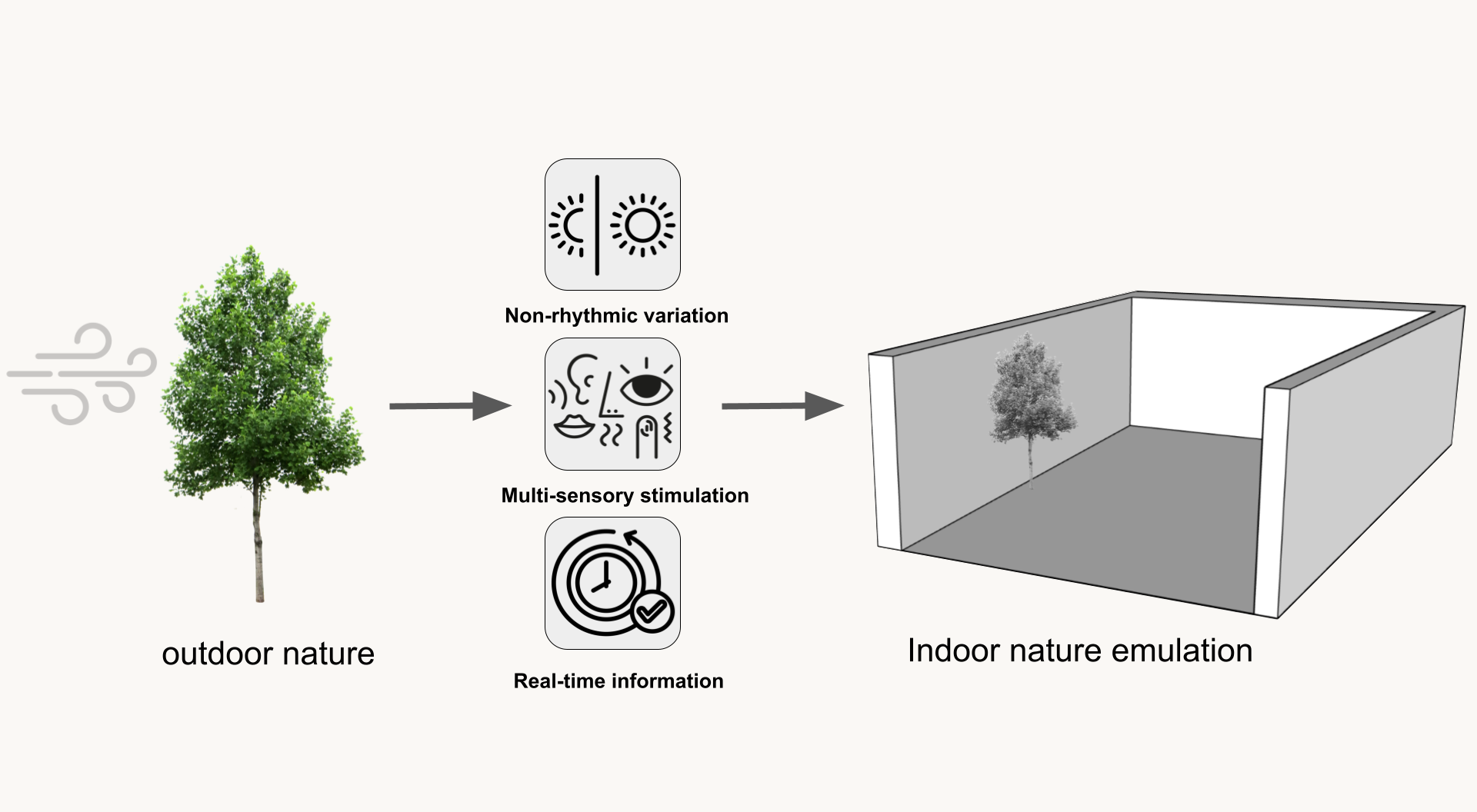
Consider the Japanese concept of wabi-sabi, which finds beauty in asymmetry, impermanence, and incompleteness. A biophilic space infused with wabi-sabi might feature a cracked terracotta pot spilling over with wildflowers, or a stone fountain where the water trickles unevenly, creating a soothing, arrhythmic soundtrack. These aren’t mistakes; they’re deliberate choices to honor the unpredictable, the ephemeral. In a world obsessed with optimization and efficiency, dream logic reminds us that sometimes, the most profound experiences come from surrendering to the unplanned.
.png)
From Spaces to Stories
The most compelling spaces aren’t just places to be; they’re stories to be lived. Dream logic transforms biophilic design from a set of principles into a narrative—a journey that unfolds as you move through it. Imagine a museum where each gallery tells a different story through its design: one room mimics the feeling of walking through a dense forest at dusk, with shadows stretching long and the air thick with the scent of pine; the next transports you to a coral reef, where the walls ripple like water and the floor glows with bioluminescent patterns. These aren’t just exhibits; they’re immersive experiences that linger in the memory long after you’ve left.
This narrative approach extends to residential spaces as well. A home designed with dream logic might feature a “moonlight corridor”—a hallway where the walls are embedded with photoluminescent materials that glow softly at night, casting shifting patterns on the floor like moonlight through leaves. Or a bedroom where the ceiling is a projection of the night sky, not static but alive, with stars that twinkle in real-time based on atmospheric conditions. These aren’t just design flourishes; they’re invitations to engage with space on a deeper, almost mythic level. They turn the act of living into a story, and the storyteller is the space itself.
The Practical Magic of Dream Logic
Of course, dream logic isn’t about abandoning all sense of function or feasibility. It’s about pushing boundaries while remaining grounded in human needs. The key is to blend the surreal with the practical, creating spaces that are both extraordinary and livable. For example, a biophilic office might feature a “sky garden” on its roof—not just a place to grow plants, but a space where the boundaries between indoors and outdoors blur. The garden could be enclosed in a transparent dome that fogs up in the rain, or it could include a “floating” walkway that sways gently with the wind, creating a sense of weightlessness. These elements are whimsical, but they also serve a purpose: they reduce stress, boost creativity, and foster a sense of connection to something larger than oneself.
Similarly, a school designed with dream logic might incorporate “learning pods” shaped like giant acorns or mushrooms, with walls that change color based on the time of day to regulate circadian rhythms. The pods could be connected by winding paths that mimic the meandering trails of a forest, encouraging exploration and discovery. These aren’t just gimmicks; they’re tools for engagement, designed to make learning feel like an adventure rather than a chore.
The magic of dream logic lies in its ability to make the familiar feel new again. It asks us to look at the world—and our spaces—with fresh eyes, to embrace the unexpected, and to find wonder in the everyday. It’s not about rejecting the principles of biophilic design but about expanding them, infusing them with the spirit of play, curiosity, and imagination. In doing so, we don’t just create buildings; we create experiences that resonate on a deeply human level.
The Future: A World Where Spaces Dream With Us
As technology advances, the possibilities for dream logic in biophilic design are only beginning to unfold. Imagine buildings that grow and evolve over time, their structures responding to the needs of their occupants like living organisms. Or cities where parks aren’t just patches of green but entire ecosystems, designed to shift and change with the seasons, the weather, and the whims of those who inhabit them. This is the future of biophilic design—a future where spaces don’t just mimic nature but *participate* in it, where the line between the built environment and the natural world blurs into something entirely new.
It’s a future that demands courage—not just from designers, but from all of us. It asks us to let go of the need for control, to embrace the unknown, and to trust in the power of the subconscious to guide us. It’s a future where spaces aren’t just places to be, but partners in our journey, co-creators of our experiences, and storytellers of our lives. And it starts with a single, radical idea: that design doesn’t have to be logical to be meaningful. Sometimes, the most profound designs are the ones that feel like dreams.
So the next time you find yourself in a space that feels alive—where the light dances, the air hums, and the walls seem to breathe—ask yourself: is this biophilic design, or is it something more? Is it a place, or is it a story? And then, let yourself be carried away by the dream.


Leave a Comment