

Imagine a bustling city square, teeming with life—thousands of people moving in unison, their footsteps creating a rhythmic hum, their chatter weaving into a symphony of human energy. Now, picture your computer handling this scene without a single lag, no stuttering framerates, no overheating fans. What if I told you that creating such immersive, massive crowds in your digital projects isn’t just possible, but effortless? The secret lies not in raw hardware power, but in the alchemy of smart simulation and ingenious optimization. Welcome to the future of crowd dynamics, where your PC remains as cool as a cucumber, even when simulating legions of virtual beings.
Gone are the days when rendering crowds meant sacrificing performance or drowning in a sea of technical debt. Today’s tools and techniques allow you to conjure thousands—even millions—of intelligent agents, each moving with purpose, reacting to their environment, and interacting with one another, all while your system hums along in serene silence. Whether you’re designing a video game, crafting a cinematic masterpiece, or prototyping urban planning simulations, the ability to simulate massive crowds without crashing your PC is no longer a distant dream. It’s a tangible reality, waiting for those bold enough to harness it.
The magic begins with understanding that crowd simulation isn’t about brute force—it’s about elegance. It’s about distilling chaos into order, and complexity into simplicity. By leveraging procedural generation, spatial partitioning, and behavioral hierarchies, you can create lifelike crowds that feel organic and dynamic, yet remain computationally lightweight. This isn’t just about saving FPS; it’s about unlocking creative freedom. No longer constrained by hardware limitations, you can iterate rapidly, experiment fearlessly, and bring your most ambitious visions to life.
The Illusion of Infinity: Procedural Crowds That Scale
Procedural generation is the cornerstone of scalable crowd simulation. Instead of manually placing thousands of individual characters, you define rules—algorithms that dictate how crowds form, disperse, and evolve over time. These rules can be as simple as “follow the path” or as intricate as “react to nearby agents based on social norms.” The beauty lies in repetition with variation: each agent is unique in appearance and behavior, yet governed by the same underlying logic.
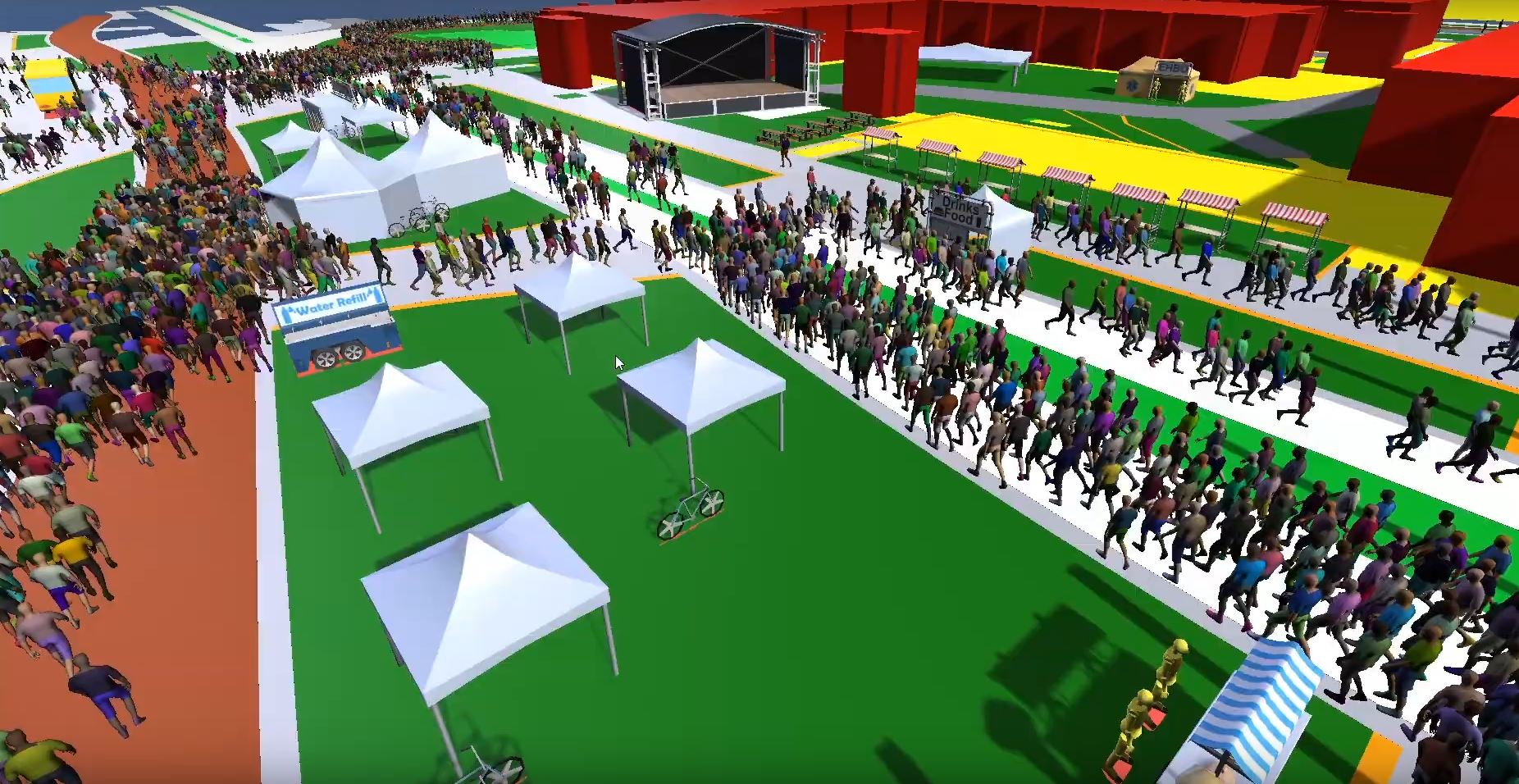
Consider a virtual festival scene. With procedural generation, you don’t need to model every attendee’s outfit or hairstyle. Instead, you define a palette of clothing styles, hair textures, and accessories, then let the system randomly assign them to agents. The result? A visually rich crowd that feels authentic, yet requires minimal storage and processing power. This approach doesn’t just save memory—it transforms crowd simulation from a resource sink into a creative playground.
Moreover, procedural systems allow for dynamic scaling. Need a crowd of 10,000? No problem. Want to zoom into a single individual and observe their behavior? Done. The same dataset adapts seamlessly, ensuring that your simulation remains responsive regardless of scale. This scalability is the difference between a static backdrop and a living, breathing world.
Spatial Sorcery: Divide and Conquer with Smart Partitioning
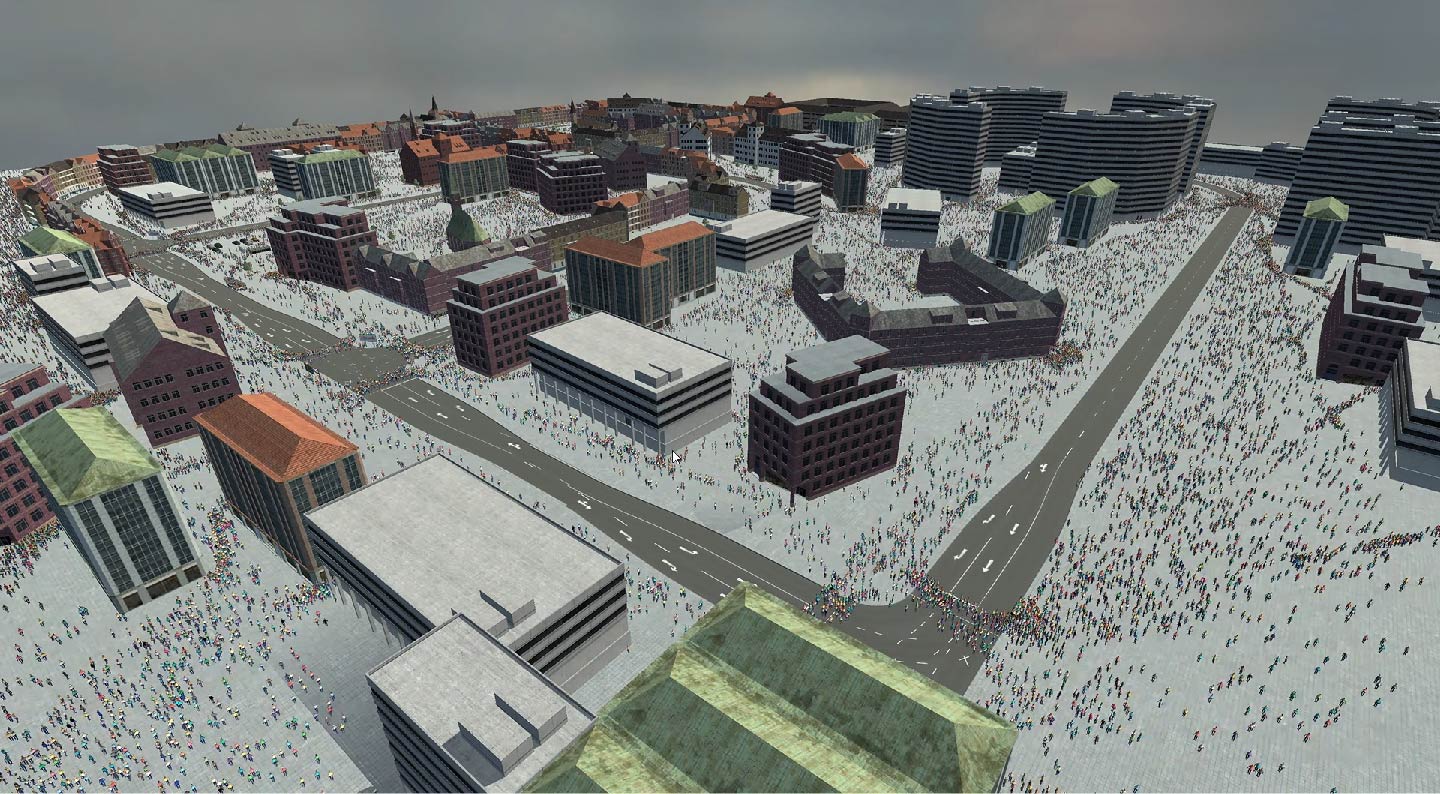
Even the most elegant algorithms can buckle under the weight of unchecked complexity. That’s where spatial partitioning enters the stage—a technique so powerful, it’s like giving your CPU a map to navigate the chaos. By dividing your virtual space into manageable chunks (think grids, octrees, or bounding volume hierarchies), you ensure that only the relevant portions of the crowd are processed at any given moment.
Imagine simulating a marathon. The runners are spread across miles of road, but your player’s camera is focused on a single stretch. Spatial partitioning allows your system to ignore the distant runners until they enter the player’s field of view. Suddenly, what was once a computational nightmare becomes a streamlined operation. Agents outside the active zone are either frozen in place or updated at a reduced frequency, freeing up resources for the critical elements in focus.
This isn’t just about performance—it’s about precision. Spatial partitioning enables you to fine-tune simulation fidelity where it matters most. High-detail interactions occur in the player’s vicinity, while background crowds maintain a lower level of detail. The result is a seamless experience where immersion never comes at the cost of responsiveness.
Behavioral Choreography: The Art of Crowd Intelligence
A crowd isn’t just a collection of moving dots—it’s a living organism, governed by invisible social contracts and environmental cues. The most compelling simulations capture this essence by embedding intelligence into each agent. This means endowing them with goals, perceptions, and decision-making processes that mimic human behavior.
Start with pathfinding. Agents should navigate obstacles, avoid collisions, and follow logical routes. But go further: introduce group dynamics. Friends walking together, families sticking close, strangers maintaining personal space. These nuances transform a mechanical procession into a believable crowd. Use steering behaviors—like seek, flee, or wander—to give agents autonomy without overwhelming the system.
Another layer of sophistication comes from environmental awareness. Agents should react to changes in their surroundings: a sudden downpour sends them scrambling for cover; a blocked alleyway forces them to reroute. These reactions don’t require hyper-detailed physics—just smart, context-aware logic. By layering behaviors hierarchically (from individual actions to group patterns), you create a simulation that feels alive, yet remains computationally efficient.
The Performance Paradox: Optimizing Without Sacrificing Soul
Optimization is often seen as a trade-off between quality and performance—a necessary evil where corners must be cut. But in crowd simulation, optimization can be a creative catalyst. The key is to identify what truly matters to the viewer and what can be abstracted away without diminishing the experience.
Start with level-of-detail (LOD) techniques. Distant agents can be rendered as simple sprites or silhouettes, while those up close are fully modeled with animations. Transition smoothly between these states to maintain immersion. Similarly, reduce the complexity of agent behaviors based on distance. A crowd member 50 meters away doesn’t need to calculate precise collision avoidance—approximate their movement and save precious cycles.
Another powerful tool is occlusion culling. If an agent is hidden behind a building or out of the camera’s view, there’s no need to simulate their actions in real time. Pause their logic until they reappear. This technique alone can slash computational load by orders of magnitude, especially in open-world environments.
Don’t overlook the power of caching. Frequently used animations, textures, and behaviors can be precomputed and stored in memory, reducing runtime calculations. Even something as simple as reusing the same walking cycle for multiple agents—with slight variations—can drastically cut down on processing time without sacrificing visual fidelity.
From Simulation to Storytelling: Crafting Emotional Resonance
A crowd isn’t just a backdrop—it’s a narrative device. The way characters move, interact, and react can convey mood, tension, and atmosphere. A sparse crowd might evoke loneliness; a dense, chaotic one could signal urgency or danger. Use crowd density, movement patterns, and even color palettes to reinforce your story’s emotional core.
Consider the difference between a bustling marketplace and a protest march. In the former, agents meander casually, forming small clusters around vendors. In the latter, they move in tight, purposeful groups, their paths converging toward a focal point. These subtle distinctions are what turn a static scene into a living story.
Sound design plays an equally vital role. The ambient noise of a crowd—murmurs, footsteps, distant shouts—adds depth without requiring additional visual processing. Layer these audio cues to create a multi-sensory experience that draws the viewer in. A well-crafted crowd doesn’t just occupy space; it breathes life into it.
The Future is Crowded: What’s Next for Simulation?
The frontier of crowd simulation is expanding rapidly. Emerging technologies like machine learning are poised to revolutionize how we model behavior. Imagine training neural networks on real-world crowd footage, then using them to generate hyper-realistic agent movements. Or deploying reinforcement learning to let crowds adapt dynamically to player actions, creating unpredictable yet believable scenarios.
Another exciting development is the integration of crowd simulation with physics engines. Agents could interact with destructible environments, leaving behind debris or altering terrain in real time. This blurs the line between simulation and gameplay, offering unprecedented interactivity.
As hardware becomes more powerful, the constraints of today will fade into memory. But the principles of smart simulation—procedural generation, spatial partitioning, behavioral intelligence—will remain timeless. They are the foundation upon which the next generation of immersive worlds will be built.
So, the next time you find yourself staring at a blank canvas, dreaming of a world teeming with life, remember this: you don’t need a supercomputer to bring it to life. You need vision, strategy, and the willingness to let go of the old myths about performance. The future of crowd simulation isn’t about pushing hardware to its limits—it’s about transcending those limits entirely.
The stage is set. The tools are here. All that’s left is to fill it with a crowd.


Leave a Comment