

In the ceaseless hum of modern life, where the mind is often a whirlwind of fragmented thoughts, miniature painting emerges as a serene sanctuary—a tactile meditation that quiets the cacophony within. This ancient art form, with its meticulous brushstrokes and boundless attention to detail, transcends mere craftsmanship; it becomes a portal to stillness, a dialogue between the artist and the void. As the hand glides across the minuscule canvas, each stroke is a breath, each color a whisper of intention. The world shrinks, and in that diminishment, clarity blooms. This is not merely painting; it is a pilgrimage inward, where the artist and the art become one in a state of profound presence.
Miniature painting, with its roots stretching back to the illuminated manuscripts of medieval Europe, the intricate Mughal miniatures of India, and the delicate Persian miniatures, is a testament to humanity’s enduring quest for beauty and meaning. Yet, beyond its historical significance, it offers something far more intimate: a meditative practice that harmonizes the mind, body, and spirit. Whether you are a seasoned artist or a curious novice, the act of creating or even contemplating miniature art can serve as a balm for the overstimulated mind. It invites patience, fosters focus, and nurtures a rare stillness—qualities that are increasingly scarce in our hyper-connected world.
For those seeking respite from the relentless pace of life, miniature painting provides a structured yet fluid path to mindfulness. The confined space of a miniature canvas acts as a microcosm of the universe, where every element must be considered, every hue deliberated. This constraint is not a limitation but a liberation—a way to distill complexity into simplicity, to find the extraordinary in the infinitesimal. As you embark on this journey, you will discover that miniature painting is not just about depicting the external world but about uncovering the landscapes within. Let us explore the myriad ways this art form can serve as a vessel for meditation, creativity, and self-discovery.
The Art of Stillness: How Miniature Painting Cultivates Mindfulness
At its core, miniature painting is an exercise in deliberate slowness. The very nature of working on a small scale demands a level of precision that precludes haste. Each brushstroke must be calculated, each layer of paint allowed to dry before proceeding. This necessity for patience is not a burden but a gift—an opportunity to slow the mind’s frantic pace and anchor it in the present moment. The act of focusing on minute details forces the mind to shed its distractions, much like a meditator observing the breath. The difference between a rushed, sloppy stroke and a carefully placed one is not merely aesthetic; it is a reflection of the artist’s state of being.
Consider the traditional Japanese art of *sumi-e*, where ink is applied in a single, fluid motion to capture the essence of a subject. Miniature painting shares this philosophy. The artist must let go of the need for perfection and instead embrace the process as a form of active meditation. The mind, when fully engaged in the act of creation, becomes a blank canvas itself—free from the clutter of past regrets or future anxieties. In this space, time dissolves, and the artist enters a state akin to *flow*, where hours can pass without notice. This is the magic of miniature painting: it transforms the act of creation into a meditative ritual, where the journey is as significant as the destination.

The meditative benefits of miniature painting extend beyond the studio. As the artist becomes more attuned to the nuances of color, texture, and composition, they develop a heightened awareness of their surroundings. The world, when viewed through the lens of miniature art, reveals its hidden intricacies—the play of light on a petal, the subtle gradations of a sunset, the delicate veins of a leaf. This act of observation is itself a form of meditation, training the mind to see beauty in the overlooked and to find harmony in the smallest of details. In a society that often prioritizes speed and efficiency, miniature painting offers a radical counterpoint: a celebration of slowness, patience, and presence.
From Mughal Splendor to Modern Minimalism: Exploring Diverse Styles
Miniature painting is not a monolith; it is a vast and varied tapestry, woven with threads from different cultures, eras, and artistic sensibilities. Each style carries its own philosophy, its own rhythm, and its own invitation to meditative practice. By exploring these diverse traditions, you can find the one that resonates most deeply with your soul—or even blend elements to create a personal, hybrid practice.
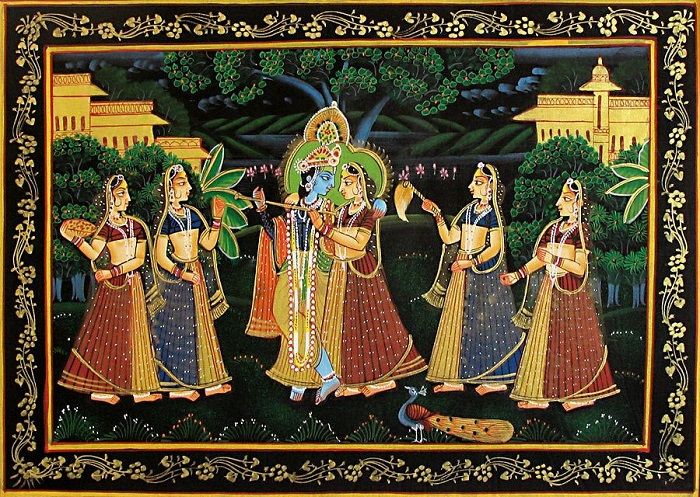
The Mughal miniature tradition, born in the courts of 16th-century India, is a symphony of opulence and precision. These paintings, often depicting royal scenes, flora, and fauna, are characterized by their intricate detailing, jewel-toned palettes, and a sense of grandeur that belies their small scale. Working in this style demands not only technical skill but also a deep appreciation for narrative and symbolism. The artist must consider the story behind each element—the curve of a leaf, the tilt of a crown, the gaze of a figure—each stroke contributing to a larger, cohesive vision. For the meditative artist, Mughal miniatures offer a way to connect with history and culture, to immerse oneself in a world where every detail is imbued with meaning.
In contrast, the Persian miniature tradition, with its ethereal landscapes and poetic themes, is a study in fluidity and grace. These paintings often feature dreamlike scenes of lovers, mystics, and mythical creatures, rendered with a delicate, almost translucent quality. The Persian approach emphasizes the interplay of light and shadow, the suggestion of form rather than its explicit definition. For the artist seeking a more abstract, intuitive path to meditation, Persian miniatures provide a liberating framework. The focus shifts from rigid precision to emotional resonance, allowing the subconscious to guide the hand. This style teaches that meditation is not about control but about surrender—letting the art emerge organically from within.

For those drawn to the minimalist aesthetic, contemporary miniature painting offers a refreshing departure from tradition. Artists like Andrew Wyeth and contemporary practitioners of hyperrealism use miniature scales to explore the interplay of light, shadow, and texture in ways that are both intimate and expansive. The minimalist approach strips away the superfluous, leaving only the essential. In this space, the meditative act becomes one of distillation—finding the core essence of a subject and expressing it with the fewest possible strokes. This style is particularly suited to those who find solace in simplicity, who see meditation as a way to pare down to the essentials of existence.
Beyond these traditions, there are countless other styles to explore: the vibrant folk miniatures of India, the delicate *ukiyo-e* prints of Japan, the bold, graphic miniatures of contemporary pop art. Each offers a unique lens through which to view the world and a distinct path to meditative practice. The key is to experiment, to allow the art to guide you rather than the other way around. In the process, you may discover that the style you are drawn to reflects not just your aesthetic preferences but your inner landscape as well.
Materials and Techniques: Crafting a Ritual of Creation
The tools and techniques of miniature painting are as varied as the artists who wield them, but each material and method carries its own potential for ritual and reflection. The act of selecting brushes, paints, and surfaces is not merely practical; it is an extension of the artist’s intention, a physical manifestation of their meditative state. By approaching the craft with mindfulness, the artist transforms the act of creation into a sacred ritual, where every choice is deliberate and every motion is infused with purpose.
Brushes, the extensions of the artist’s hand, come in a dizzying array of shapes, sizes, and materials. A fine-tipped sable brush, with its ability to hold a precise amount of paint, is ideal for the delicate work of miniature painting. The feel of the bristles against the paper, the resistance of the stroke—these tactile experiences ground the artist in the present moment. The choice of brush is not arbitrary; it is a dialogue between the artist and the medium, a negotiation of control and surrender. Some artists prefer synthetic brushes for their durability, while others swear by natural fibers for their responsiveness. The key is to find the tool that feels like an extension of your own body, one that allows your hand to move with fluidity and intention.
The paints themselves are another layer of the meditative process. Watercolors, with their translucent layers and unpredictable blends, invite a sense of spontaneity and play. The artist must learn to embrace the happy accidents—the way colors bleed into one another, the way a stroke can take on a life of its own. This unpredictability is not a flaw but a feature, a reminder that meditation is not about rigid control but about adaptability. Acrylics, on the other hand, offer a more opaque, controlled medium, allowing for precise layering and correction. The artist who works with acrylics must cultivate patience, waiting for each layer to dry before proceeding, each stroke building upon the last. The choice of paint is a reflection of the artist’s temperament—whether they lean toward fluidity or structure, surrender or control.
The surface on which the miniature is painted is equally significant. Traditional miniature painters often use wasli paper, a handmade, hand-pressed paper that is smooth yet absorbent, ideal for the delicate layering of watercolors. The texture of the paper, its slight tooth, the way it holds the paint—these qualities become part of the artwork itself. For those working in acrylics or oils, a primed wooden panel or a high-quality canvas may be more suitable, offering a sturdy foundation for the artist’s vision. The act of preparing the surface—sanding, priming, stretching—can itself be a meditative practice, a way to slow down and attune to the materials before the first stroke is even made.
Beyond the basics, there are countless techniques to explore: stippling, hatching, glazing, dry brushing. Each method offers a different path to meditative focus. Stippling, with its repetitive dots, can induce a trance-like state, while glazing, with its translucent layers, invites a sense of depth and mystery. The artist who experiments with these techniques is not just refining their craft but deepening their connection to the act of creation. The goal is not mastery but presence—each technique a doorway to a new way of seeing, a new way of being.
Miniature Painting as a Gateway to Creative Expression and Emotional Healing
While miniature painting is undeniably a meditative practice, it is also a powerful tool for creative expression and emotional healing. The confined space of a miniature canvas is not a limitation but a crucible, where raw emotions can be distilled into something tangible and beautiful. For those who struggle to articulate their feelings through words, miniature painting offers a silent, visual language—a way to externalize the internal landscape. The act of creation becomes a form of catharsis, a way to process grief, joy, anger, or confusion without the need for explanation.
Consider the artist who uses miniature painting to explore themes of loss. The small scale forces a distillation of emotion, stripping away the extraneous to reveal the core truth. A single, solitary figure in a vast, empty landscape can convey loneliness more powerfully than a sprawling canvas. The artist who works through grief in miniature may find that the process itself is healing—not because it erases the pain, but because it gives the pain a shape, a form, a place to exist outside of the self. In this way, miniature painting becomes a companion in the journey of healing, a way to hold space for the full spectrum of human experience.
For others, miniature painting is a celebration of joy and wonder. The act of bringing something beautiful into existence—a delicate flower, a serene landscape, a whimsical creature—can be an antidote to the cynicism and fatigue of modern life. The artist who paints with the intention of spreading beauty is, in essence, performing an act of rebellion against the forces that seek to diminish our capacity for awe. Each miniature becomes a tiny sanctuary, a pocket of tranquility in a chaotic world. The process of creation is not just a meditation but a gift—to oneself and to those who encounter the artwork.
Miniature painting can also serve as a bridge between the conscious and subconscious mind. The act of painting, especially when approached with a meditative mindset, can unlock hidden memories, dreams, and desires. The artist may begin with a vague intention—a color, a shape, a mood—and find that the painting evolves in ways they never anticipated. This element of surprise is where the magic lies. The miniature becomes a dialogue between the artist and their inner self, a way to access parts of the psyche that are often obscured by the noise of daily life. In this way, miniature painting is not just a form of self-expression but a form of self-discovery.
The emotional benefits of miniature painting extend beyond the artist. For the viewer, a miniature artwork can evoke a sense of intimacy and connection. The small scale invites close inspection, a moment of pause in a world that often feels overwhelmingly vast. A miniature painting can be a talisman, a reminder of beauty and stillness in the face of chaos. It can also be a conversation starter, a way to share one’s inner world with others without the need for words. In this way, miniature painting becomes a shared meditation, a way for communities to come together in appreciation of the small, the delicate, and the profound.
Incorporating Miniature Painting into Your Daily Life: A Practical Guide
For those inspired to embark on this meditative journey, the question often arises: How can I integrate miniature painting into my daily life? The answer lies not in grand gestures but in small, consistent acts of creation. The key is to approach the practice with curiosity and gentleness, to treat it as a companion rather than a chore. Whether you have five minutes or five hours, there is always a way to connect with the art of miniature painting.
Start small. Dedicate a corner of your home to your practice—a table, a shelf, a windowsill where the light is just right. Keep your materials organized and accessible, so that the act of creation feels effortless. Begin with simple exercises: a single leaf, a geometric pattern, a study in light and shadow. The goal is not to produce a masterpiece but to cultivate the habit of presence. Set aside a few minutes each day to work on your miniature, even if it’s just a single brushstroke. Over time, these small acts will accumulate into a rich and rewarding practice.
Consider joining a community of miniature artists, whether online or in person. The shared experience of creation can deepen your practice and provide a sense of accountability and support. Many artists find that teaching others—whether through workshops, social media, or casual mentorship—reinforces their own understanding of the craft. The act of sharing your work can also be a reminder that your art has value, not just as a personal practice but as a contribution to the world.
Another way to integrate miniature painting into your life is to use it as a tool for reflection. Keep a sketchbook or a series of small canvases dedicated to your meditative practice. Use these pieces to explore your thoughts, your emotions, your dreams. The act of painting becomes a way to process the events of your day, to find clarity in the midst of chaos. You might even create a series of miniatures that tell a story—a visual journal of your inner journey. Over time, this collection becomes a testament to your growth, a record of your evolution as both an artist and a person.
Finally, remember that miniature painting is not about perfection. It is about presence, about the act of creation itself. There will be days when the brush feels heavy, when the colors refuse to cooperate, when the vision in your mind does not match the reality on the canvas. These moments are not failures; they are part of the process. The meditative practice of miniature painting teaches us to embrace imperfection, to find beauty in the flawed and the unfinished. In a world that often demands flawlessness, the miniature artist learns to celebrate the imperfect, the delicate, the ephemeral.
As the final brushstroke dries and the miniature takes its place among the other pieces on your shelf, take a moment to reflect on the journey. The hours spent in quiet focus, the patience cultivated, the emotions explored—all of it has led to this single, small creation. It is a reminder that meditation is not about achieving a state of perfect stillness but about finding stillness in the midst of the storm. Miniature painting is more than an art form; it is a way of being. It is a practice that invites us to slow down, to pay attention, to find the extraordinary in the ordinary. In a world that often feels overwhelming, it offers a pocket of peace—a tiny canvas where the mind can rest and the soul can breathe.


Leave a Comment